 Why Japan?
Why Doesn't Anyone Break Into Japan's Vending Machines?
 Told by Sophie, your guide to Japan
Why doesn't anyone break into Japan's vending machines? They did. In 1999, Japan's police counted over 222,000 thefts targeting vending machines, about 600 a day. Sophie follows what changed: Korean 500-won coins drilled or ground down to fool the machines, until, one lawmaker said, many big-city machines refused even real 500-yen coins, and Japan issued a new one in 2000; an industry standard that hardened the box against hand tools and then power tools; police advice to leave less cash inside; and, in a common deal, the owner of the spot, who is often paid a cut of the sales. Plus three things to know at a Japanese vending machine.
The full story
In this story
A Samurai at Midnight
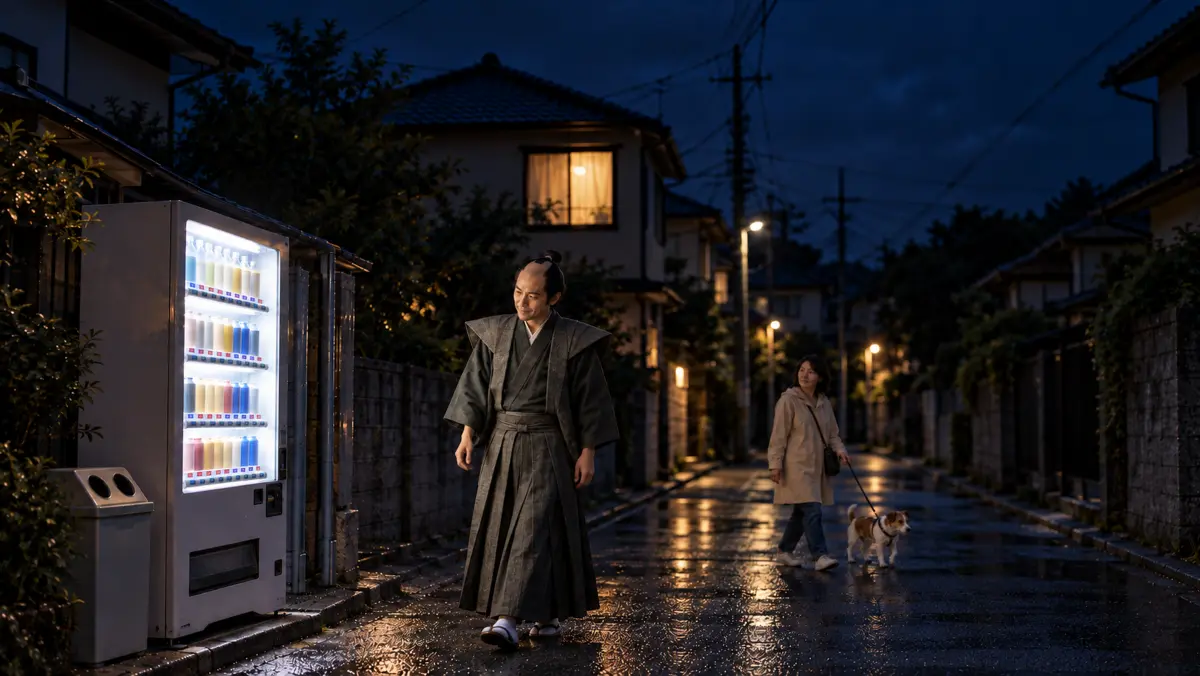
Midnight, a side street in a Japanese town. The shops are shut. One thing is still lit: a drink machine on the pavement. A samurai stops in front of it. He wants something hot. He studies it like a castle wall. No guard. No fence. Above it, one window is still lit. He feeds the machine a brand-new thousand-yen note. It pushes the note back out. He smooths it on his sleeve and tries again. Out it comes. About two and a half million machines in Japan actually sell something, most of them drinks. Some stand on quiet roads: a car park, a country road, the front of a shop that closed at seven. In summer, one stands near the top of Mount Fuji. It goes up by bulldozer. Visitors notice it on the first evening. The machine is lit. The street is not.
What Is Inside
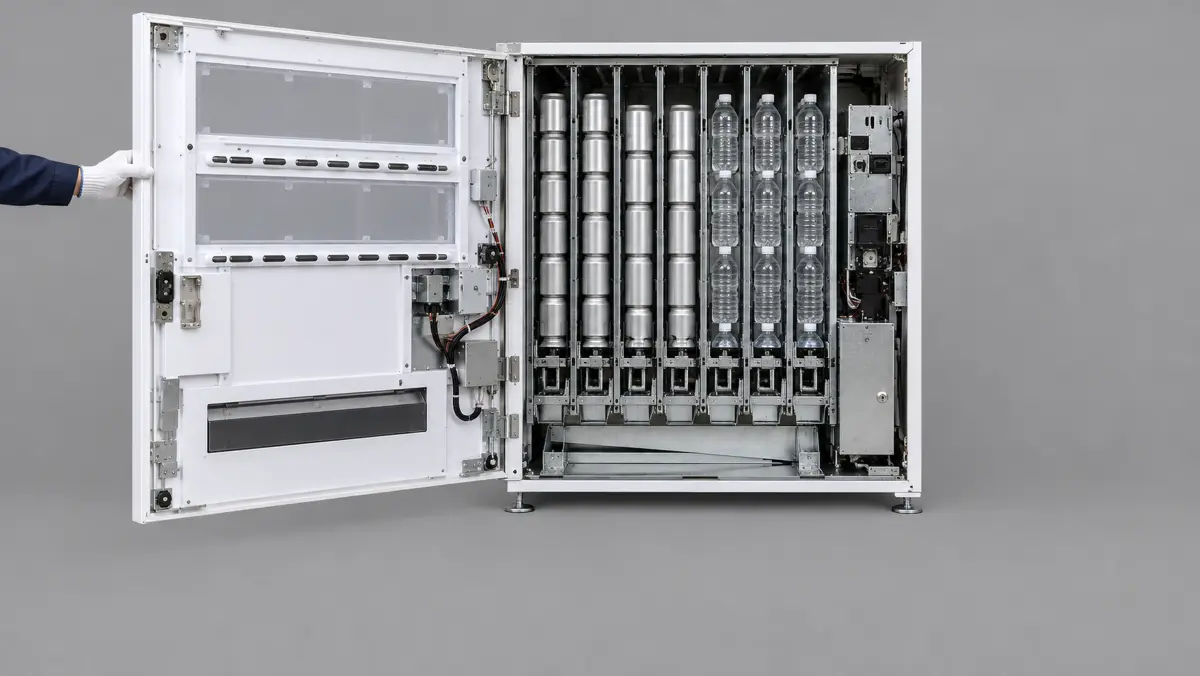
What is actually inside? Drinks, often hot and cold in the same box. A stock of coins, so it can give change. And some of the day's cash, until someone comes for it. On a dark pavement, that is still a box with money in it. Most people who walk past do not think about it. They just want a cold tea.
Six Hundred a Day
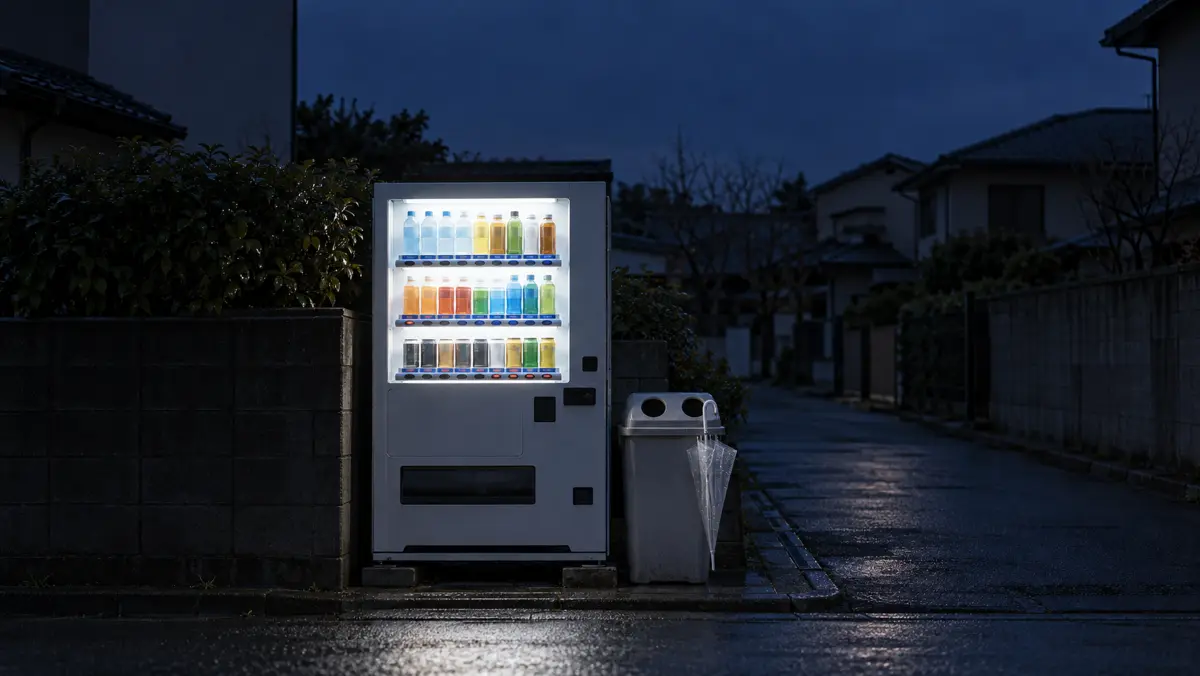
The easy answer is that nobody in Japan would try. The police kept count: thefts targeting vending machines. In 1999, they recorded more than two hundred and twenty thousand cases. That is about six hundred a day. Somebody tried. Over and over.
Something Like a Crowbar
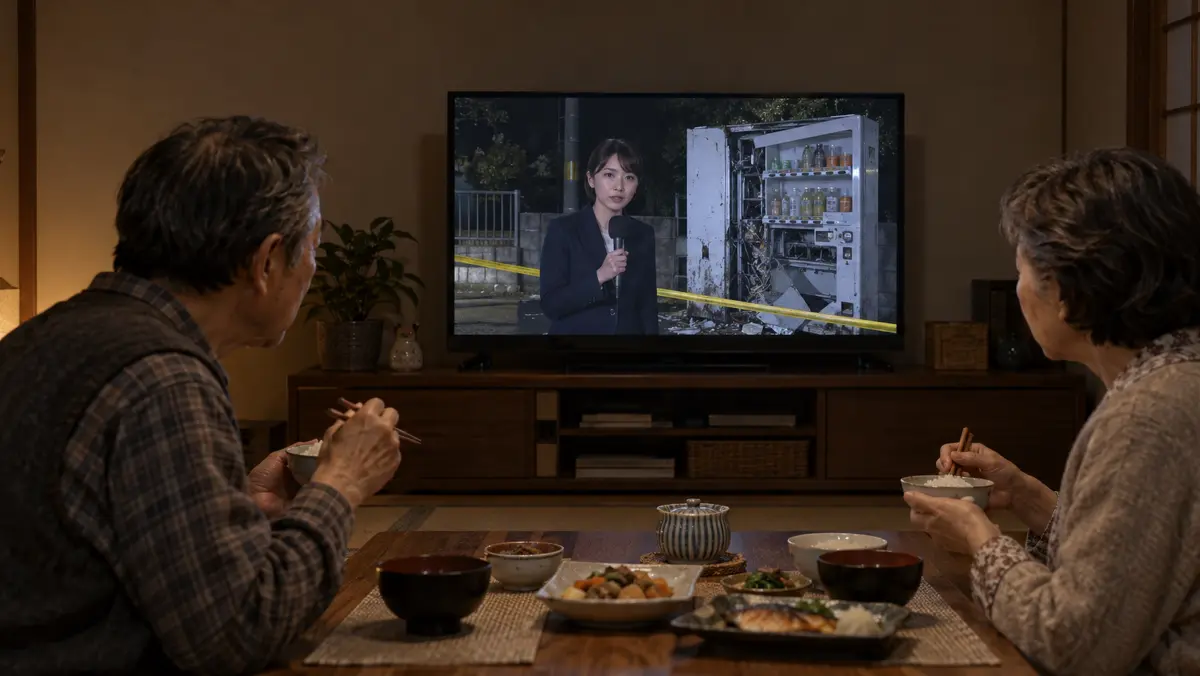
How do you rob a drink machine? The loud way needs a tool. Japanese crime reports have a phrase for it: baru no yo na mono, something like a crowbar. Police use it when the tool has not yet been identified. It still happens. Since 2025, at least eighteen machines have been damaged in parks south of Nagoya. A camera caught one of the visits: someone carrying something like a crowbar.
The Won Coin
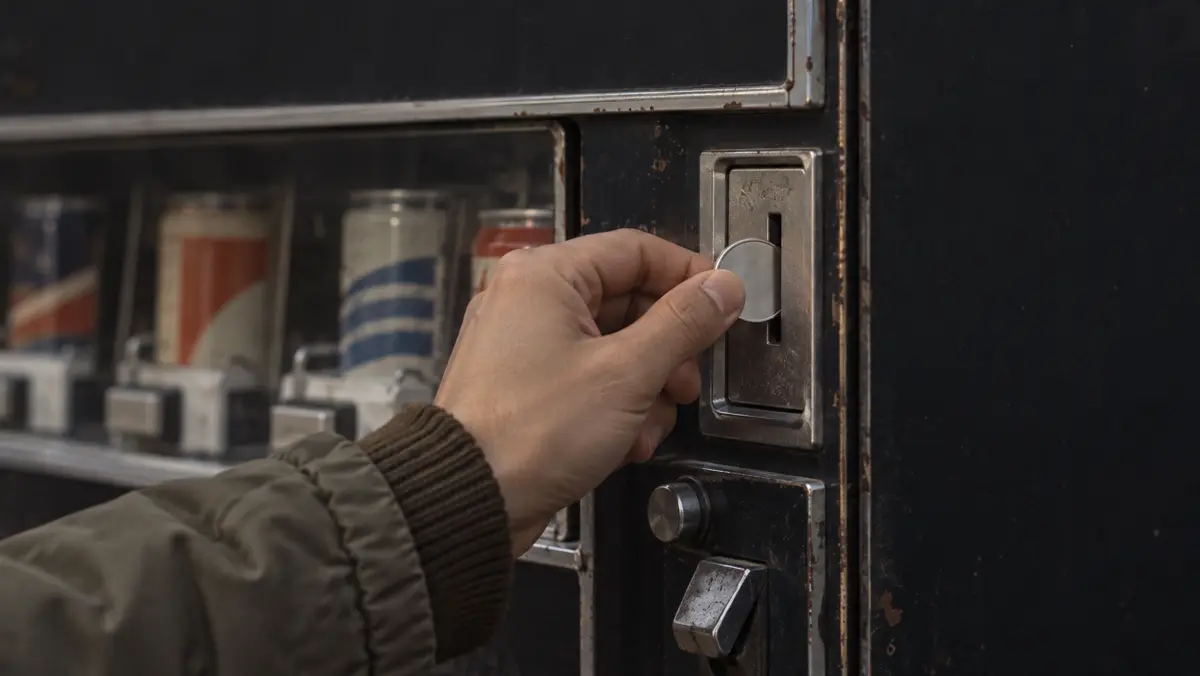
The quiet way fit in a pocket. In 1982, Japan put out a five-hundred-yen coin. The same year, South Korea put out a five-hundred-won coin. Same metal. Same width. The won coin was a little heavier, and worth far less. So people drilled a small hole in it, or ground it down, until the machine thought it was yen. Then they pressed the refund lever, and the machine paid them back in real five-hundred-yen coins. In 1999 alone, police reported more than eight hundred and twenty thousand altered won coins used in vending-machine thefts.
Machines That Refused Real Money
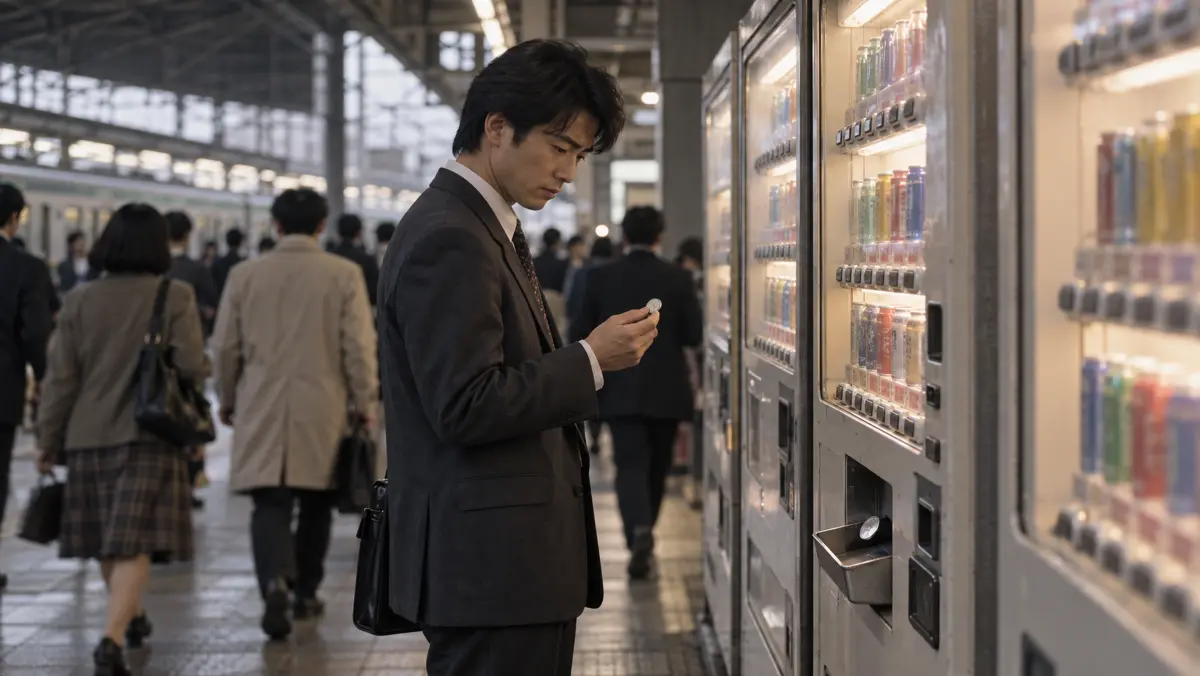
Many machines fought back. In November 1999, a member of parliament asked the finance minister whether he had tried to use a five-hundred-yen coin lately. The minister said he could not remember. In the big cities, the member said, many machines no longer took even the real coin. So Japan changed the coin. The next summer, a new one came out in a different metal, with slanted grooves on the edge. Two years later, police found only a few thousand altered won coins. Our samurai is still holding his note. It is real.
Thicker After Every Siege
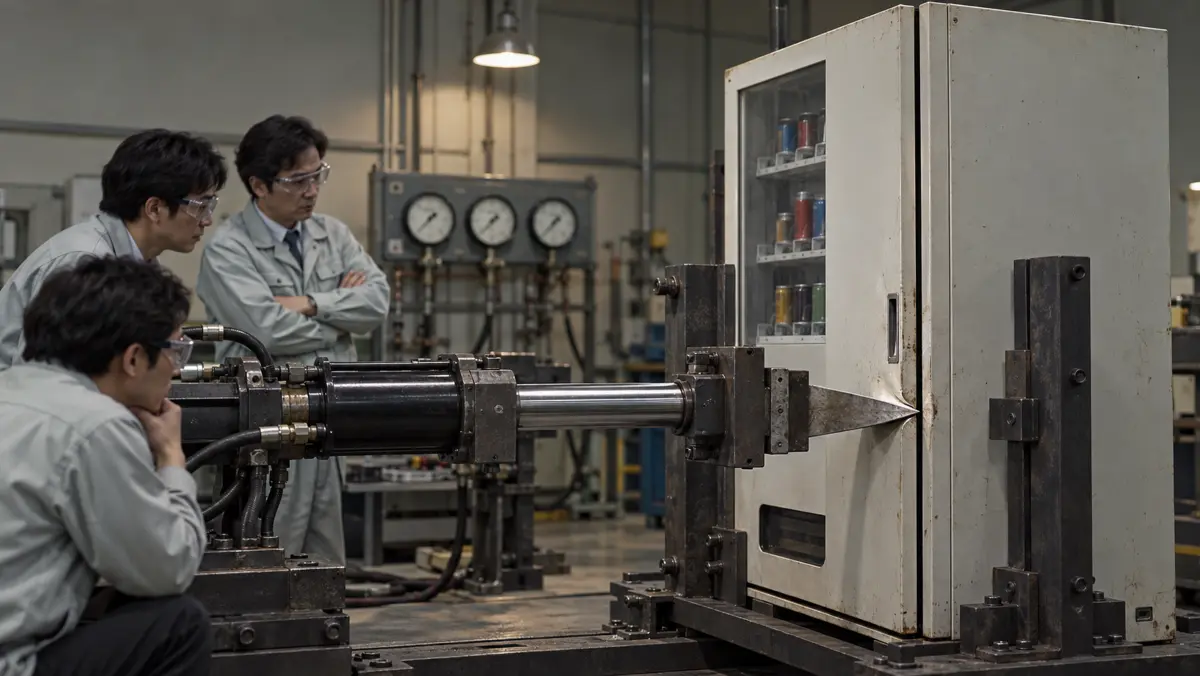
A crowbar does not care about coins. So the makers went after the box. In 1996, the vending-machine industry wrote its own standard for hardening machines against hand tools. Four years later, a second version dealt with power tools. A third version made the whole cabinet stronger. Our samurai runs a thumb along the seam of the door. A castle wall gets thicker after every siege. Upstairs, a curtain moves.
Bolts for Earthquakes
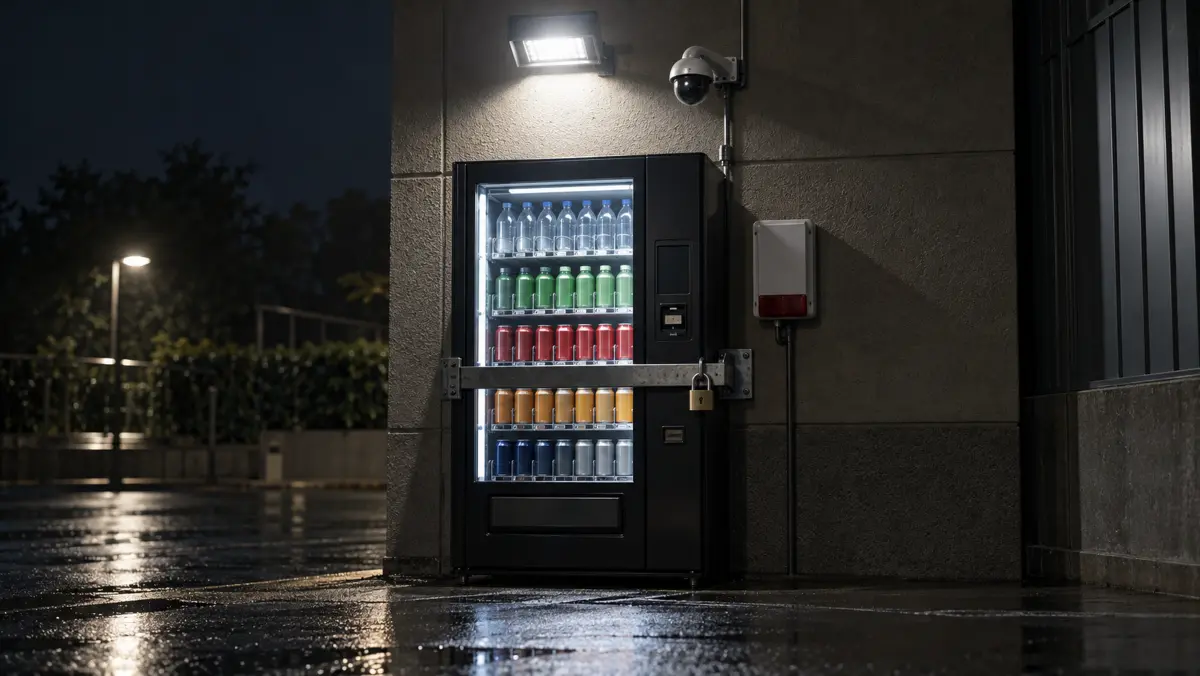
The engineering details are not public. Police added their own list: bright lights, an extra lock, an alarm, a camera. Floor-standing machines are also normally fixed against toppling. That was mainly for earthquakes. Thieves get the bolts anyway.
Less Cash Inside
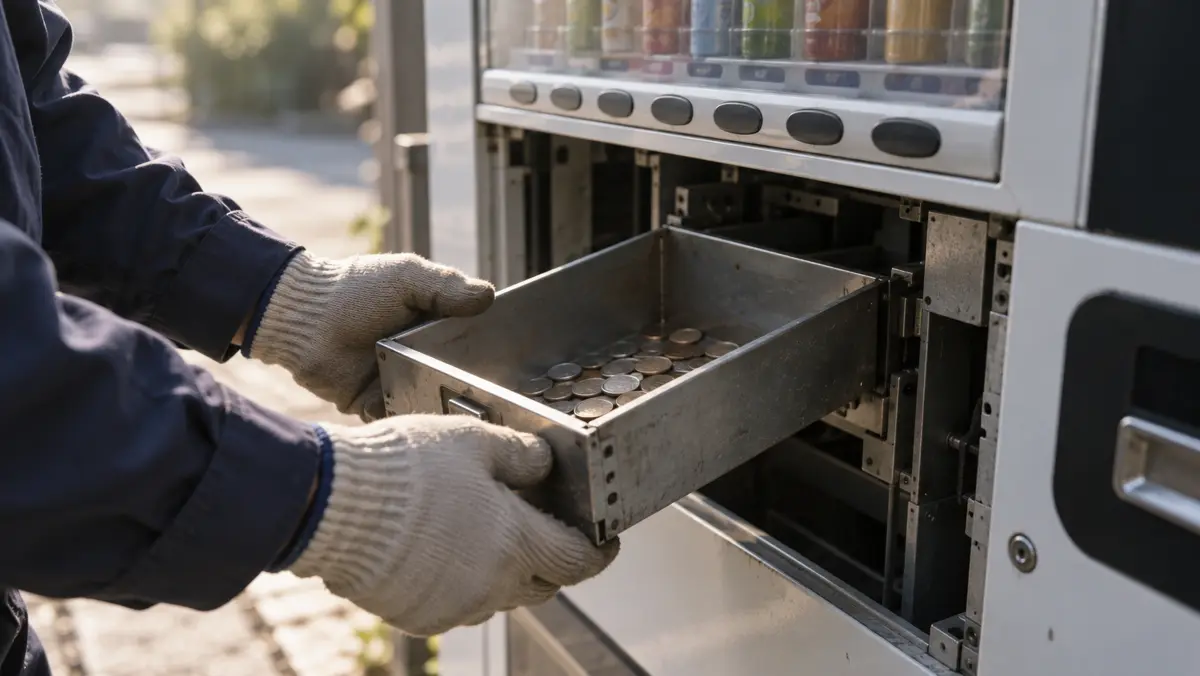
Then there is the money itself. On many machines, a drink company or an operator refills the stock and takes the cash away. Busy machines get more visits. The police advice is simple: keep as little cash inside as possible, and collect it often. Cashless payment helps too: a card sale adds no coins. In 2025, about forty percent of drink machines were estimated to take it. A thief who does get in may find less cash than he hoped, and a lot of tea.
The Landlord Upstairs
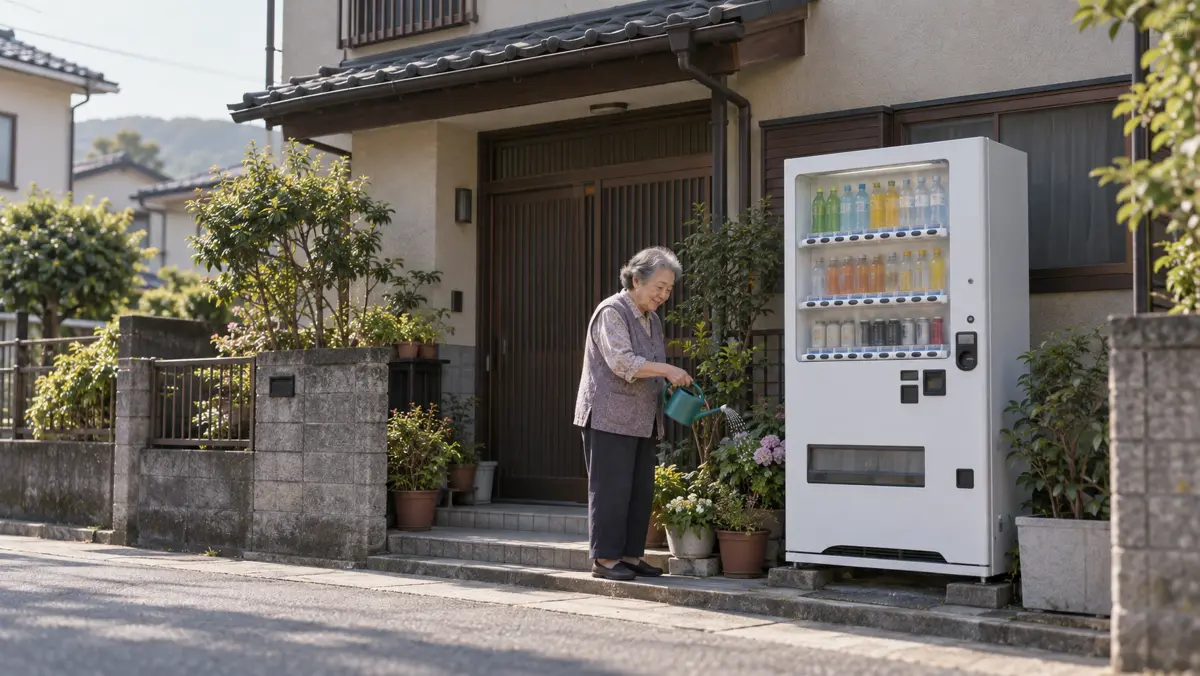
Look at where a machine stands. It may be in front of a house, a shop or a small business. In a common deal, the drink company brings the machine. The person who owns the spot gives it space and electricity, and is often paid a negotiated cut of the sales. So the machine on the street often has a landlord, and the landlord has a reason to notice trouble. Police give the same advice: put machines where people live or pass. Our samurai looks up. The light in the window is still on. He bows to it.
From Six Hundred a Day to About Seven
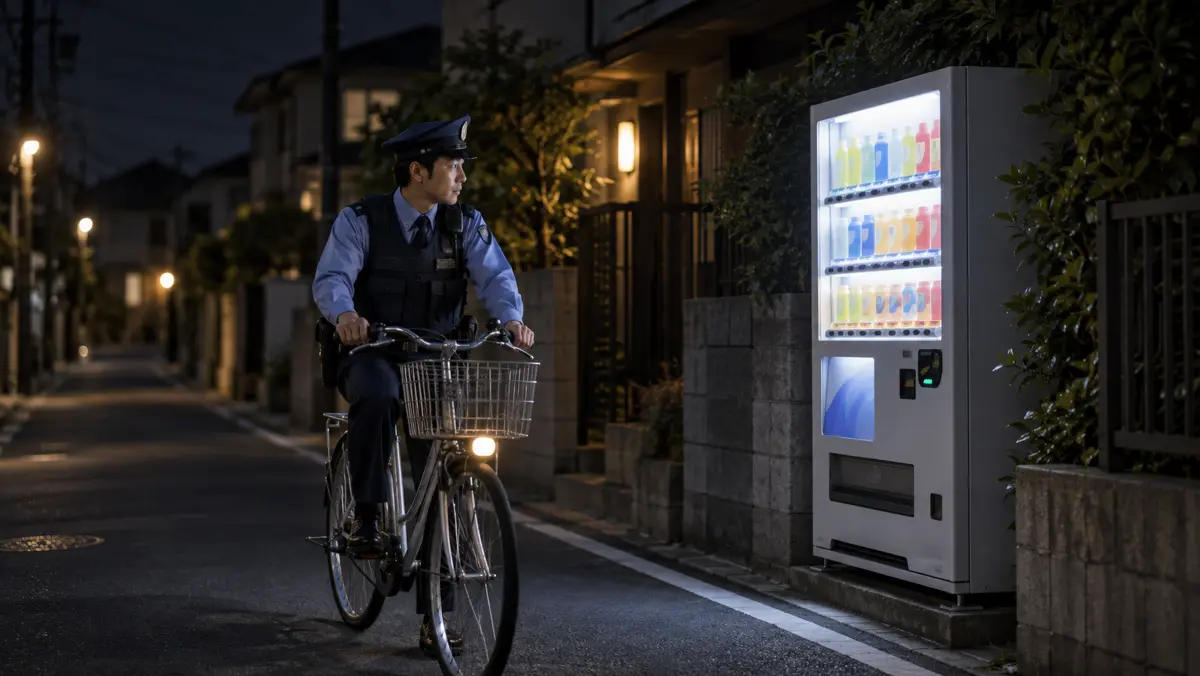
By 2025, the national count was about two thousand seven hundred a year. From six hundred a day to about seven. It is not zero, and it rose a little that year. Honesty is hard to measure. What the police point to is the harder box, and the new coin did its part. So it is less that nobody tries. More that Japan made trying less likely to pay.
If you visit
Using a vending machine in Japan
Three things help at a machine. First, many take coins of ten, fifty, a hundred and five hundred yen, and thousand-yen notes. Not larger notes. Japan's newest notes came out in 2024, and older machines may reject them. Our samurai's note is brand new. If yours comes back, try coins or an older note. If it shows a logo your card matches, choose the drink first, then tap your card. Second, read the label under each drink. Blue usually means cold. Red usually means hot. Third, the box beside the machine is only for empty drink containers. Our samurai finds three coins in the same sleeve. He chooses red. Hot tea. The empty bottle goes in the box. Upstairs, the light goes off.
Enjoyed the story? Sophie answers a new question about Japan every few days on YouTube.
Subscribe on YouTube

