 Why Japan?
Why Do Japanese Hot Springs Say No to Tattoos?
 Told by Sophie, your guide to Japan
Many hot springs, pools and gyms in Japan turn tattooed guests away, yet the sign at the door is not the law. Sophie follows the story behind it: tattoos recorded in the third century, Edo punishments and firefighters' dragons, a Meiji ban that did not stop British princes from getting inked, and the doors that are starting to open again.
Skip to the practical part: Visiting a hot spring with tattoos ↓
The full story
In this story
A Firefighter at the Hot Spring
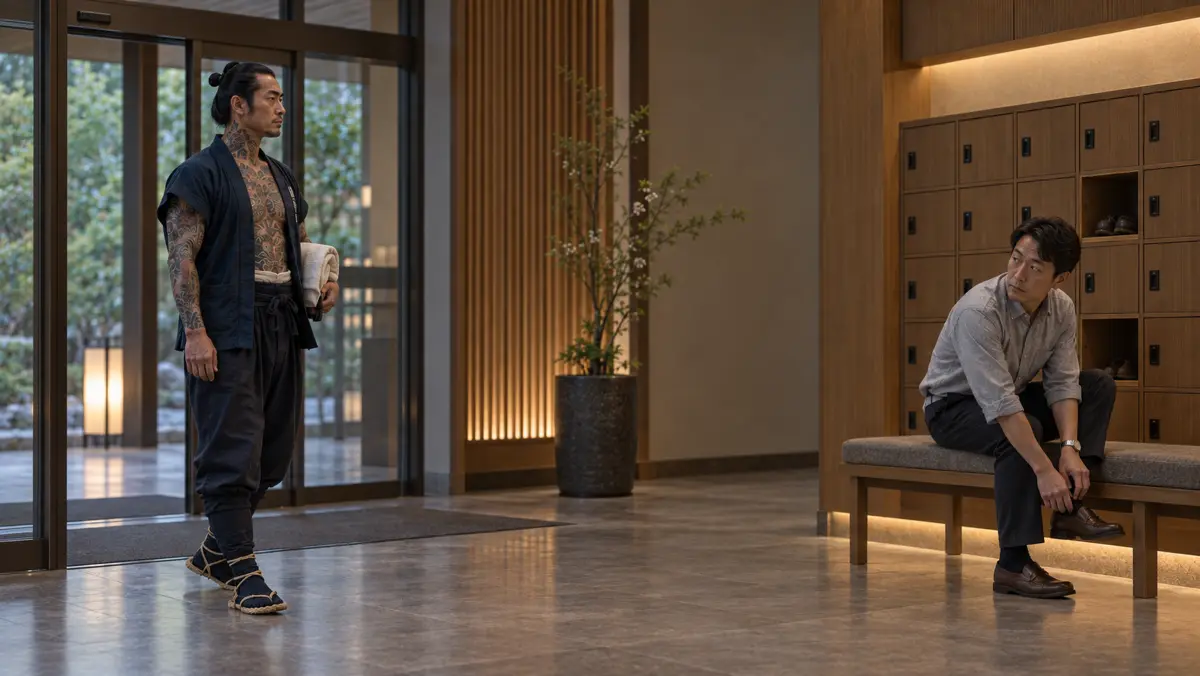
Picture an Edo firefighter, tattooed from neck to knee, walking into a Tokyo hot spring tonight, still smelling of smoke. The staff would stop him at the door. Politely. In Edo, that same body could have made him the pride of his neighborhood. In 2015, the same agency asked hotels and inns with baths what they do about tattoos. Of the five hundred and eighty-one that answered, fifty-six percent said they turn tattooed guests away from their baths.
The Sign Is Not the Law
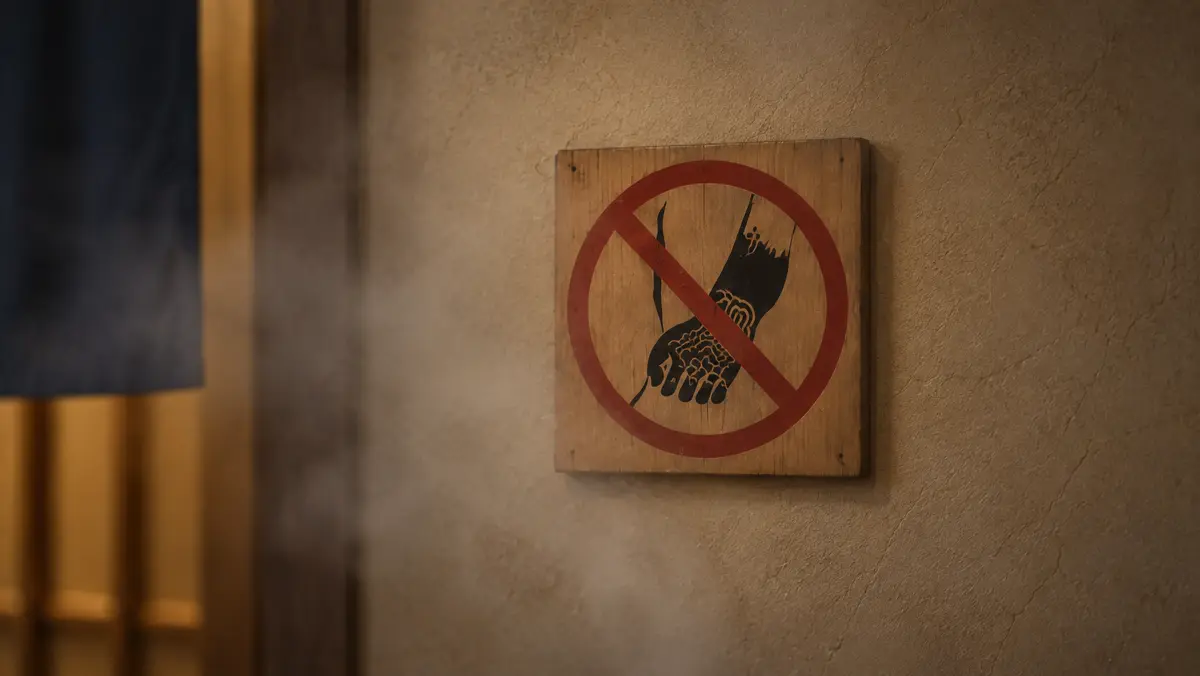
Most places that refuse say it is their own decision, not an order from the police or the city. In 2013, a Maori language teacher from New Zealand, in Hokkaido for a meeting on Indigenous languages, was turned away from a hot spring because of the traditional moko on her lips and chin. In 2016, the agency's guidance for bath owners noted that visitors may wear a tattoo for religion, culture or fashion.
Older Than the Sign
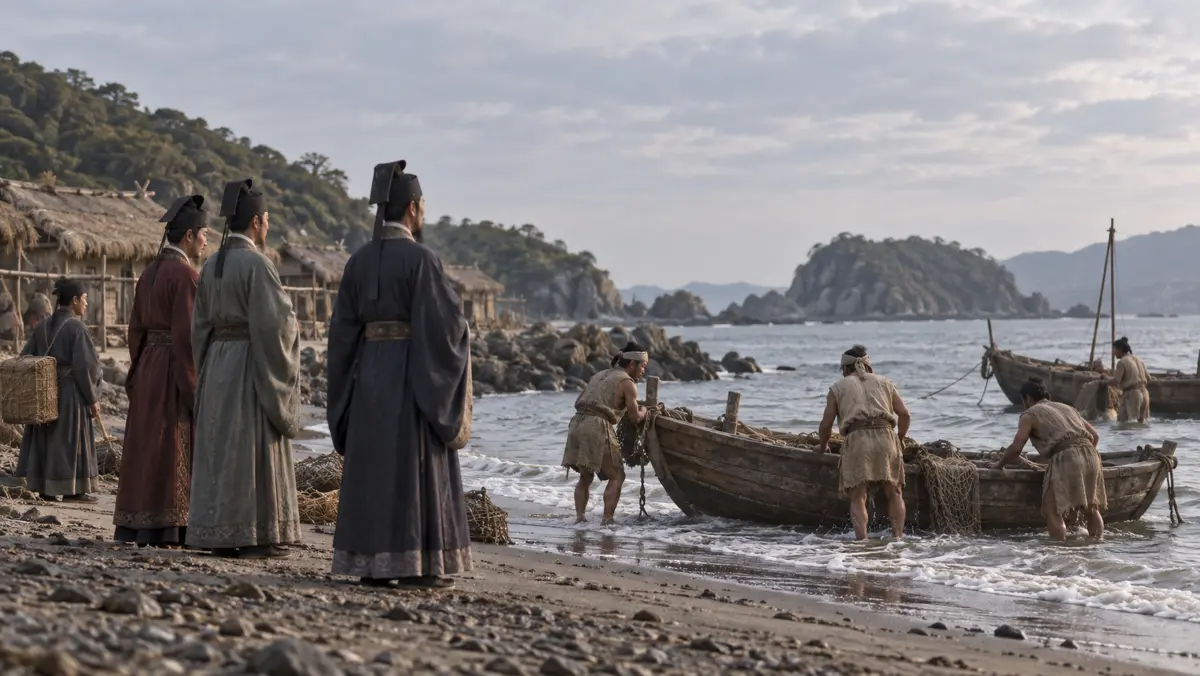
So is Japan a country without tattoos? The opposite. One of the earliest detailed Chinese descriptions of the people of the Japanese islands, written in the third century, reports that the men marked their faces and decorated their bodies. Old Japanese chronicles mention tattoos too, usually on people at the edges of the realm, or as a punishment. The ink was there long before the sign.
Ink as Punishment
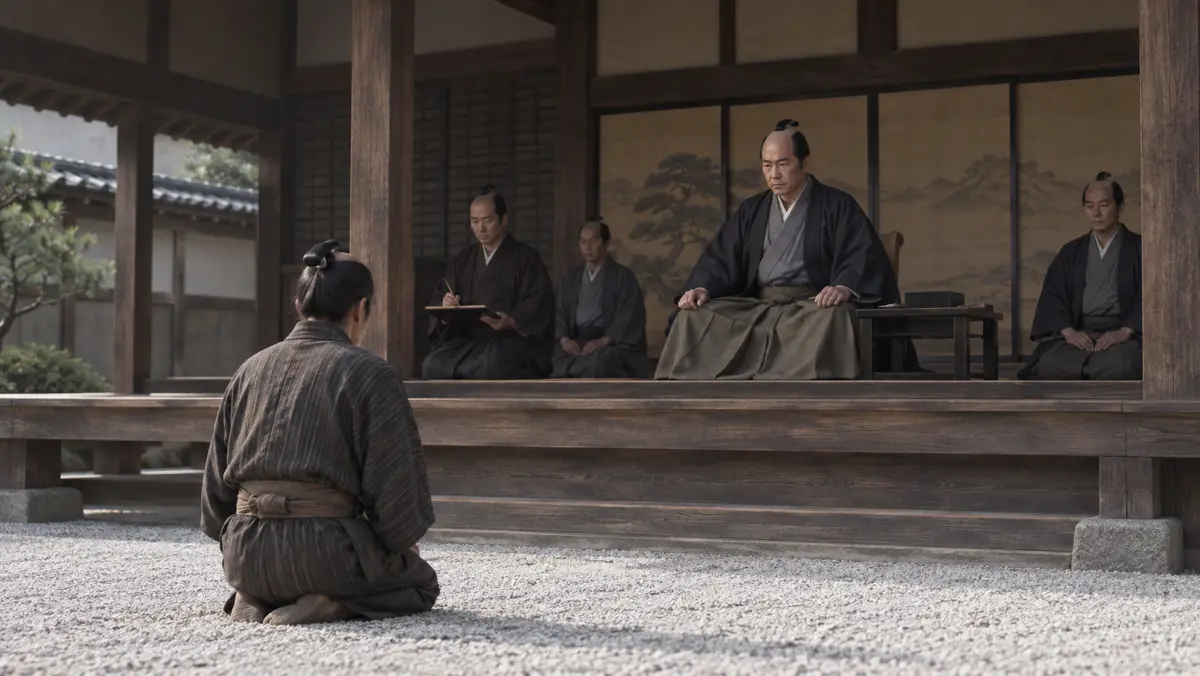
By the Edo period, a tattoo could carry two very different meanings. The first was a sentence. In 1720, the shogunate wrote tattooing into its law as a punishment, in place of harsher penalties such as cutting off a nose or an ear. A convicted thief could receive dark bands around his arm. The shape and place of the bands could show where he had been punished.
Ink as a Choice
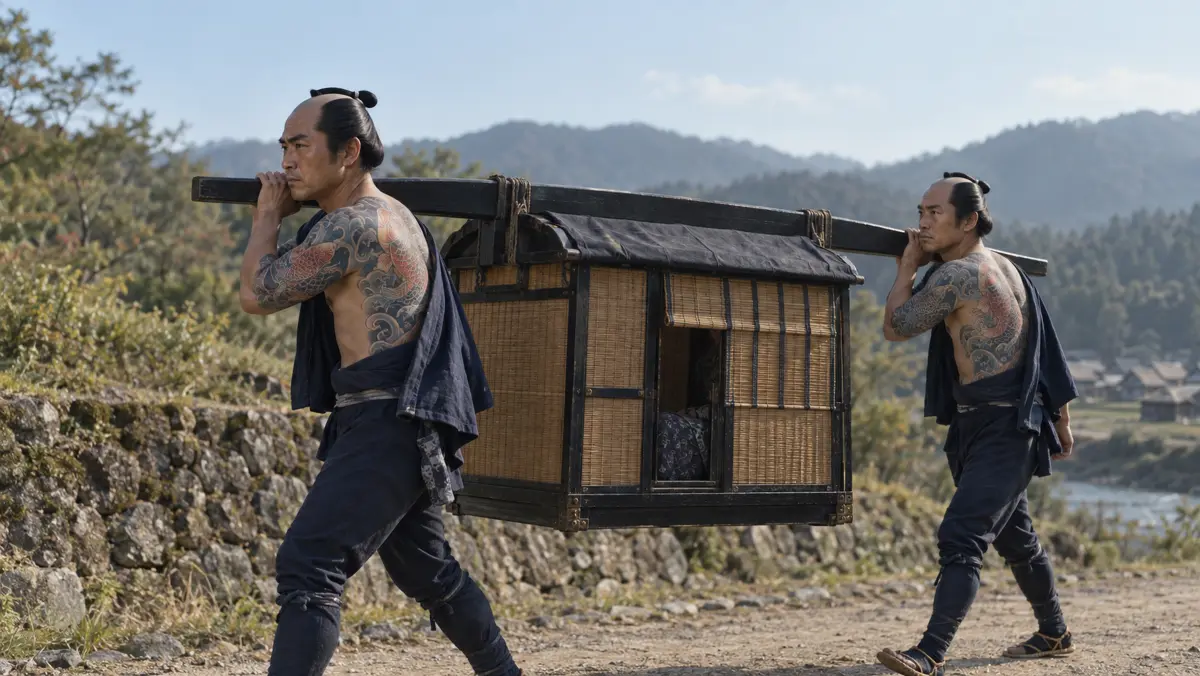
The second meaning was a choice. Firefighters, couriers and palanquin bearers worked in little more than a loincloth, and many covered their skin with ink instead: dragons, waves, carp, heroes. The fashion grew after Utagawa Kuniyoshi's prints of tattooed heroes from a Chinese adventure story appeared around 1827. For firefighters, the tattoo was almost part of the uniform. There are stories of neighborhoods pooling money so that a young fireman without one could finally be inked.
Two Men on One Street
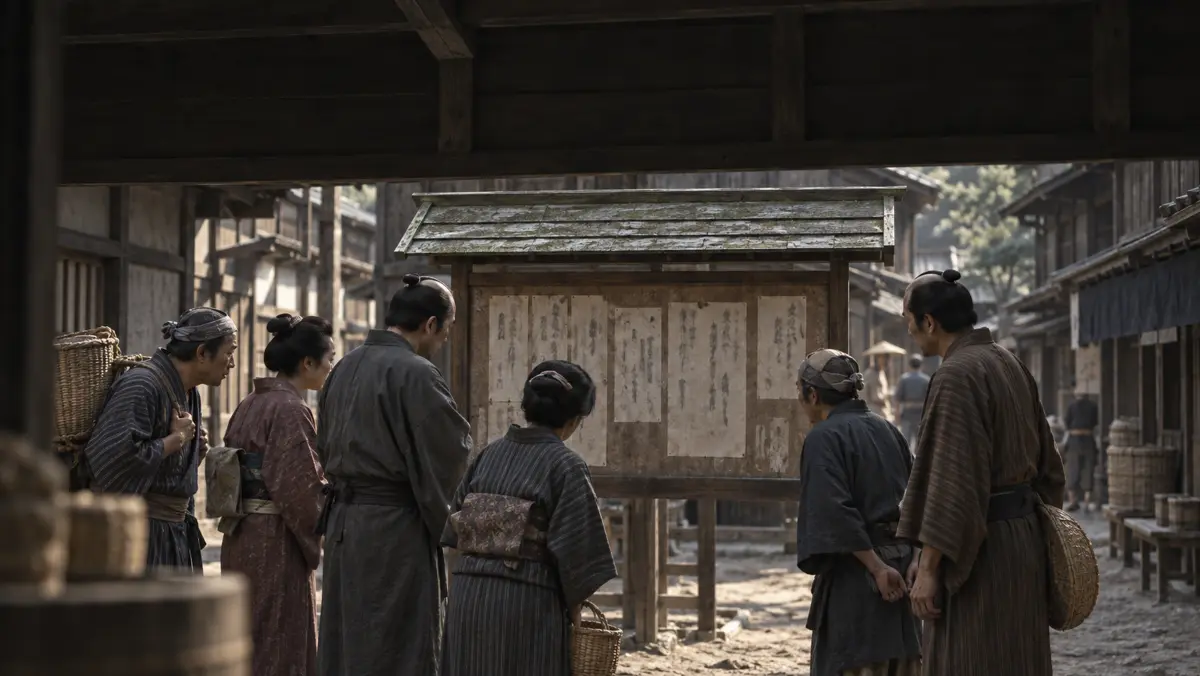
The shogunate did not approve. As part of its broader controls on luxury and public morals, it banned decorative tattoos. Then it banned them again. But those orders came with few real penalties, and the firefighters kept their dragons. So on the same Edo street, you might pass two men with ink on their arms. One had been given it by a court. The other had paid for it, and was proud to show it.
Japan Bans Tattoos
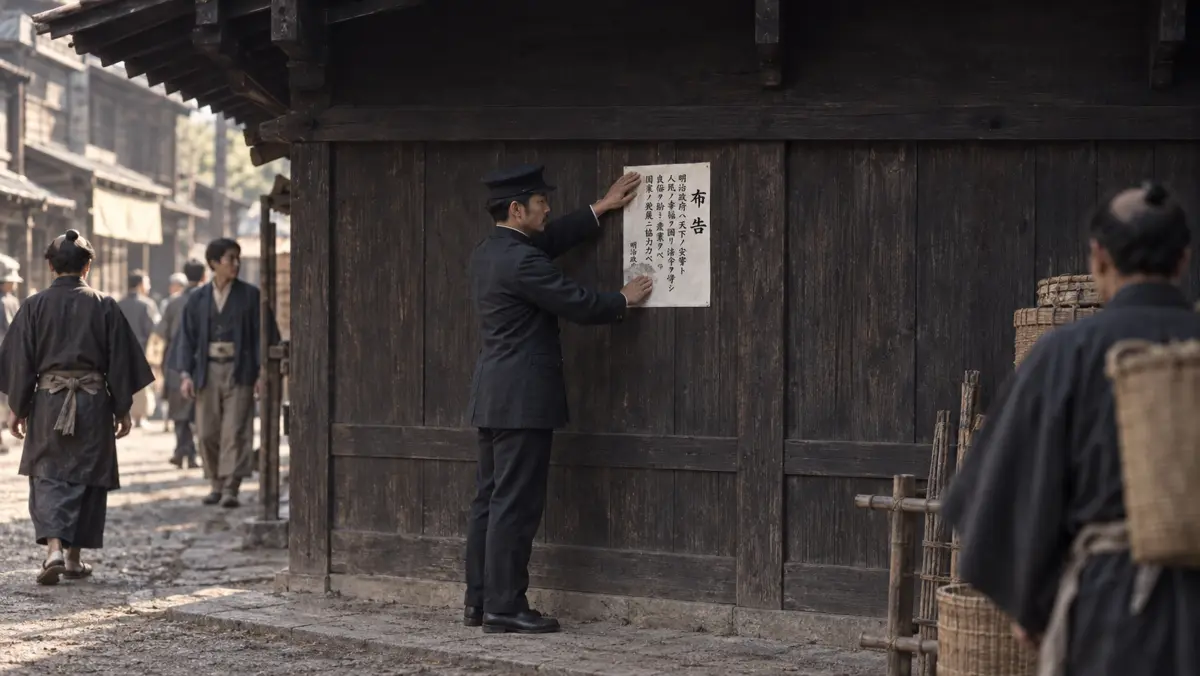
In 1872, Tokyo banned tattooing, in the same set of rules that banned going naked in the street. Part of the reason was an old idea that your body came from your parents and should not be marked. Part of it was how Japan looked to Western visitors. Similar rules spread across the country and passed into national law. Indigenous traditions were targeted too. A year earlier, the government's Hokkaido office had already forbidden tattooing Ainu girls born from then on. Later, in Okinawa, the hajichi hand tattoos worn by women were banned too.
Princes With Dragons
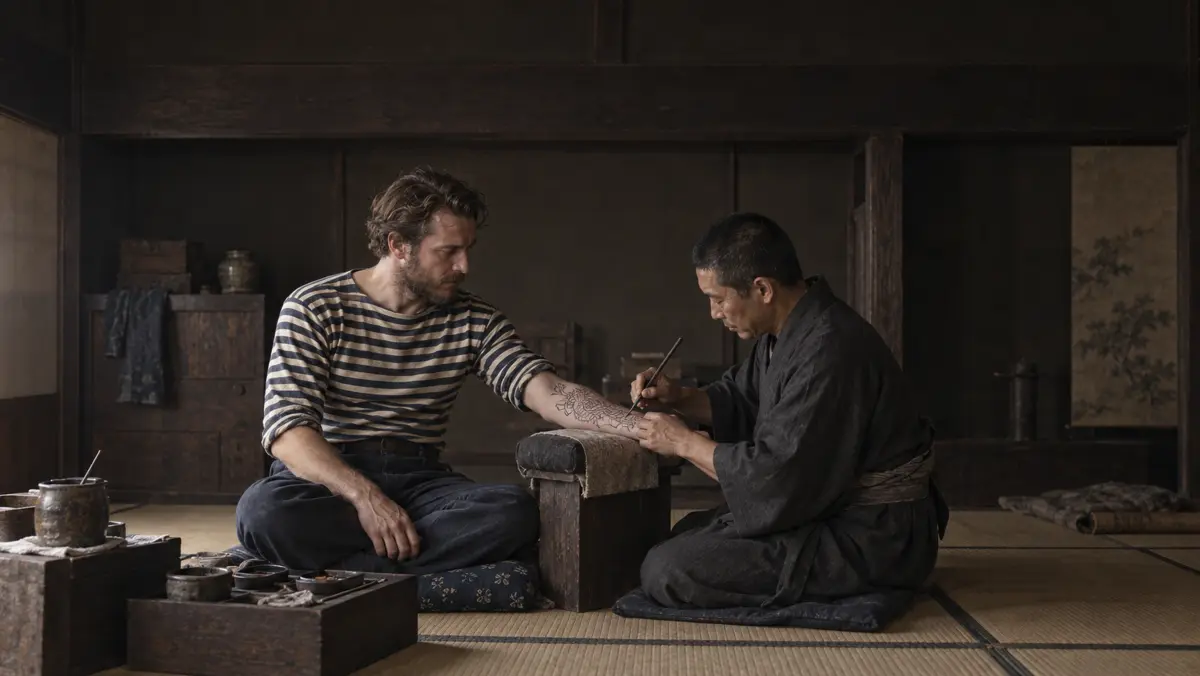
Yet the tattooists did not disappear. They found new customers among foreign visitors. In 1881, two teenage British princes on a navy training voyage were tattooed in Japan. One of them, the future King George the Fifth, received a dragon in blue and red down his arm. He wrote that the needles did not hurt at all. Although, he added, this varies with different people. Ten years later, the future last tsar of Russia was reported to have a dragon tattooed on his arm in Nagasaki.
How the Ban Ended
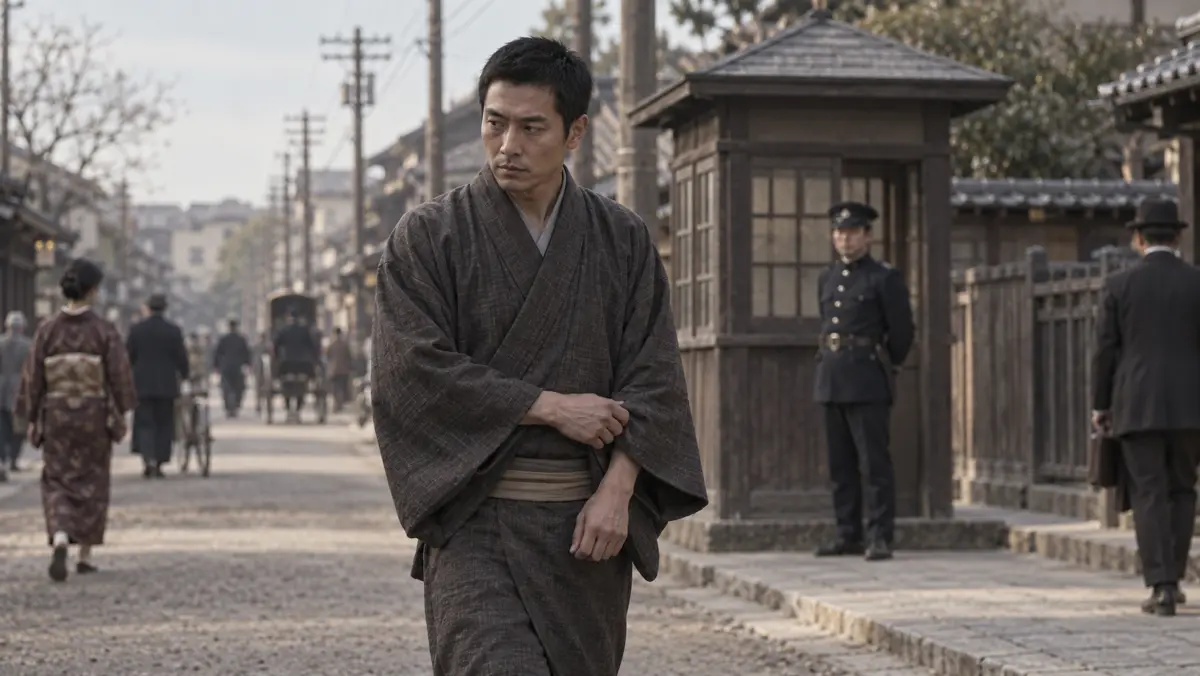
For Japanese customers, the rule stayed. Years later, George's son, the future King Edward the Eighth, hoped to be tattooed on his visit. Official restrictions stopped him. His father had come home with a dragon. Then, in 1948, the old police rules were abolished, and the new Minor Offenses Act contained no ban on tattooing. The modern legal ban ended not with an announcement, but with an omission.
The Gangster Image
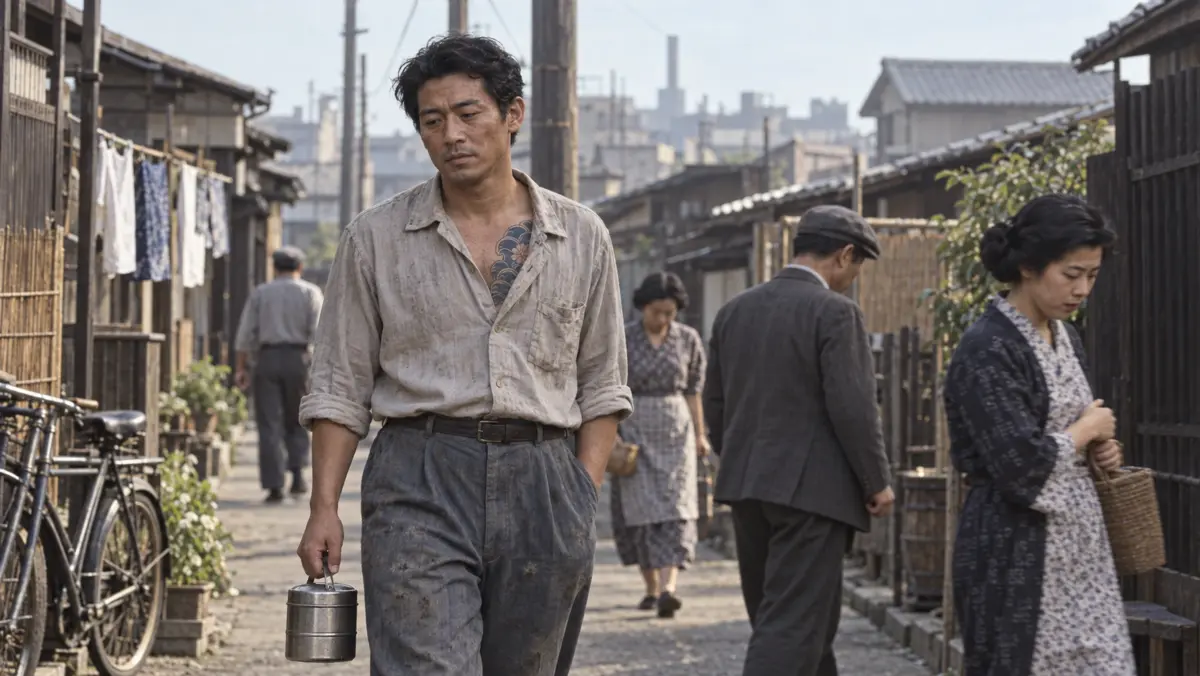
Legal did not mean accepted. After the war, full-body tattoos were most visible on one group in particular: gamblers and gangsters. From 1963, a wave of yakuza films made the tattooed back a costume of the screen gangster. For many people in Japan who had never met one, that was the image. Firefighters, festival carriers and craftsmen still wore tattoos. Fewer people noticed them.
Why the Signs Spread
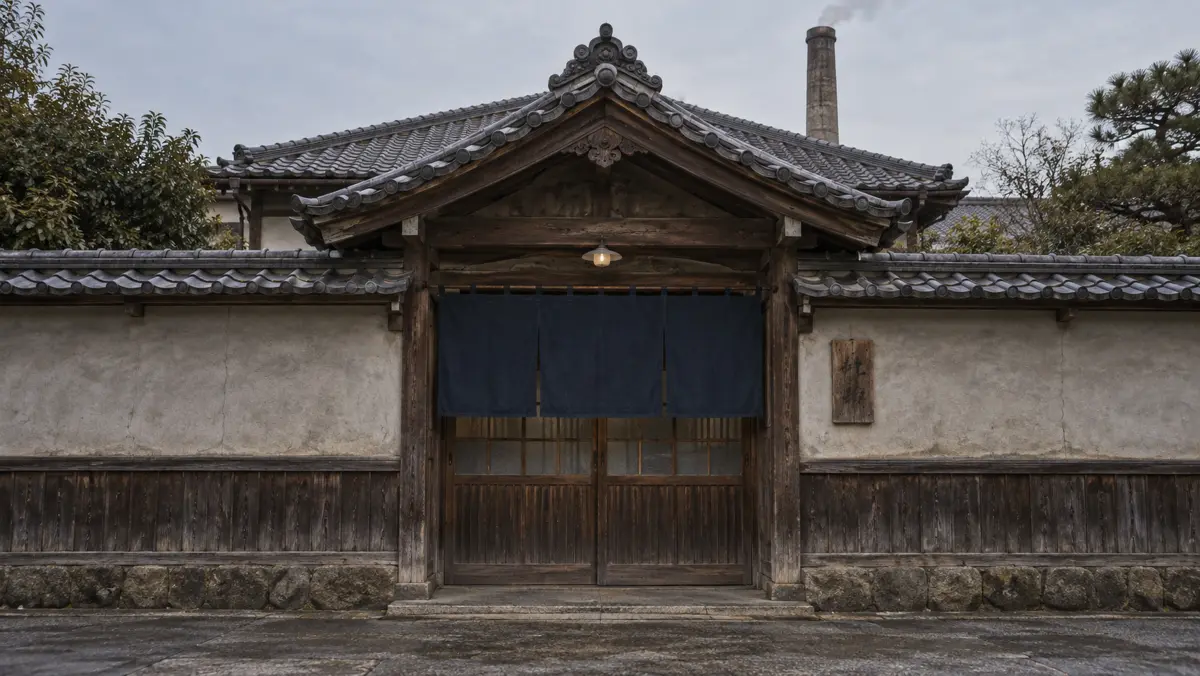
Some baths were already refusing tattooed guests long before the 1990s. But in 1992, a new law targeted organized crime groups, and researchers note that the signs then spread far more widely, to baths, pools and gyms. For many, the aim was to keep gangsters out without having to ask anyone who they were. A sign cannot ask what your tattoo means. So it asks no one.
If you visit
Visiting a hot spring with tattoos
Now the door is moving again. In most Japanese communal baths, bathers go nude, so there is nothing to hide a tattoo under. The agency's guidance suggests letting guests in if they cover small tattoos with a sticker, or offering private baths. Before the Rugby World Cup in 2019, players were advised to cover tattoos where local rules required it, and some covered up at hot springs. Some baths now keep cover stickers at the front desk. In that 2015 survey, thirty-one percent did not refuse tattooed guests, and another thirteen percent let them in under conditions. A sign cannot ask. You can. For our firefighter, inked from neck to knee, there may still be a private bath.
Enjoyed the story? Sophie answers a new question about Japan every few days on YouTube.
Subscribe on YouTube

