 Why Japan?
Why Do Japanese Gas Stations Treat Your Car Like a Guest?
 Told by Sophie, your guide to Japan
Why do Japanese gas stations treat your car like a guest? At a full-service station in Japan, attendants may guide you in, wipe your windows, hand you a towel for the dashboard and take your trash. The strange part: America once had something very like it, and gave it up to save five cents.
The full story
In this story
Waved In, Wiped Down
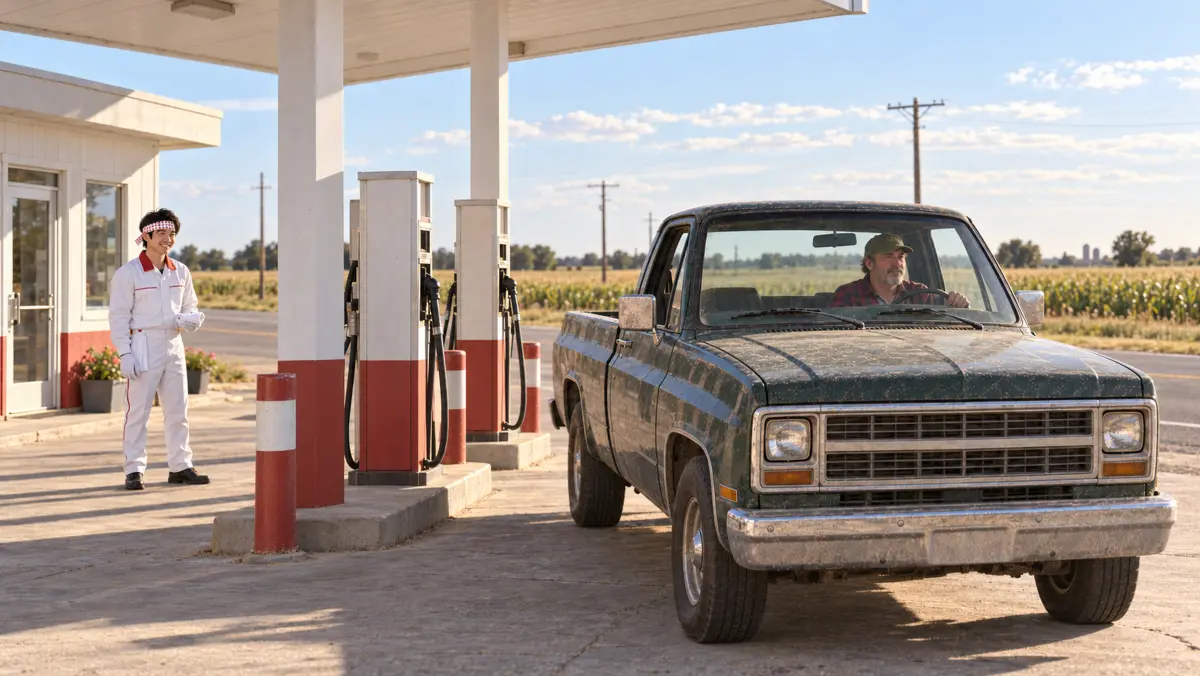
Picture a gas station off a highway in the American Midwest. A driver pulls in and reaches for his door. Before he can open it, a new attendant is running toward the car. His name is Kenji. He started on Monday. He wipes the windshield, then the side windows, then the back. The driver locks the doors. Then, carefully, he lowers his window two inches. Kenji passes a damp towel through the gap, with both hands. It is for the dashboard. Then he asks if there is any trash he can take. Pull into one today, and it can start before you have stopped. Someone waves you in, calling ōrai, ōrai, all right, all right, until your bumper is exactly where they want it. The staff call out a welcome. One takes your order through the window. Another is already on the glass.
What Do I Do With My Hands?
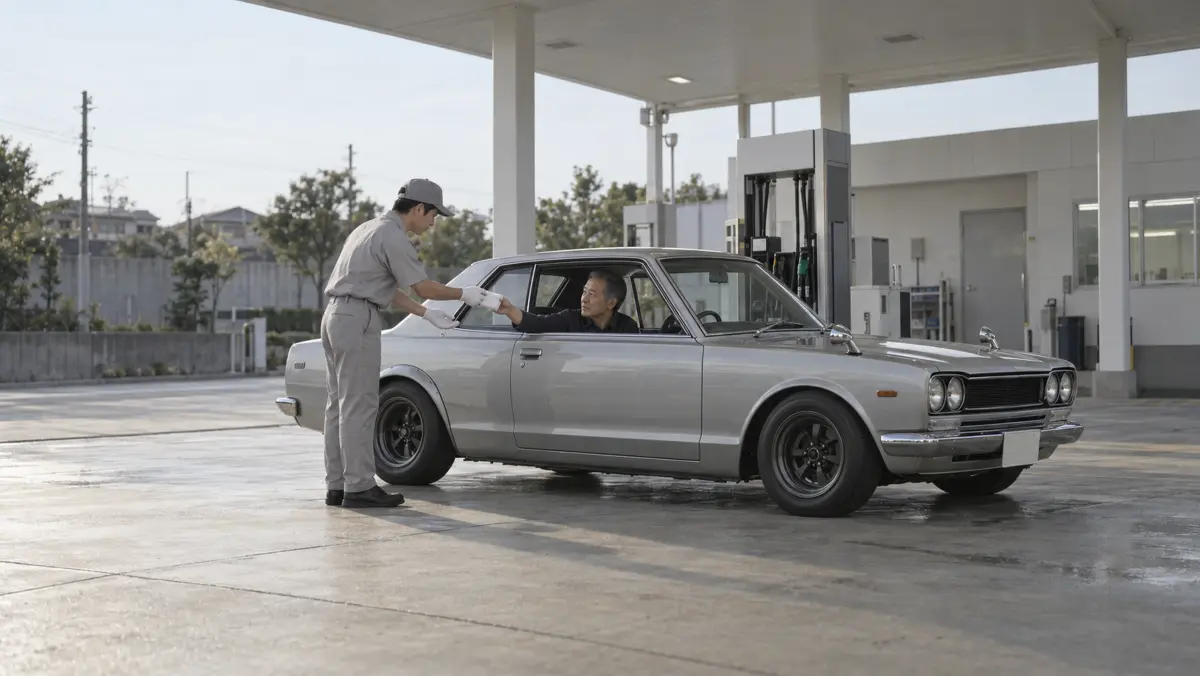
Then comes the towel, and the question about trash. Not every station does all of it. But anyone who has rented a car in Japan and pulled into a good one knows the small panic. What am I supposed to do with my hands? Nothing. And the bill? Back in 1998, a Los Angeles Times report described one fill-up in Tokyo: the tank filled, the windows washed, the ashtray emptied, the fluids checked. Next to self-service, it said, that cost dimes more per tank at most.
Hoses From the Ceiling
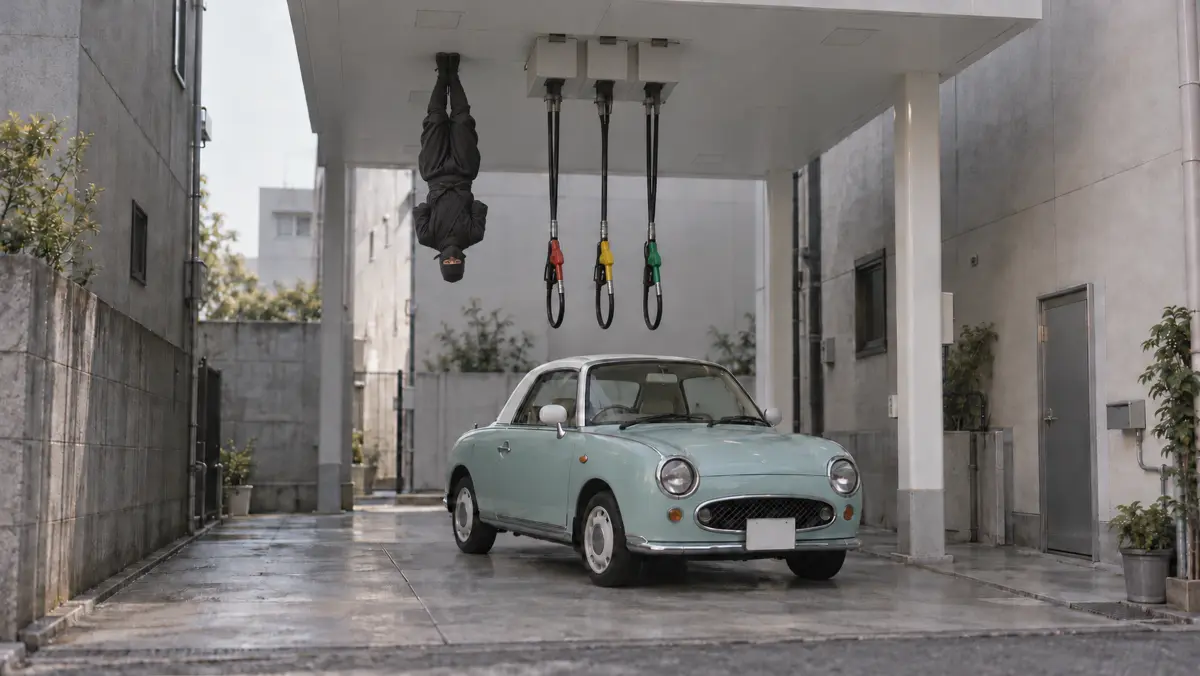
Look up, and it gets stranger. At some city stations, the hoses hang from the roof. The system was developed in Japan, and first sold in 1963, for narrow lots. Leaving has a ritual too. That same report describes an attendant stepping into a busy street to halt the traffic, so that a customer could pull out. Back in the Midwest, the driver has unlocked his door. He holds out five dollars. Kenji politely declines, and wipes the mirrors. The driver offers twenty. Kenji does the headlights. The driver takes off his watch.
When America Had This
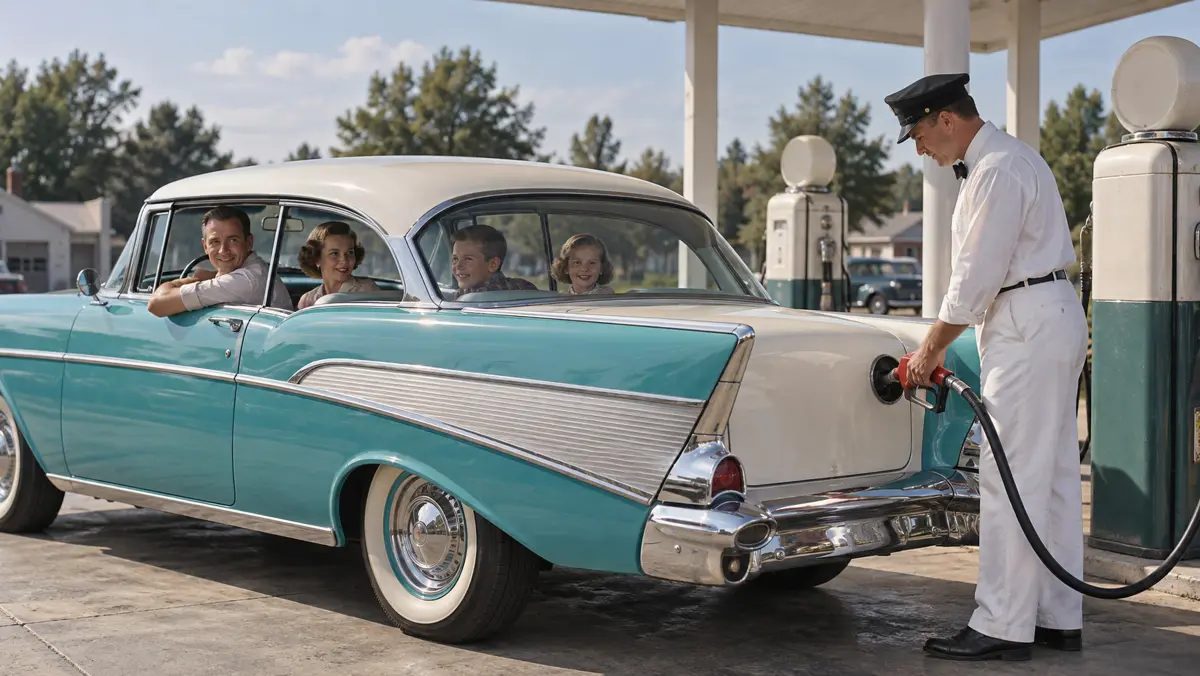
For decades, this was American. Stations there set themselves apart with service. An attendant filled the tank, washed the windshield and checked the oil, and the driver stayed in the seat. In much of the country, fire codes did not allow self-service. In 1947, a man named Frank Urich opened a station in Los Angeles where drivers served themselves. His slogan was blunt. Save five cents, serve yourself, why pay more?
Five Cents
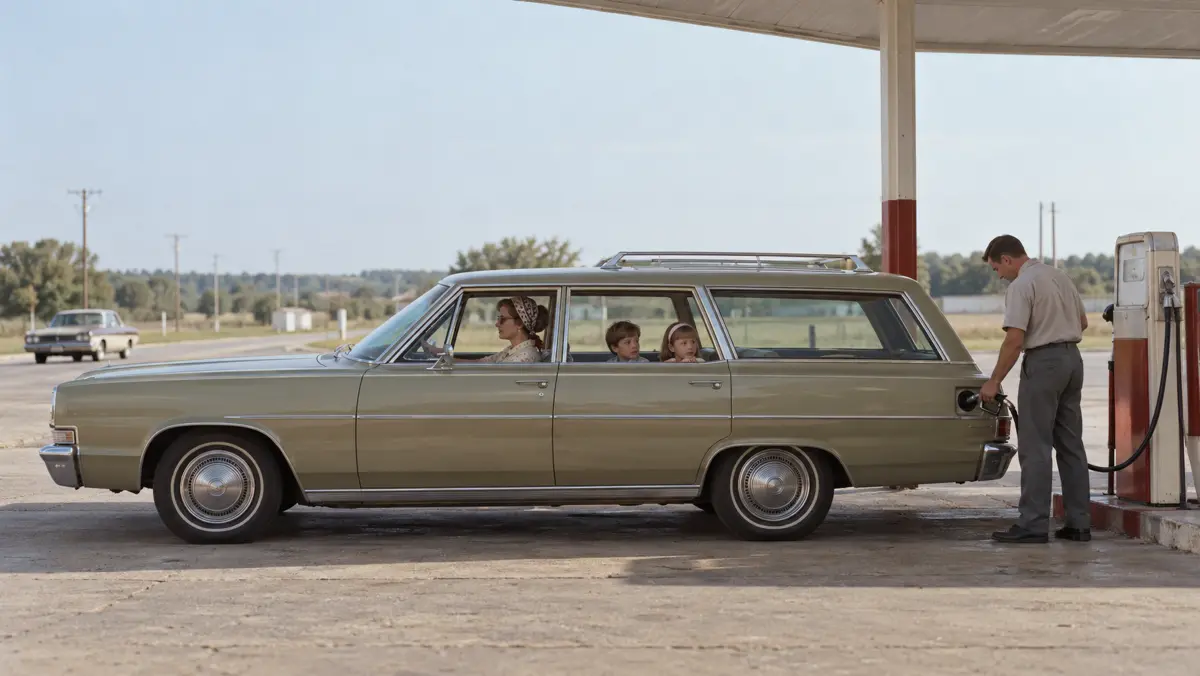
It caught on slowly. About twenty years later, nearly half the states still banned it. Then came the oil embargo of 1973. The price of oil rose nearly fourfold, and the slow shift became a fast one. Suddenly, five cents mattered. Full service did not vanish, but it thinned out, year after year. What many stations left by the pump was a bucket and a squeegee. You know the bucket.
The One State That Never Changed
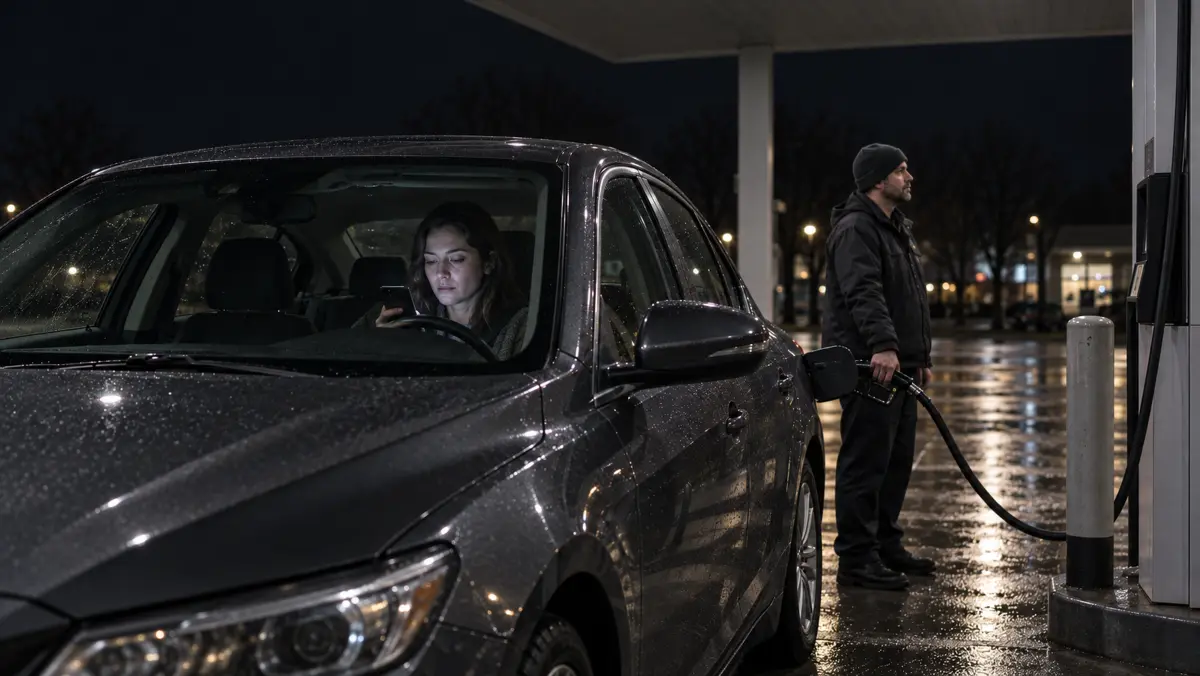
One state never changed its mind. New Jersey has banned self-service since 1949, and today it is the only state that still does. Oregon kept its ban in its busiest counties until 2023. But the New Jersey law only says who pumps the gas. The towel is not included.
Until April 1998
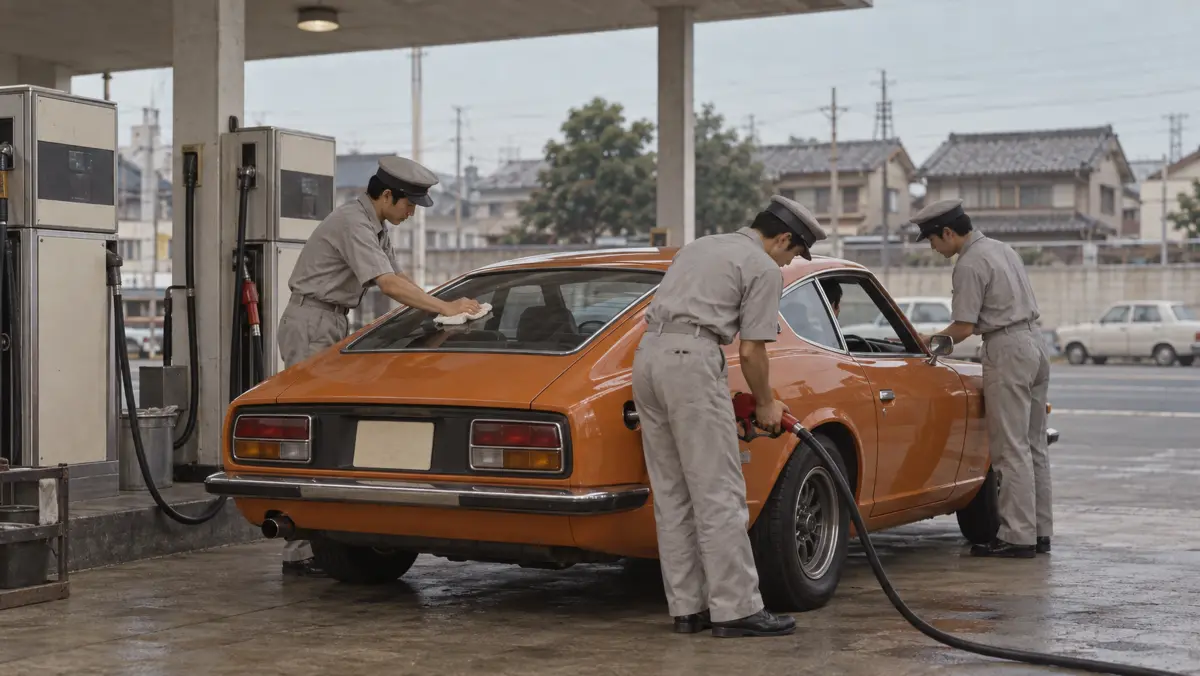
In Japan, for decades, pumping your own was not on offer. Japan's fire rules assumed that trained staff would handle the fuel. A driver holding the nozzle was simply not part of the plan. That changed on April first, 1998. Until that morning, the person filling your tank in Japan was an employee. Which explains the worker at your window. It does not explain the towel.
What the Towel Is For
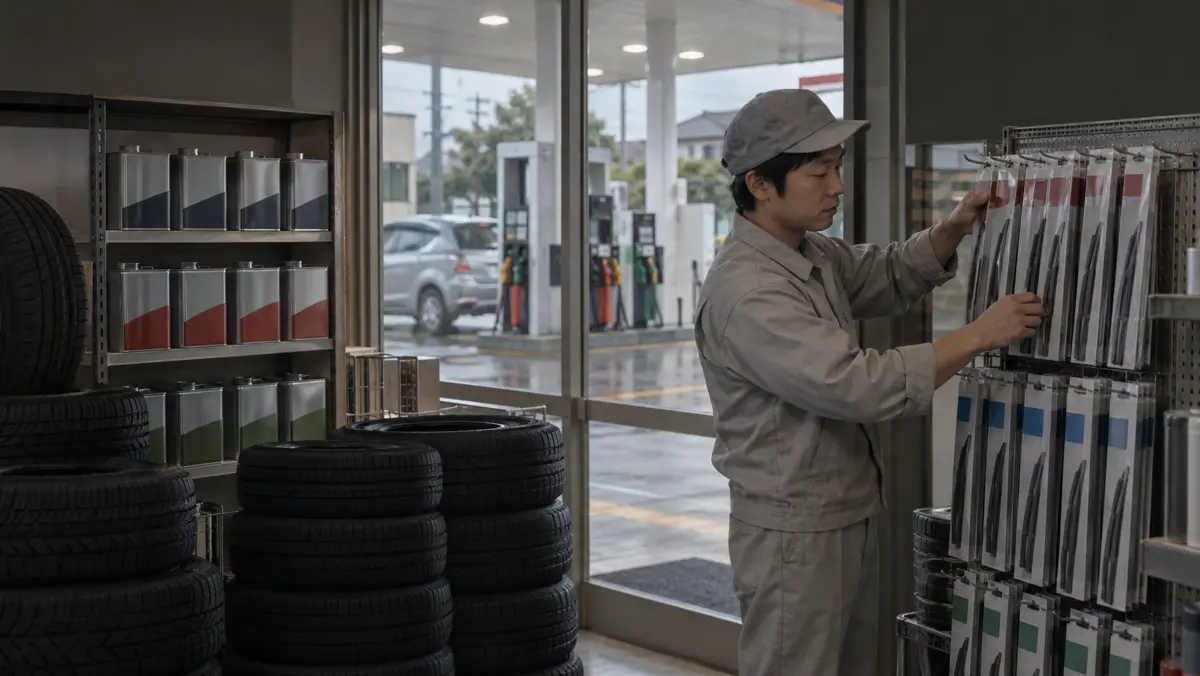
For the towel, look at what a gas station sells. Fuel is hard to tell apart, and the price war is fierce. So many stations also earn from car washes, oil, tires and wipers. A former attendant, writing for a Japanese car site, explained what he was doing at the glass. Through the cloth, he could feel how often a car was washed. He was also reading the sticker on the windshield that shows when the car's inspection is due. At some stations, the free check can double as a sales call. The kindness is real. Sometimes, so is the pitch. Back in the Midwest, Kenji has no pitch. The driver is still holding out his watch. Kenji checks the tires. All four. Then the spare.
Sixty Thousand Stations
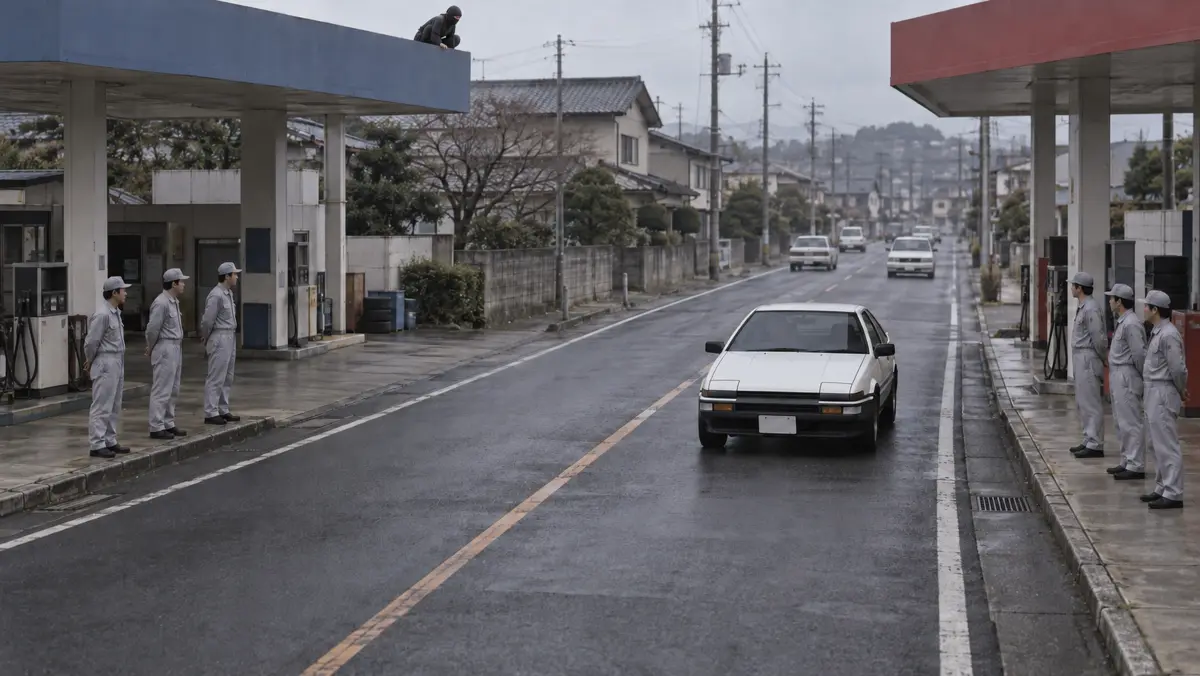
Fuel that is hard to tell apart, and an attendant at every fill-up. In the mid 1990s, Japan had more than sixty thousand gas stations. At some of them, the extras went a long way. Tires were scrubbed. Ashtrays were emptied. Even now, some stations hand out boxes of tissues as a promotion. And at some, an attendant sees you out to the road, and finishes with a bow. Kenji finds the highway backed up, and his customer cannot get out. So he walks to the edge of the road and raises one hand. An eighteen-wheeler stops and leaves a gap. The pickup slips into the line. Kenji turns to the truck and bows, and he stays down. Two cars back, a state trooper is watching. He pulls in. So does the eighteen-wheeler.
Japan Tries Self-Service
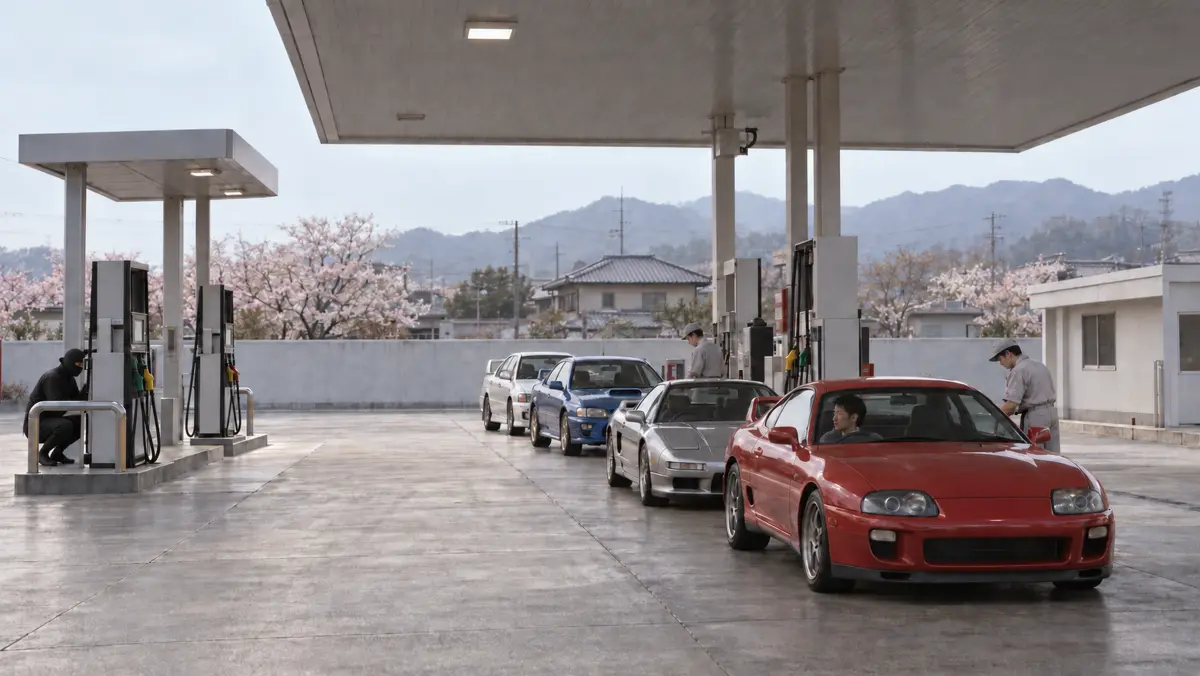
At first, almost nothing changed. Weeks after self-service became legal, only a handful of stations had converted. One driver at a new self-service station said she was afraid she would set the place on fire. Before, she pointed out, you did not even have to get out of the car. But the stations themselves were closing. Japan is now down to about twenty-six thousand, fewer than half the peak. The latest count put self-service at about four in ten. Everywhere else, an attendant still fills the tank. How much else you get depends on the station.
Someone Is Watching the Pump
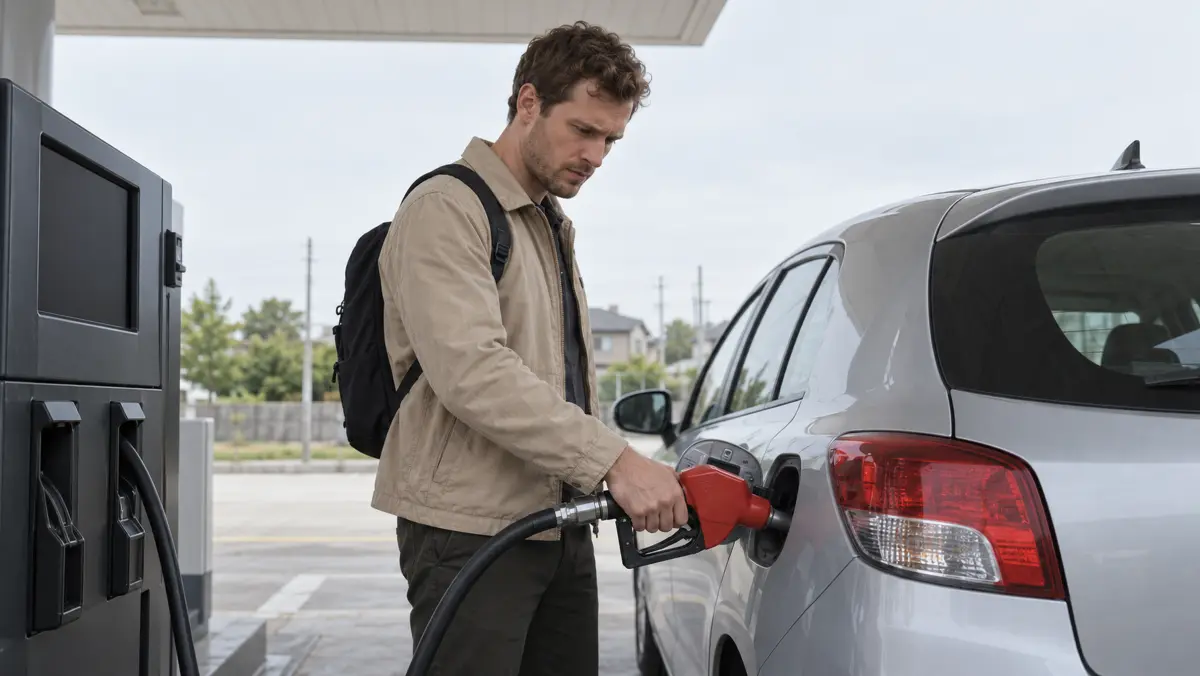
Even at a self-service station in Japan, you are not quite alone. For years, the fuel would not flow until a member of staff had checked on you and pressed a button. Car after car. Since 2026, at some stations, an A.I. system can give that permission, with staff ready to step in. Japan let drivers hold the nozzle. It kept an eye on them.
If you visit
How to fill up in Japan
So, if you rent a car in Japan, here is the whole fill-up. Start with the colors. Red is regular, yellow is high-octane, green is diesel. Most rental cars take regular, but ask when you pick up the car. With an attendant, two words will do: regular, mantan. Mantan means a full tank. At self-service, switch off the engine. The screen comes first: payment, fuel, amount. Then touch the static pad before you open the cap. If nothing comes out, give it a moment. You may be waiting for approval. If it still will not flow, wave to the staff. And keep the receipt. Some rental companies ask to see it. Back in the Midwest, the first driver has returned. His tank is already full. This time, the window goes all the way down. He hands Kenji a small bag of trash, neatly sorted. Kenji takes it with both hands. The driver goes home with a box of tissues.
Enjoyed the story? Sophie answers a new question about Japan every few days on YouTube.
Subscribe on YouTube

