 Why Japan?
Why Do Japanese Sit on the Floor Like That?
 Told by Sophie, your guide to Japan
Ten minutes of kneeling and your legs are gone — so why does Japan sit like this? Sophie looks at the old pictures (almost nobody kneels), the clothes that made it impossible, the Tokugawa hall where every lord knelt facing one man, the floor that had to arrive first, the tea room, the schools — and how to sit when it’s your turn.
The full story
In this story
- Twenty Minutes at a Japanese Inn
- The Clothes Give It Away
- A Warrior Cannot Sit Like That
- Gods, Buddhas, and the Shogun
- Every Lord in the Country
- The Legs Were the Point
- The Floor Had to Arrive First
- The Tea Room Finished It
- When the Shogun Stopped Existing
- A Proper Way to Sit
- Fossils in the Sword Schools
- What Actually Changed
- The Next Evening: How to Sit
Twenty Minutes at a Japanese Inn
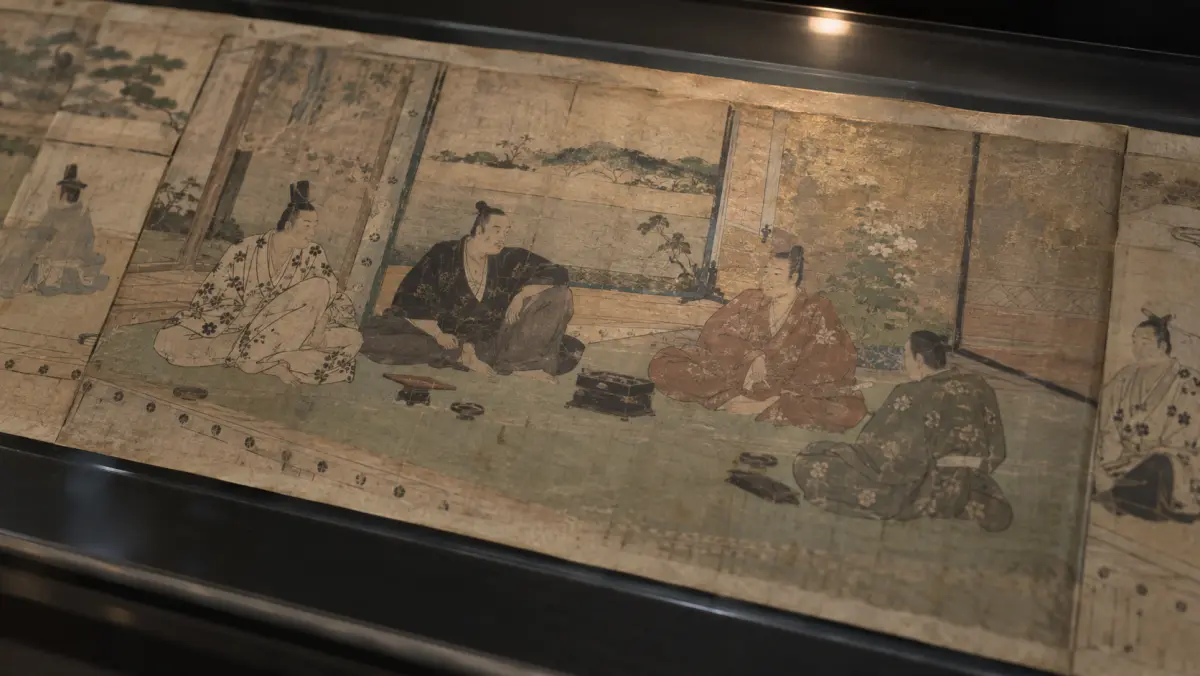
Dinner at a Japanese inn. A visitor has been kneeling for twenty minutes, because the woman beside him is. She is eighty-three. Only one of them will stand up quickly. Start with the pictures. Scrolls, screens, temple paintings, anything made before the seventeenth century. Find the people sitting down. Nobles, warriors, farmers, women, priests. Almost nobody is kneeling. They are cross-legged, or up on one knee, or sitting back on their heels for a moment before moving again. The formal kneel is close to impossible to find in Japanese art until the Edo period. Not rare. Absent.
The Clothes Give It Away
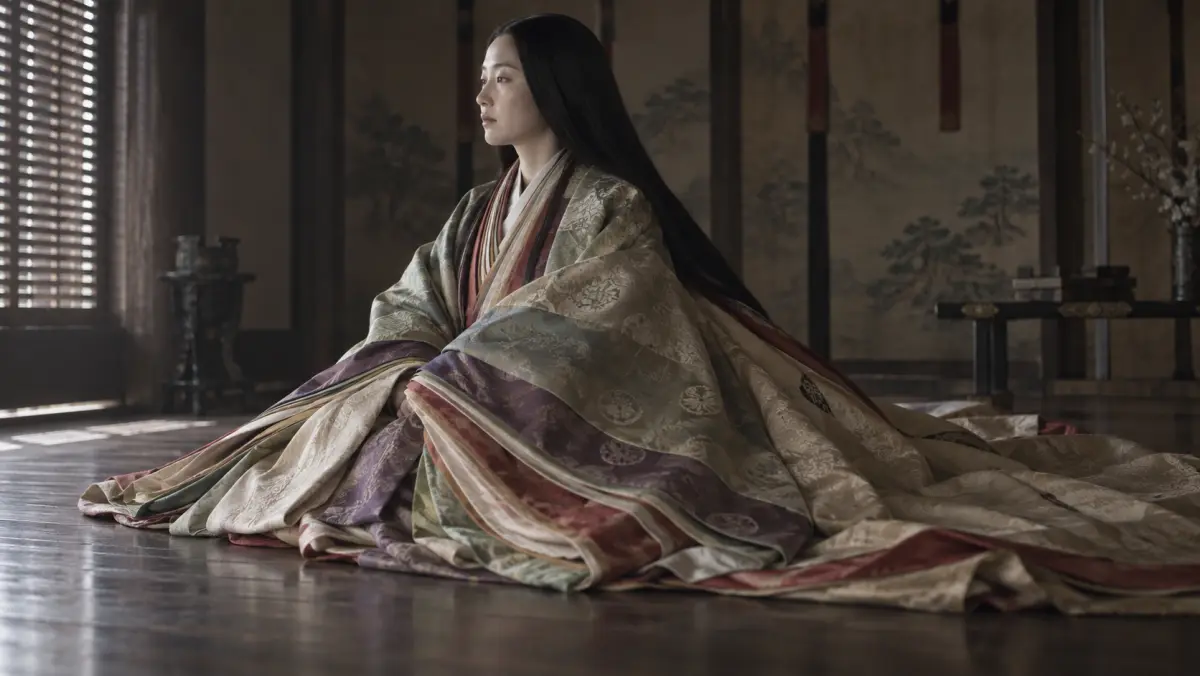
If you doubt the pictures, look at the clothes. Court dress from the Heian period was cut wide and heavy below the waist. The twelve layered robes a noblewoman wore could weigh twenty kilograms. A priest's outer robe was built the same way, generous through the hips and the knees. You cannot fold yourself into a neat kneel inside a garment shaped like that, and nobody was trying to. The clothes were made for crossed legs.
A Warrior Cannot Sit Like That
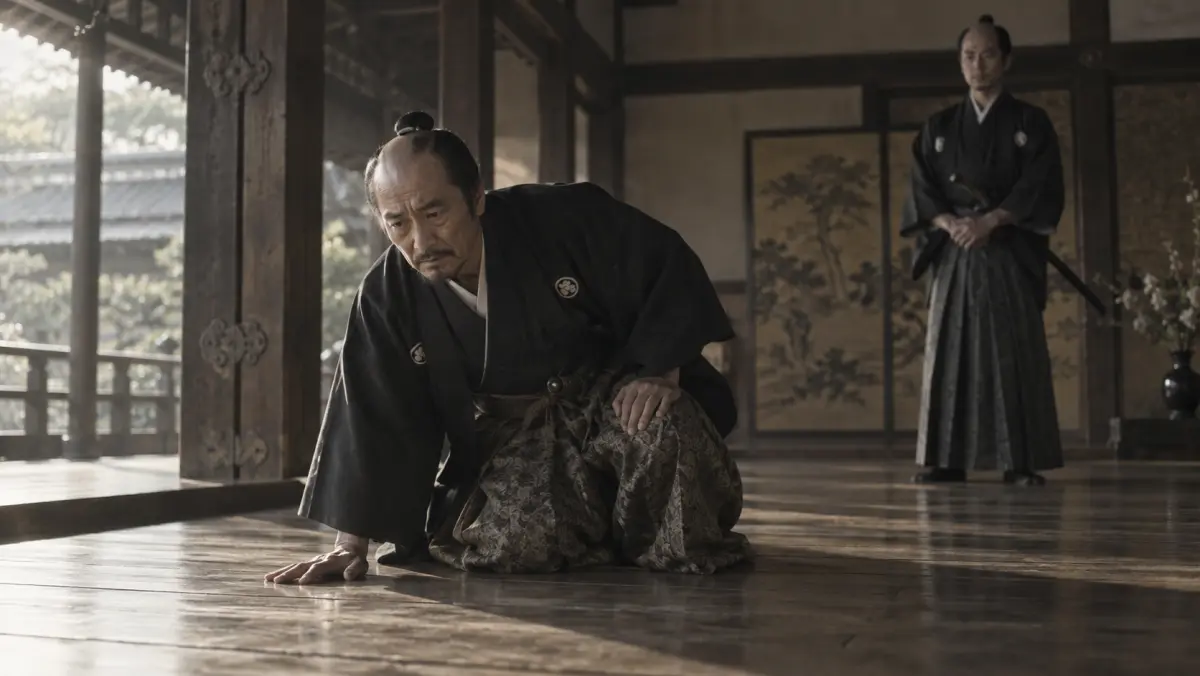
For a warrior there was a further problem, and our visitor is about to meet it. Kneel for a while and you cannot stand up. Not immediately. Not well. A man whose entire work was to be ready did not sit in a way that took ten seconds to undo. Through the warring centuries, samurai sat cross-legged, or on one raised knee, or in a low crouch with the weight already forward. Every one of those gets you to your feet in a single movement.
Gods, Buddhas, and the Shogun
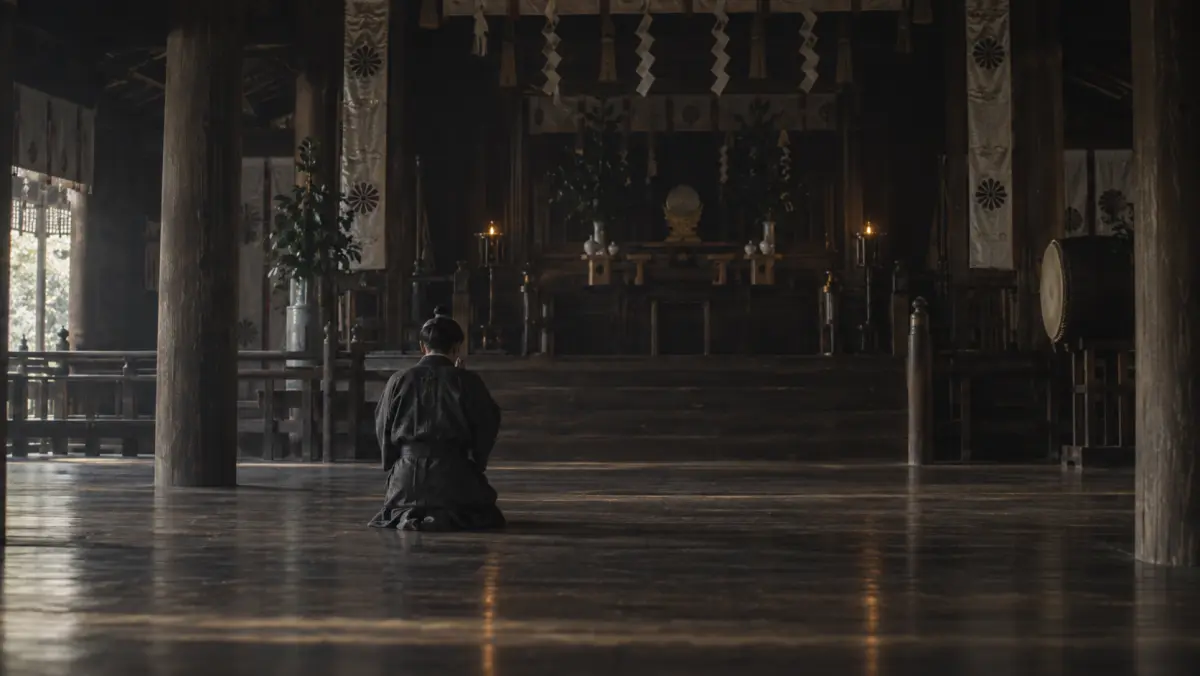
So the posture existed. It simply was not for sitting. You knelt in front of a god. You knelt in front of a Buddha. And you knelt in front of the shogun. It was a body saying, I am lower than the thing in front of me. Outside those moments, people sat however they liked.
Every Lord in the Country
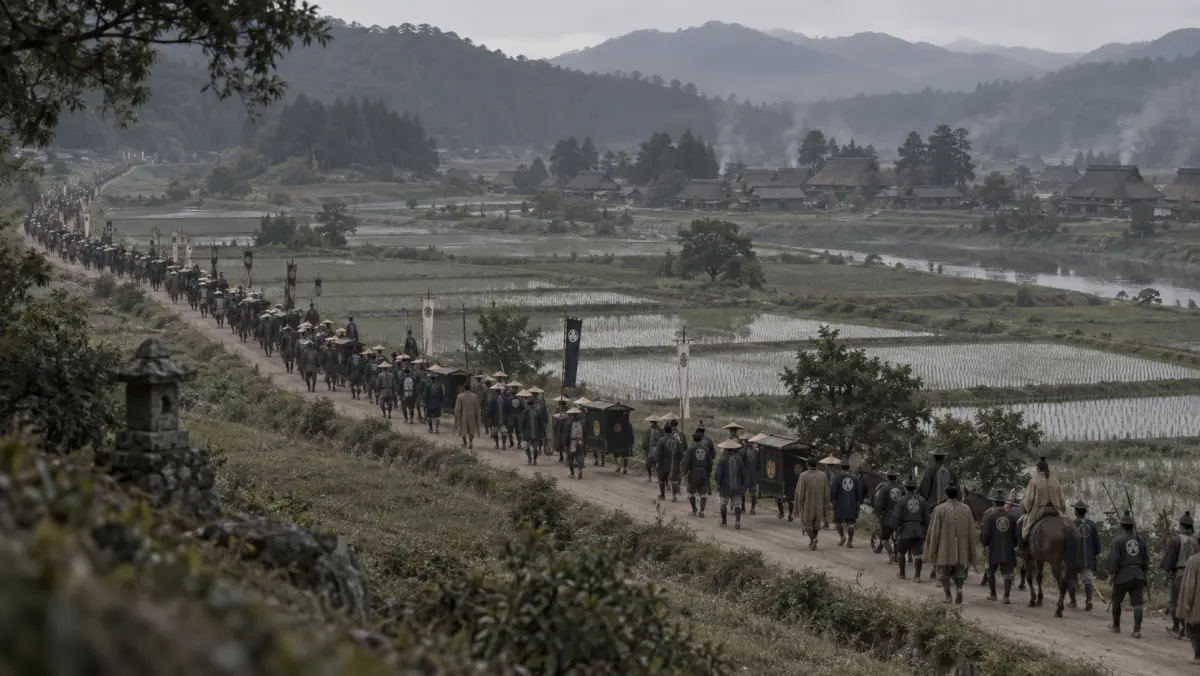
Then the Tokugawa came, and they had a problem. Two hundred and sixty domains, each with a lord, each with an army, and a peace that had to hold. Their answer was to bring the lords to the capital, in rotation, for the rest of their lives. And in the receiving hall, the new government took up a school of etiquette and set down how a lord would sit while facing the shogun. Every lord in the country. The same posture. Facing one man.
The Legs Were the Point
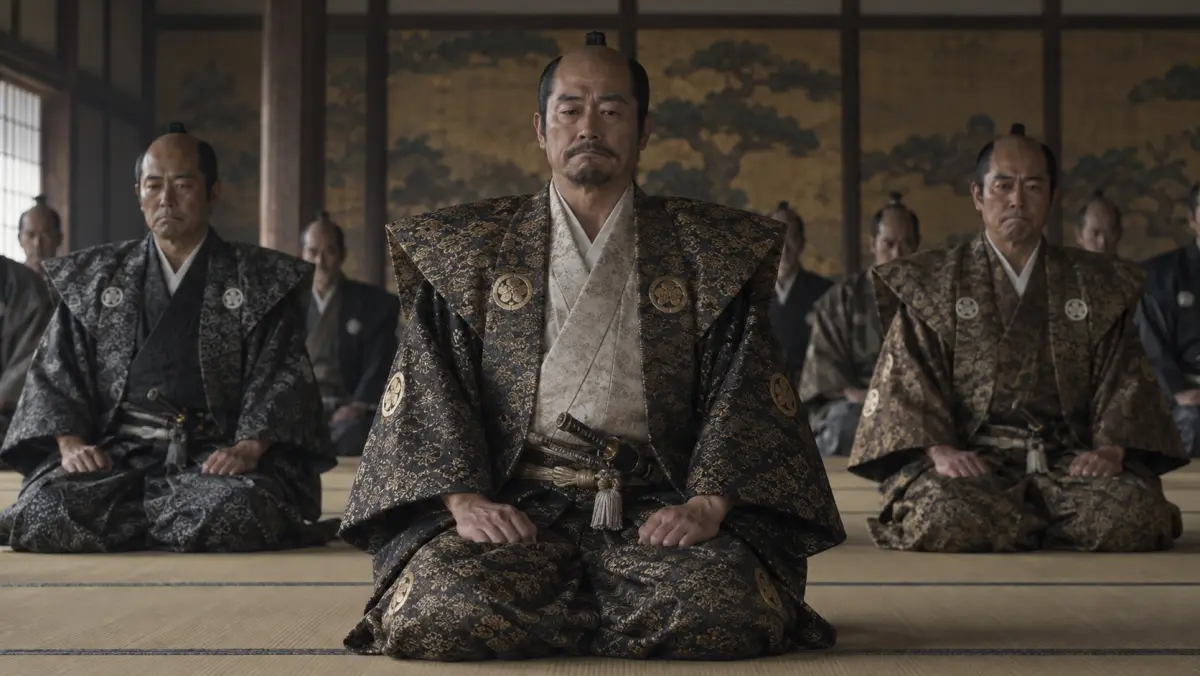
The reason usually given for that choice is hard to believe. Kneel long enough and your legs go. You cannot rise quickly, you cannot draw quickly, you cannot do anything quickly. A hall full of armed men, most of whom had been enemies within living memory, sitting in the one posture that makes a sudden movement impossible. The discomfort was not the price of the ritual. The discomfort was the ritual. Then the lords went home, and took it with them.
The Floor Had to Arrive First
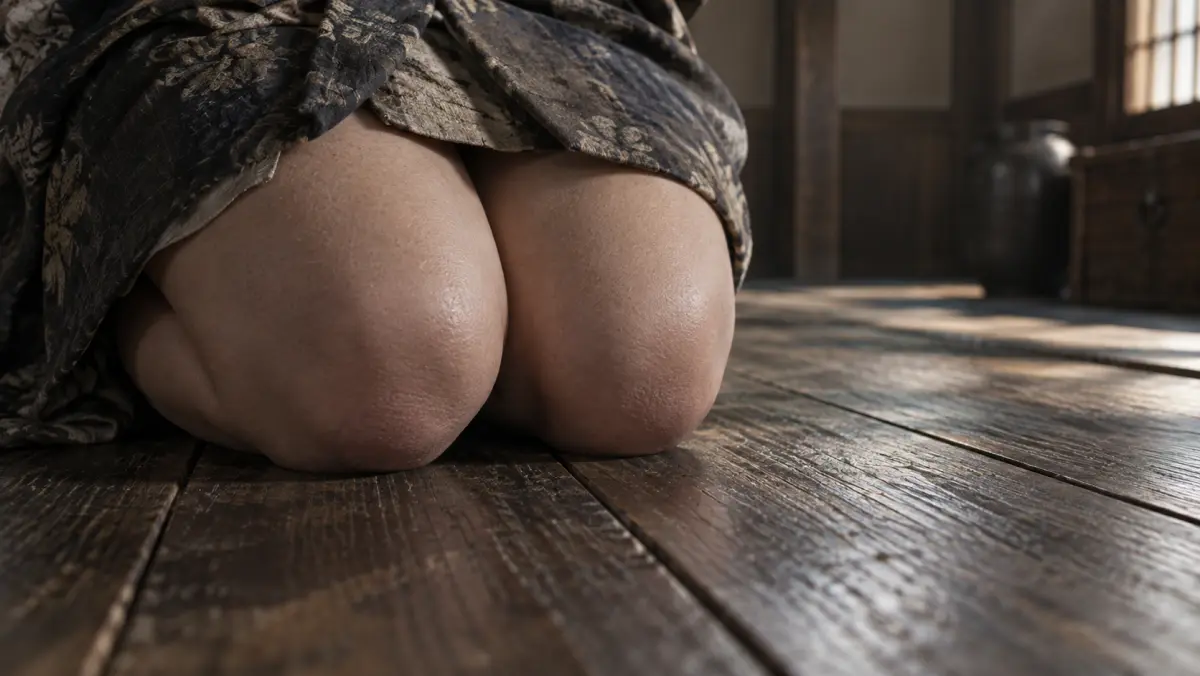
There is a reason none of this could have happened earlier, and it is underneath everybody. You can kneel on a wooden floor. Not for an hour, and not every day. Tatami changes the arithmetic. Woven mats had existed for centuries as something you put down for an important person, in one spot, and took away again. It was the Edo period that saw them fitted wall to wall in ordinary houses. The floor had to arrive before the habit could.
The Tea Room Finished It
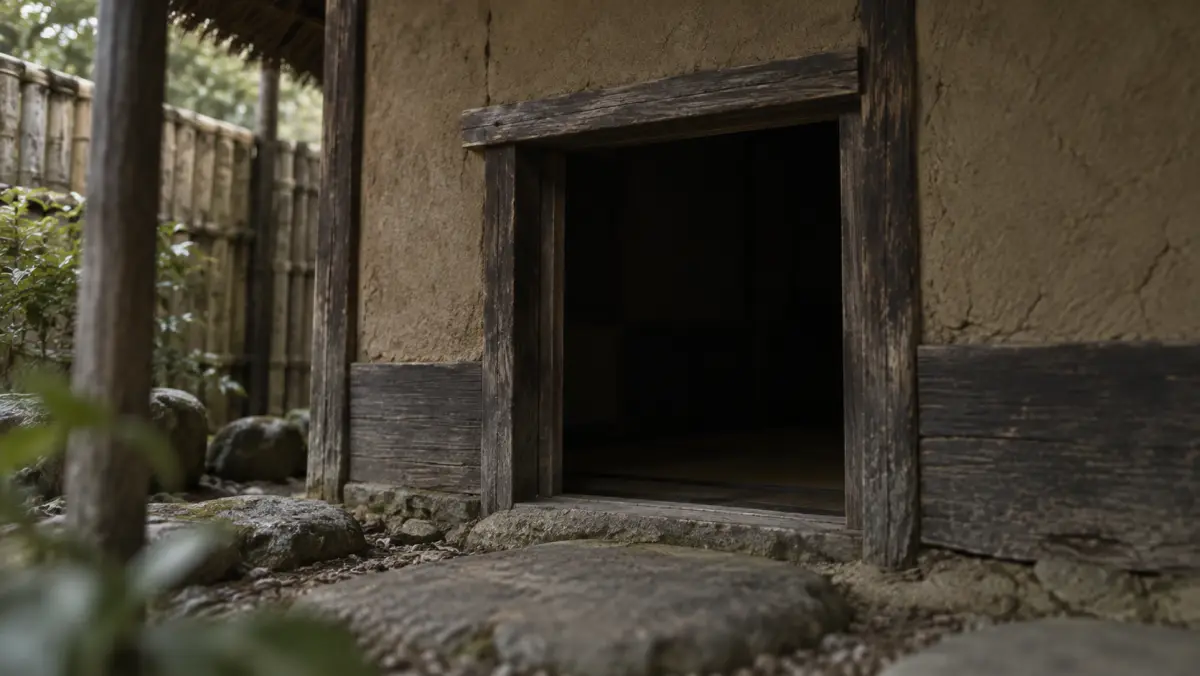
Then came the tea room. A tea room is small, and matted, and slow. People are close together, and nobody is going anywhere for an hour. By the middle of the Edo period, kneeling was understood as the correct way to sit through a gathering, and it spread through teachers and students and their students. A posture that had belonged to castles moved into rooms that ordinary people could walk into.
When the Shogun Stopped Existing
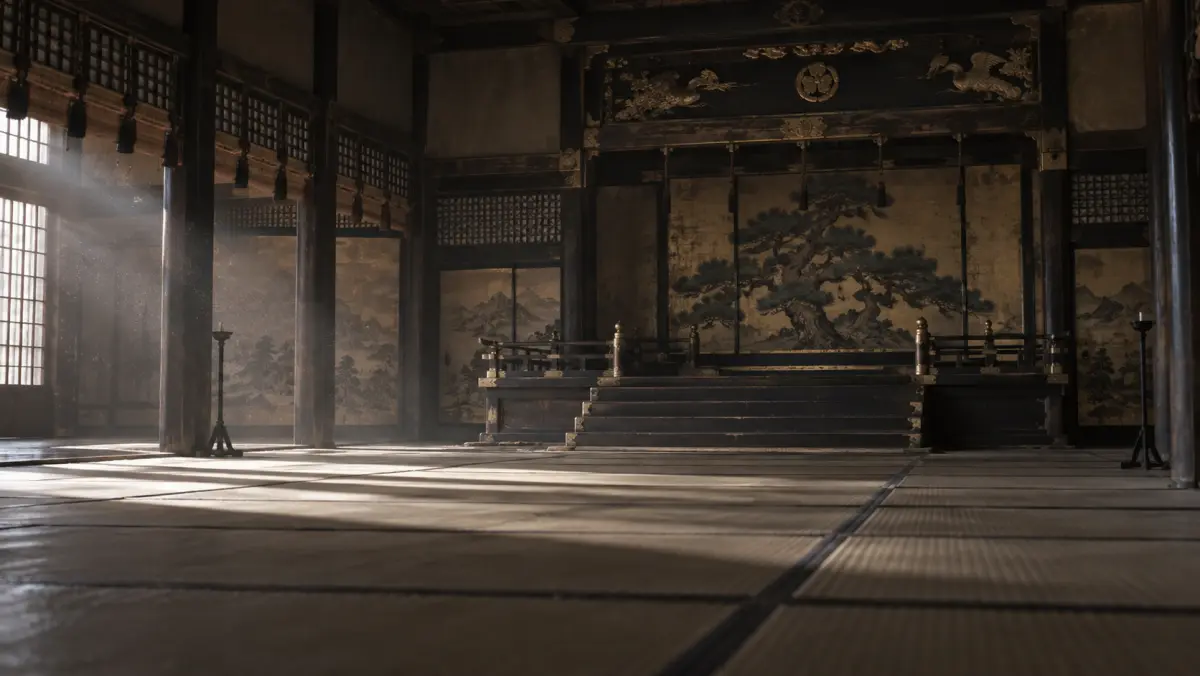
Then, in 1868, the shogun stopped existing. The lords lost their domains. The class system was dissolved, and warrior etiquette was supposed to go with it. What actually happened is stranger. The old court manner did not disappear. With the ranks gone, one form of politeness was left standing for everybody, and the way a lord had knelt in front of his shogun became the way anyone knelt in front of anyone.
A Proper Way to Sit
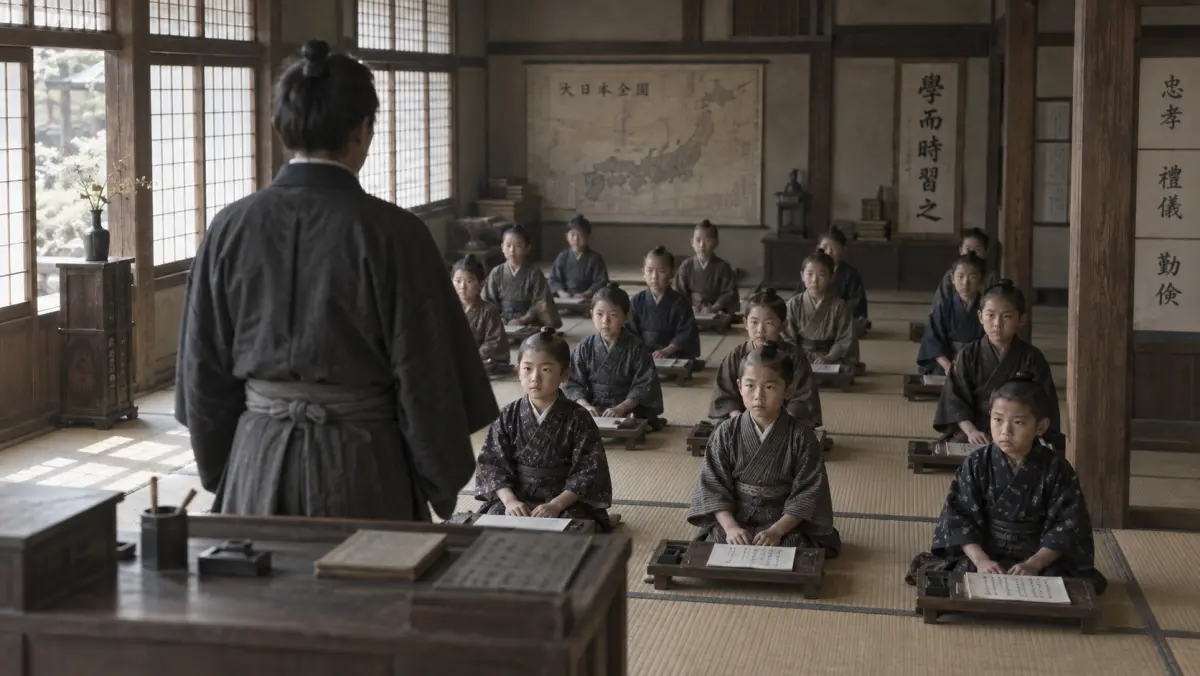
The schools standardised it. In a country busy deciding what was Japanese and what was foreign, how a Japanese person ought to sit was something that could be taught. And it was. Within a generation it was no longer one option among several. It was the way. Tea schools that had allowed crossed legs settled on kneeling. Now there was a proper way to sit. Which meant there was a wrong one.
Fossils in the Sword Schools
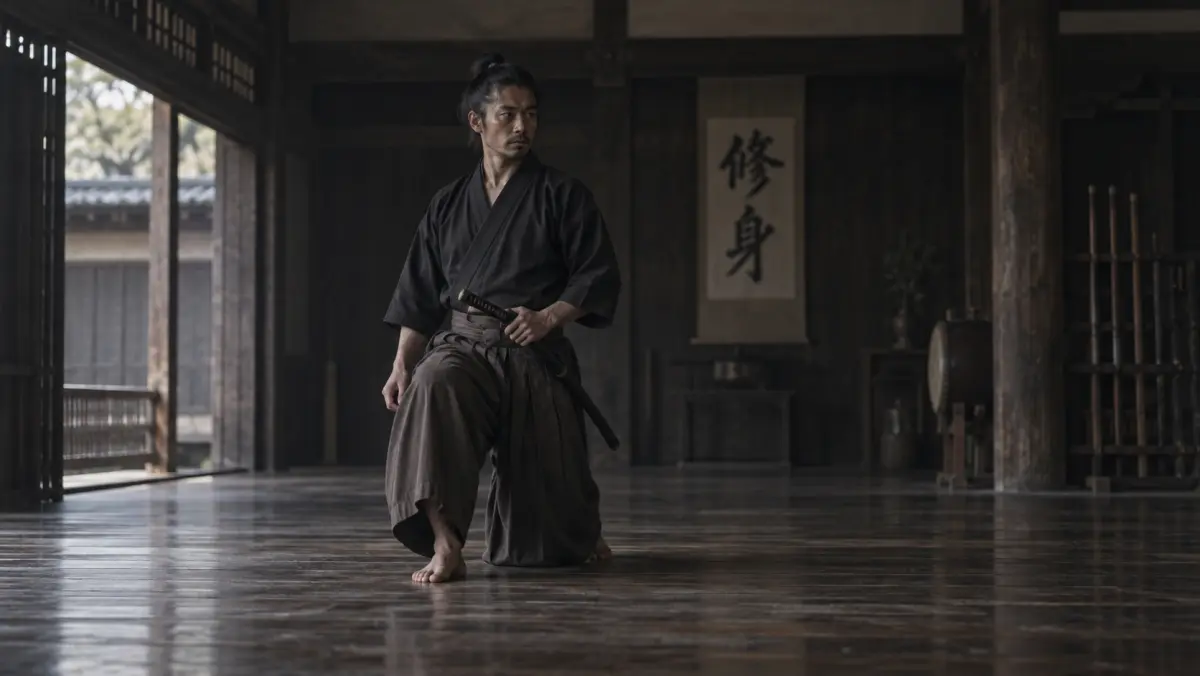
If you want to see the seam, look at sword schools. The old martial traditions teach techniques that begin from the floor, and each school keeps whatever posture it was founded with. Schools that began before or around the start of the Edo period start from a raised knee, or a crouch, the weight already forward. Schools founded from the middle of that period onward start from the kneel. The date of founding is preserved in the legs.
What Actually Changed
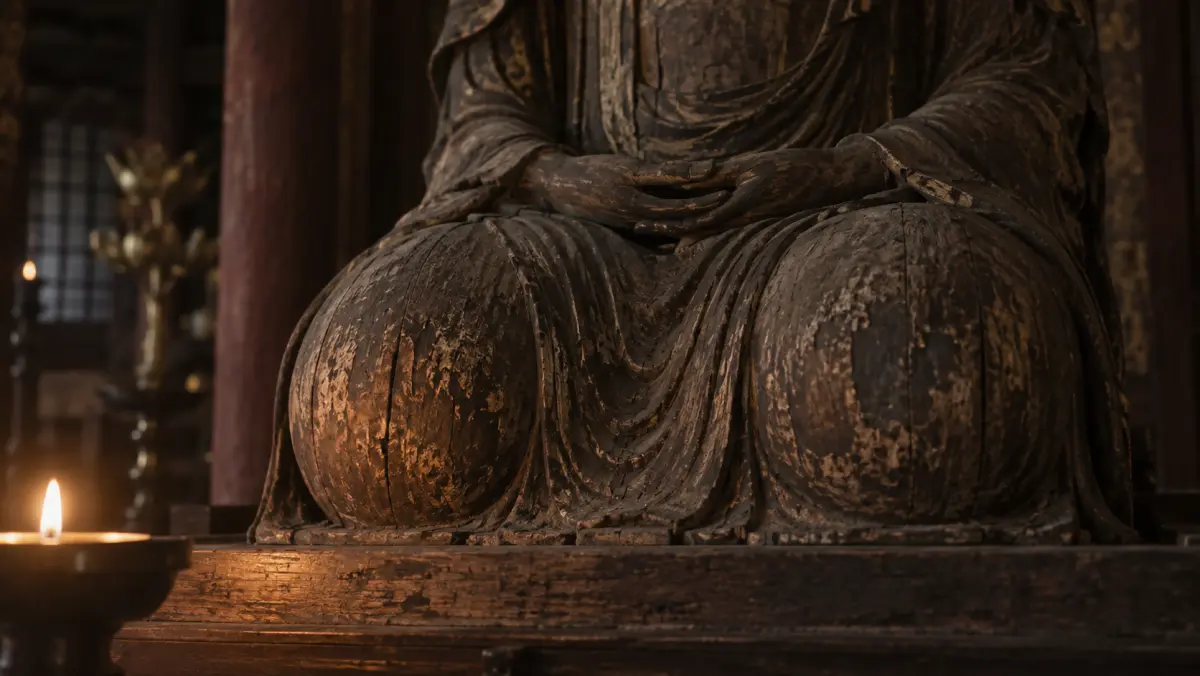
None of this means the posture was invented. People had knelt like this for a very long time, in front of altars, and a European visitor in the 1580s describes ordinary people sitting this way. What changed was not the shape of the body. It stopped being something you did in certain moments, and became the thing everybody would call a tradition. And now it is moving the other way. Tables and chairs, and fewer matted rooms. In some schools, kneeling survives mainly as a punishment.
If you visit
How to sit on a tatami floor
Our visitor, the next evening. He kneels for the greeting and the bow. A host may tell a guest to sit comfortably, and this time he takes it. Men often cross their legs, the way the old warriors did. Many women fold theirs to one side. If your feet are numb, tuck your toes under and pause before standing. The woman beside him has already moved her legs. She had only been kneeling because he was.
Enjoyed the story? Sophie answers a new question about Japan every few days on YouTube.
Subscribe on YouTube

