 Why Japan?
Why Did Samurai Carry Two Swords?
 Told by Sophie, your guide to Japan
A samurai wore two swords, and almost nobody can say why. Sophie follows the pair: the law that made wearing both an identity card at the hip, the tachi that hung edge down and the katana that sat edge up, what the short one was for, the blade drawn inside Edo Castle in 1701, and the day in 1876 when both came off.
The full story
In this story
The Pair Had a Name
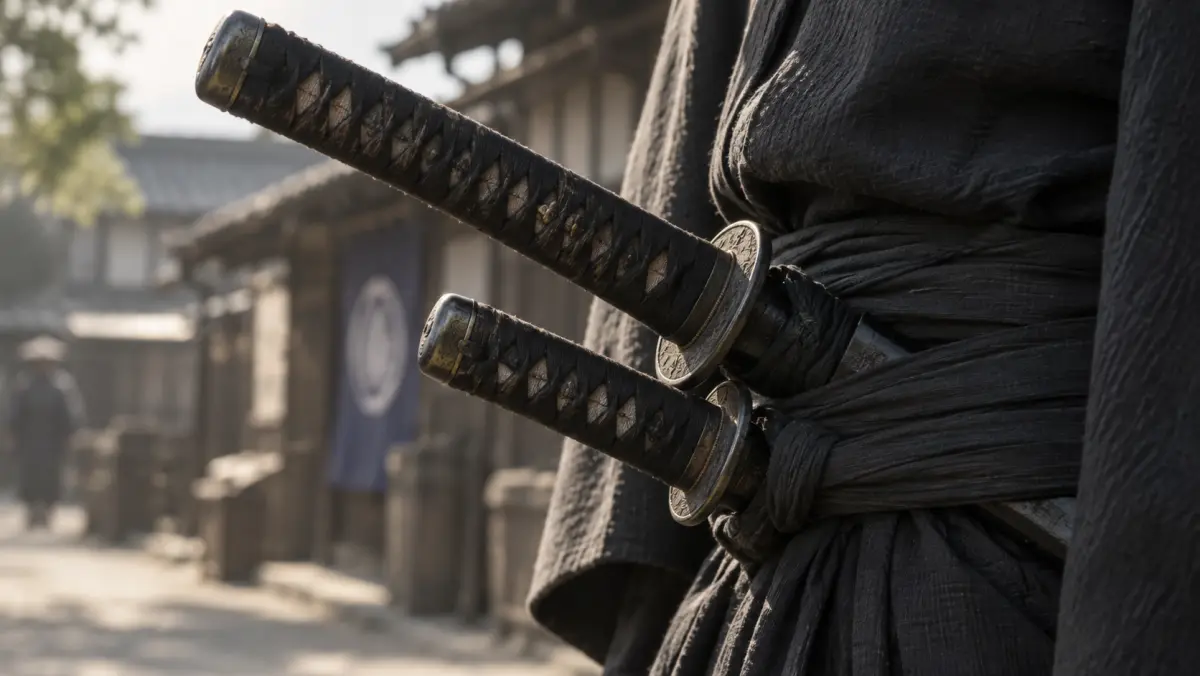
The pair had a name. Daishō. Big and small. The big one was the katana. A curved blade, a little longer than your arm. The small one was the wakizashi. About half that. Both went through the sash on the left side, edge up, handles pointing forward. It was not slung, and not strapped. Just pushed through the cloth, one above the other, so that both handles sat within reach of the right hand.
Only a Samurai Could Wear Both
For most of the Edo period, from the early 1600s, the pair came with a condition. Only a samurai could wear both. A farmer could not. A merchant could not. A townsman might be allowed a short sword, in some places, on a journey, or on a festival day. But the long one, worn together with the short one, in public, in daylight, that belonged to one class. The government wrote it down, more than once, and it punished people who ignored it.
An Identity Card at the Hip
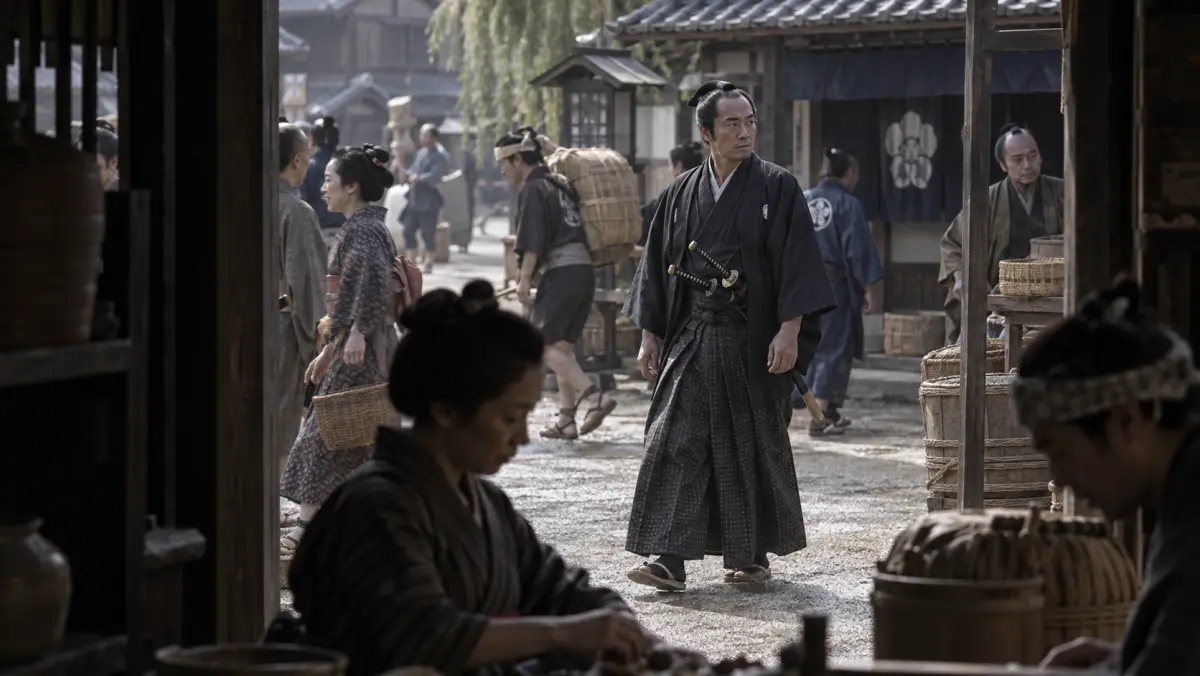
So the first answer is simple. You could read a man from across the street. Two handles at the hip meant samurai. That was the point. It was an identity card, worn on the body, and it could not be folded away. And it worked in both directions. A samurai who went out with only one sword was not fully dressed. People noticed. He noticed.
Before Edo: The Tachi
Go back before Edo, and the long sword looks different. It is called a tachi. It hangs from the belt by cords, edge down, the way a cavalry sabre hangs. It was built for a man on a horse, swinging down at people on foot. That was the war of the older centuries. Mounted archers, and then mounted swordsmen, riding through.
Edge Up: The Katana
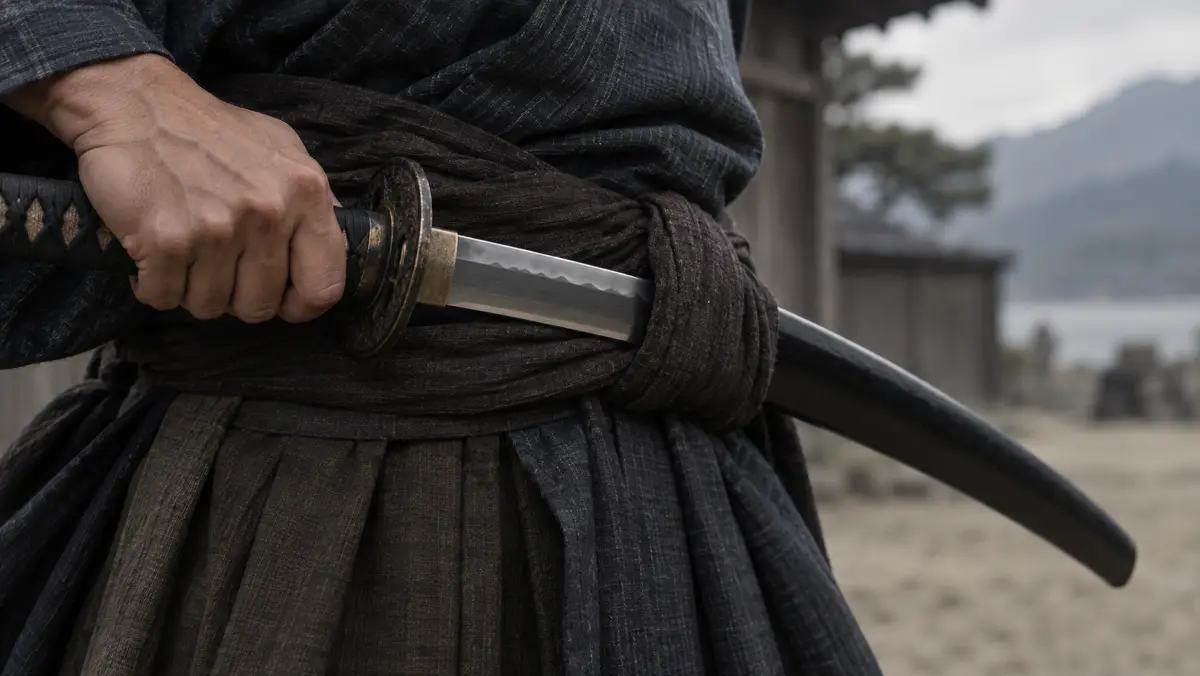
Then the wars changed. From the fifteenth century on, and especially through the long civil wars of the sixteenth, more and more of the fighting happened on foot. Massed soldiers. Narrow streets. Castle gates. A hanging sword gets in the way of a running man. So, over time, a different way of carrying it became the practical one. The blade went into the sash, edge up. This is the katana. And the edge up detail is the whole point. From the sash, one movement draws the sword and cuts on the way out. There is no second motion. Whoever draws first, cuts first.
When the Long One Fails
The short sword is usually explained by a different question. What happens when the long one fails. Blades broke. Blades stuck in armor. Sometimes the other man was simply too close, chest to chest, and a long blade had nowhere to go. Sometimes you were on the ground. For all of that, there was the wakizashi. A blade you could use in a space the width of a doorway. Long for the open. Short for the tangle. Each sword covered the ground the other could not.
Set Down on the Right
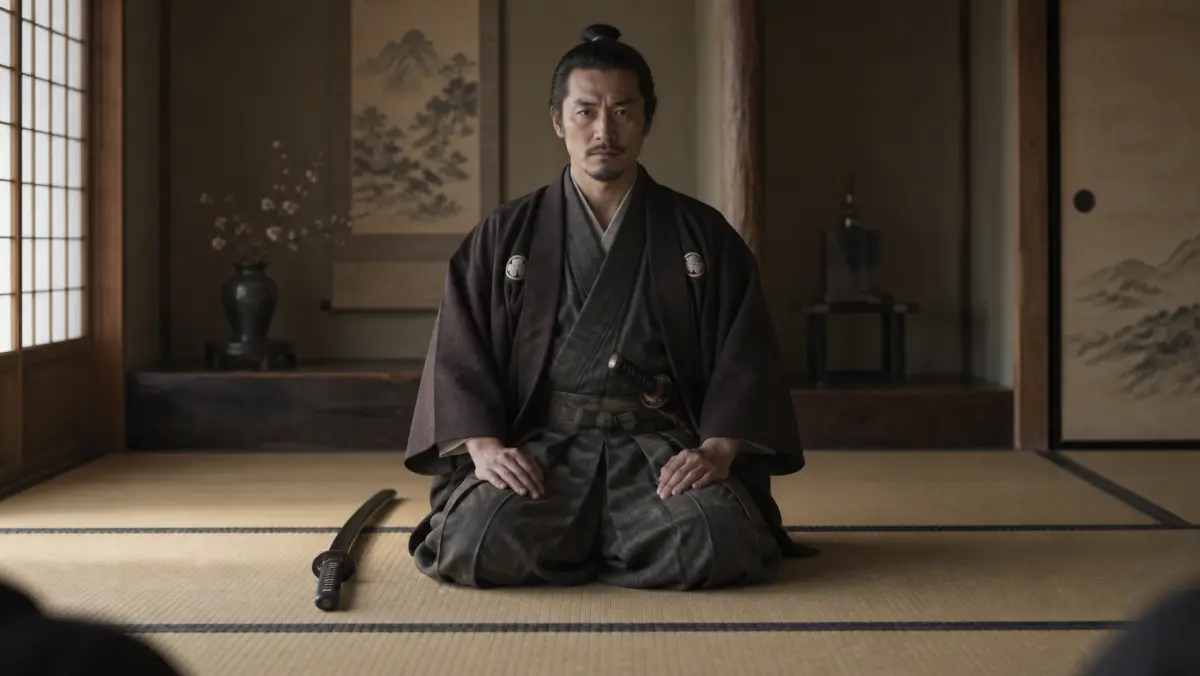
By the early 1600s, Japan was entering a long peace, and it stayed. And the swords stayed too, but their lives split apart. The long sword began a new life of being set down. At the door of a house, the katana came out of the sash. It was handed to a servant, or laid on a rack, or set down on the floor beside you as you sat. And there was a rule for that too. You placed it on your right. Never your left. On the right, a man cannot draw it quickly. Putting it there said, I am not going to.
Inside Edo Castle, 1701
Inside Edo Castle, the rule was hard. The katana did not come in. Guests, officials, lords, all of them walked the corridors with only the short sword. In seventeen oh one, a young lord named Asano lost his temper in one of those corridors and attacked an official. He used his short sword. He did not choose it. It was the only blade he had. The wound was small. The consequences were not. That story became the Forty Seven Ronin, and it starts with a man who had left his long sword at the gate.
A Blade Never Drawn
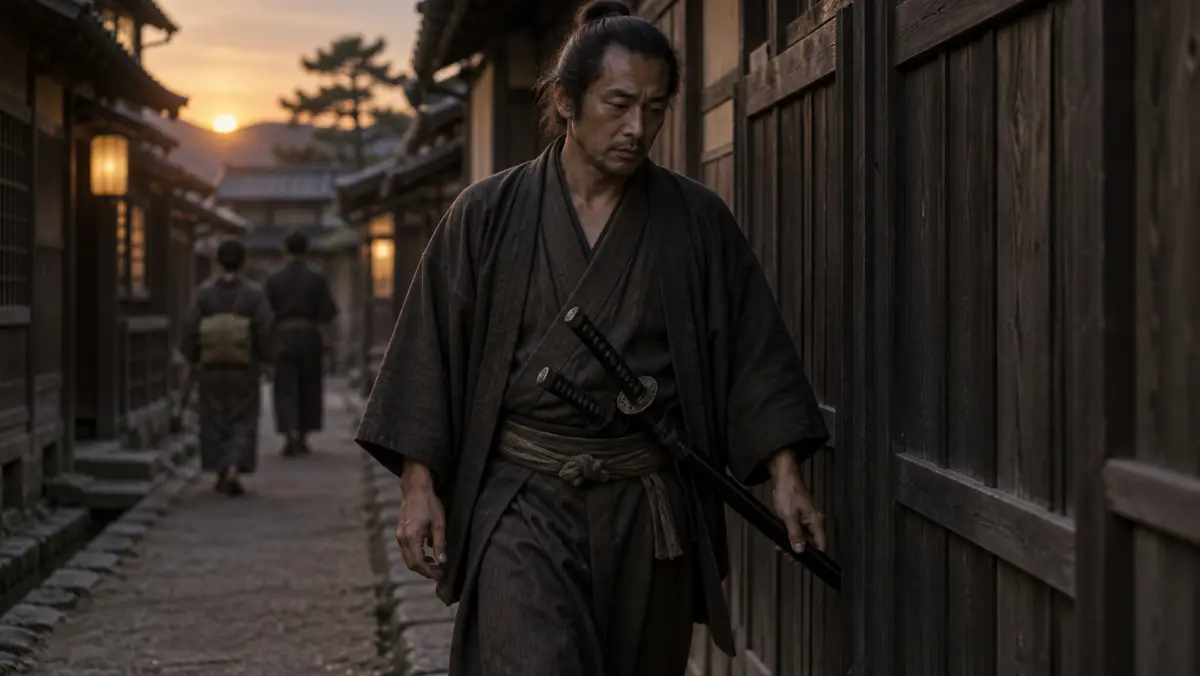
And for many samurai, that was most of the story of the long sword. Over two hundred and fifty years of peace, a man could go his whole life without ever drawing it in anger. It was heavy. It caught on doorframes. Sitting down with it took practice. Some men, low in rank and short of money, quietly sold the blade and carried a bamboo one in the scabbard. From the outside, no one could tell. The short sword, meanwhile, simply stayed on. Through the door. Through the meeting. Through the meal. It was the one part of the outfit that never left the body.
Outward and Inward
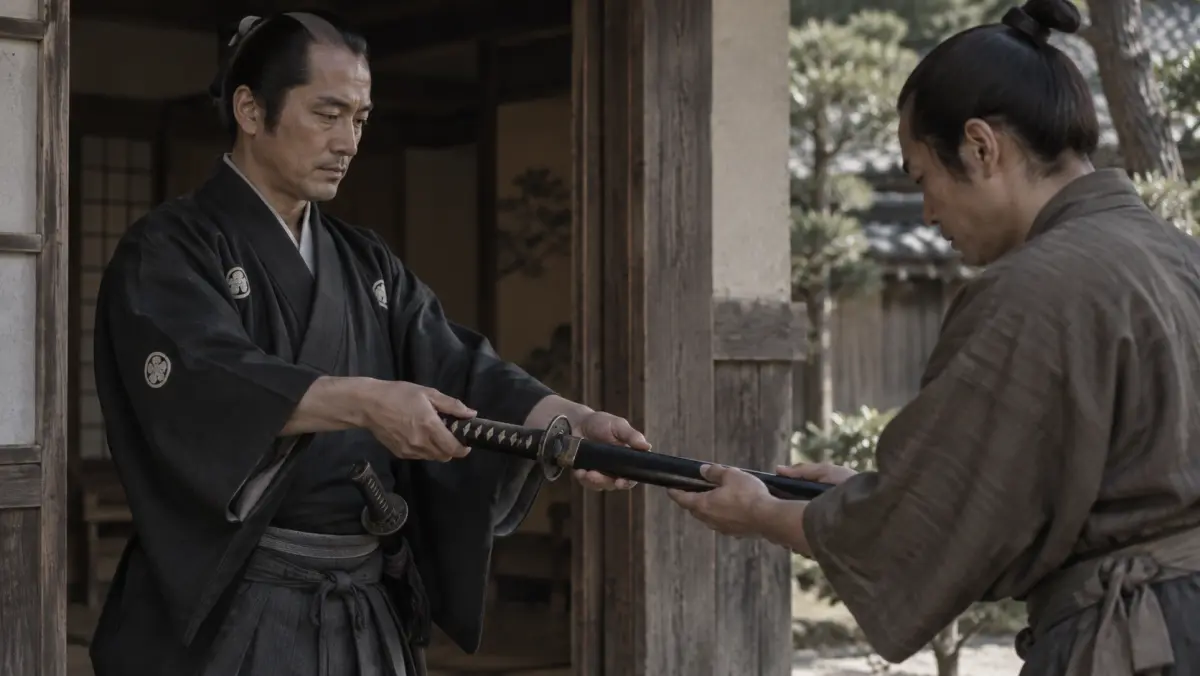
So look at the pair again. The long sword faced outward. It was the part on display. It was surrendered at doors, checked at gates, laid down in front of hosts. It belonged, in a way, to the world. The short sword faced inward. It stayed against the body when everything else came off. It was there in the room where the long sword was not. And it was the blade a samurai was expected to use if the last duty ever came to him. That is all we will say about that here.
1876: Both Came Off
Then, in 1876, the new government banned most people from wearing swords in public. The order took a few lines. The pair that had marked a class for two and a half centuries came off in a single year. The katana went into cloth wrapping, into storerooms, into pawnshops, and later into museums overseas. And the small one went with it. There was no exception for the blade that had never left the body. It left.
Two Selves
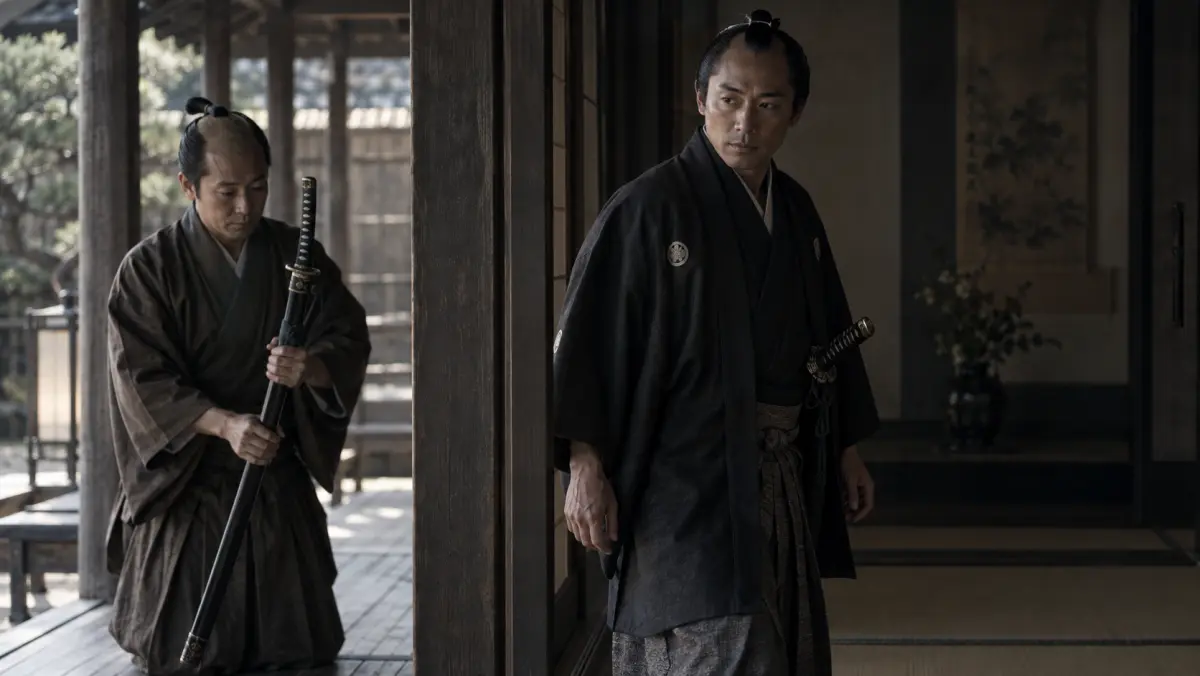
So why two swords. Because the law said so, and before the law, because a battlefield needed a blade for the open and a blade for the tangle. But the pair outlived both reasons by a long time. And what it became, in the end, was a way of carrying two selves. One you handed over at every door. And one that went through the door with you.
Enjoyed the story? Sophie answers a new question about Japan every few days on YouTube.
Subscribe on YouTube

