 Why Japan?
Why Did Samurai Shave Their Heads?
 Told by Sophie, your guide to Japan
The shaved crown of a samurai’s head was not shaved. For centuries it was pulled out, hair by hair. Sophie follows the sakayaki from under the helmet to the barber’s chair: the one place a warrior could not see, the profession that grew out of it, what the 1871 order actually said, and why most men did not cut.
The full story
In this story
Under the helmet
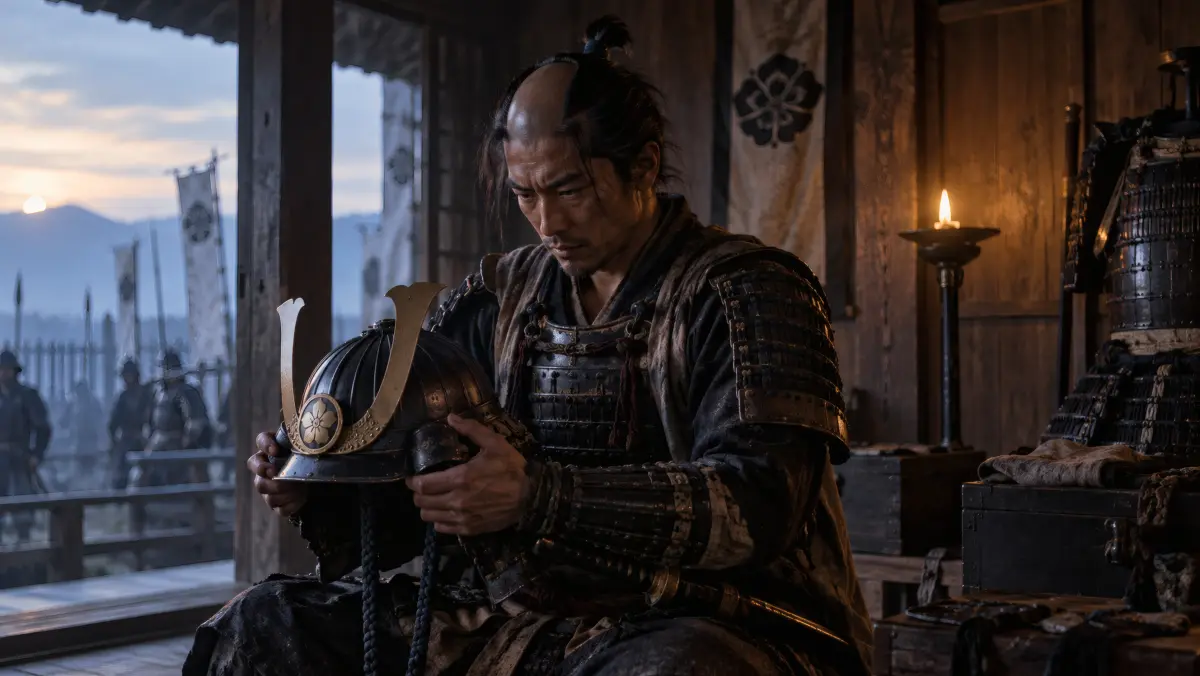
A samurai helmet is heavy, and it is closed. Under it he wore a cap, and under that, his own hair, tied up and packed against his scalp. In summer, in full armour, with the sun on the lacquered iron, the heat had nowhere to go. So men began to open a small window on top of their heads. A bare patch, right where the heat gathered. It had a name. Sakayaki. And in the beginning, it was temporary. When the fighting was over, they let it grow back.
They pulled it out
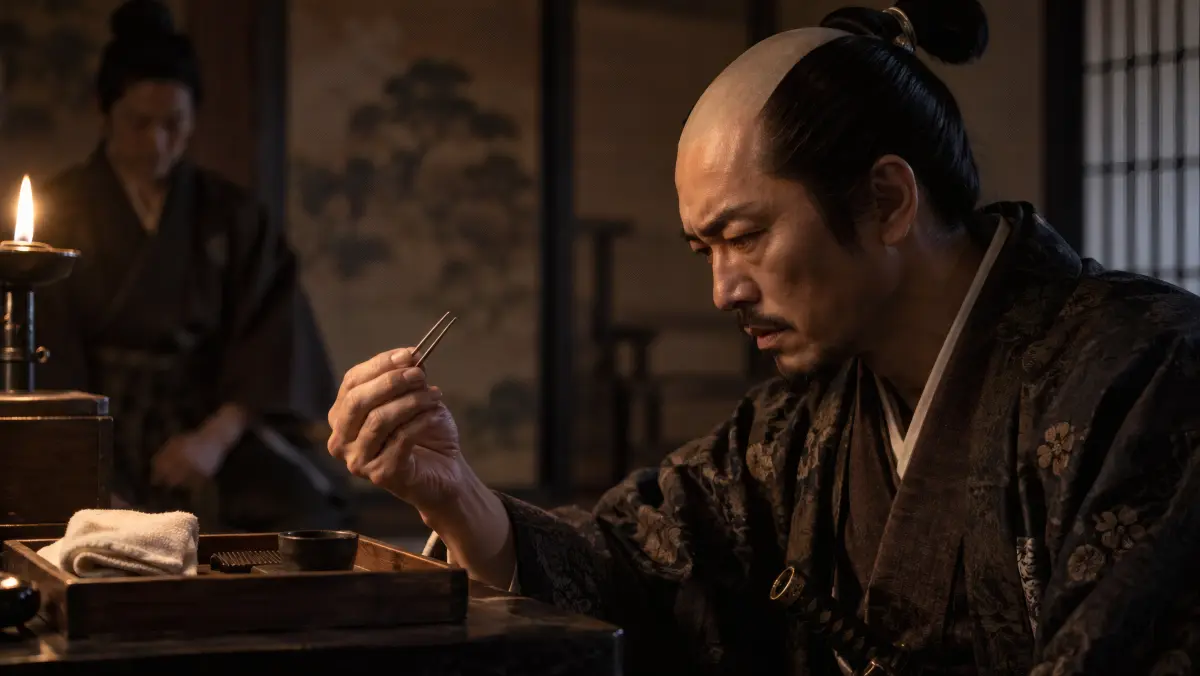
Here is the part I did not expect. For a long time, they did not shave it. They pulled it out. A wide pair of tweezers, hair by hair, out of the top of the head. The scalp swelled. It bled. There are records of men going into battle with a raw, weeping crown under the iron. This was not a short phase. It went on for centuries. Razors did not take over until around the 1570s.
The wars stopped ending
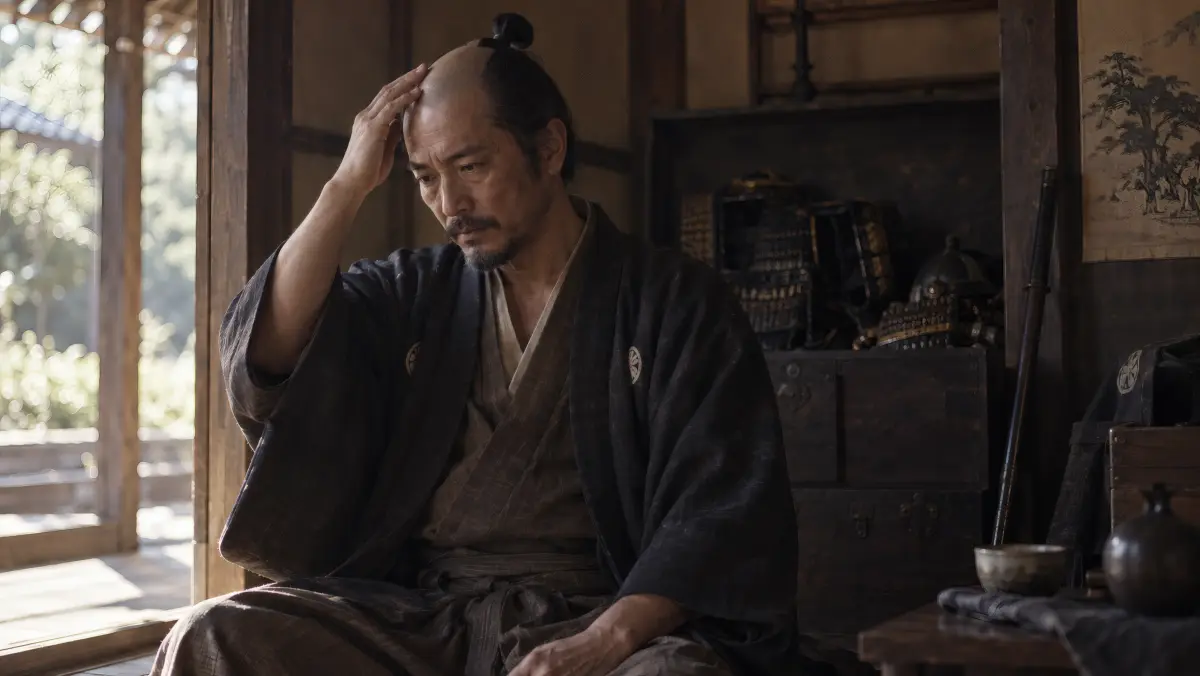
And then the wars stopped ending. From the Onin War onward, the country spent close to a hundred years in something near continuous fighting. There was no point letting it grow back, because by next season you would need it gone again. So men stopped letting it grow. By the time peace finally came, nobody could remember what a grown man looked like with a full head of hair. The window in the middle of the head had stopped being equipment. It was simply what a man's head was.
The one place you cannot see
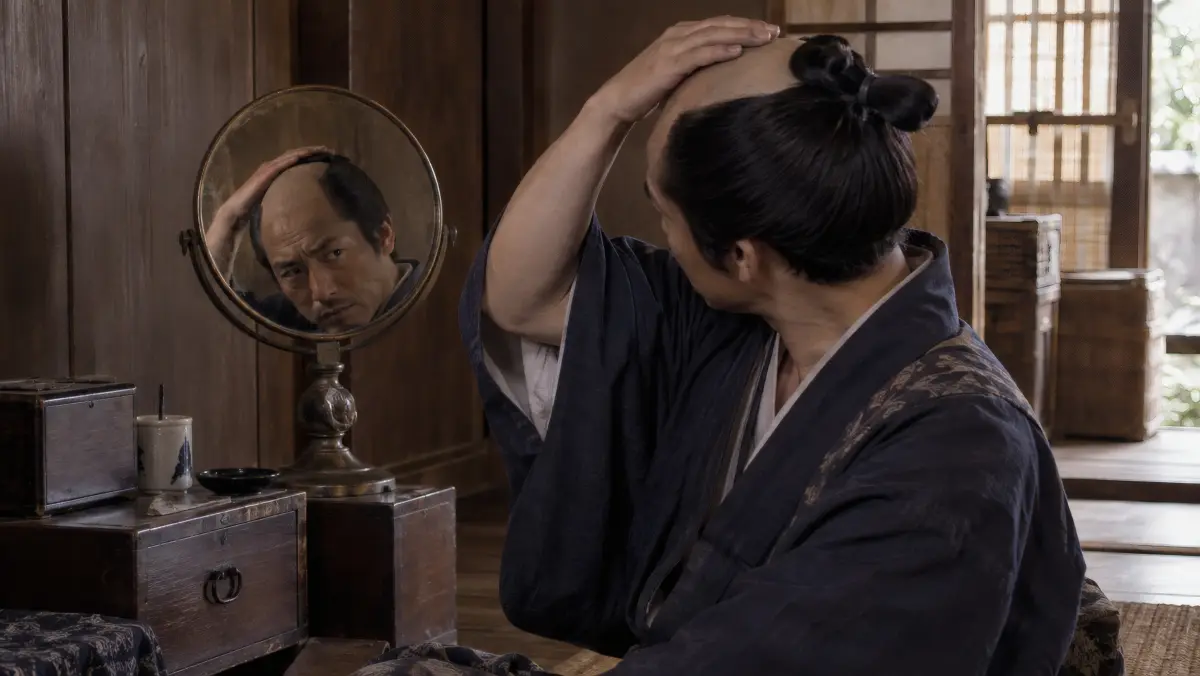
Think about the daily work of it. The crown of your own head is the one place you cannot see. You cannot do it with a mirror, not well, and not with a straight razor. So somebody else had to. Every few days. For every adult man in the country. An entire profession came into existence because of a hairstyle. The kamiyuidoko. The hair-dresser's shop.
One shop per street
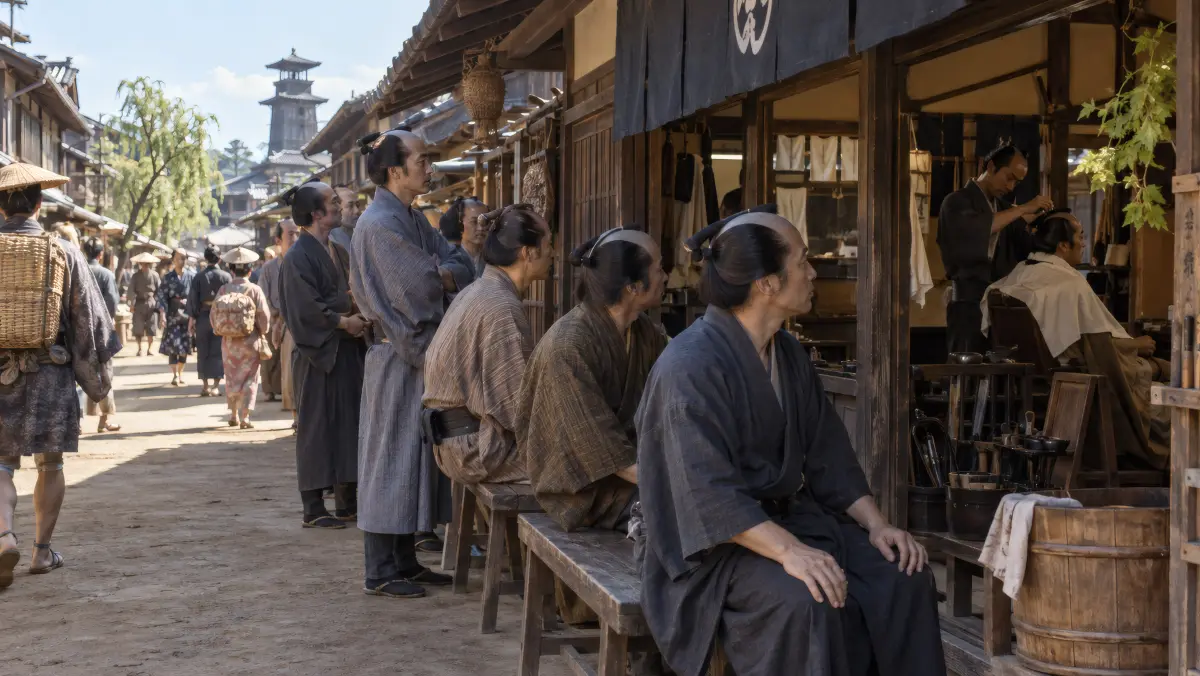
In Edo, those shops were licensed, and only one was allowed per neighbourhood. Which meant every man on that street sat in the same room, in turn, for his whole life. They kept a go board and a shogi board for the men waiting. Picture books to read. People came in with nothing that needed doing, and sat down anyway. It was the one room in the city that the entire street passed through before noon. The news of Edo moved through those shops.
A day or two of growth
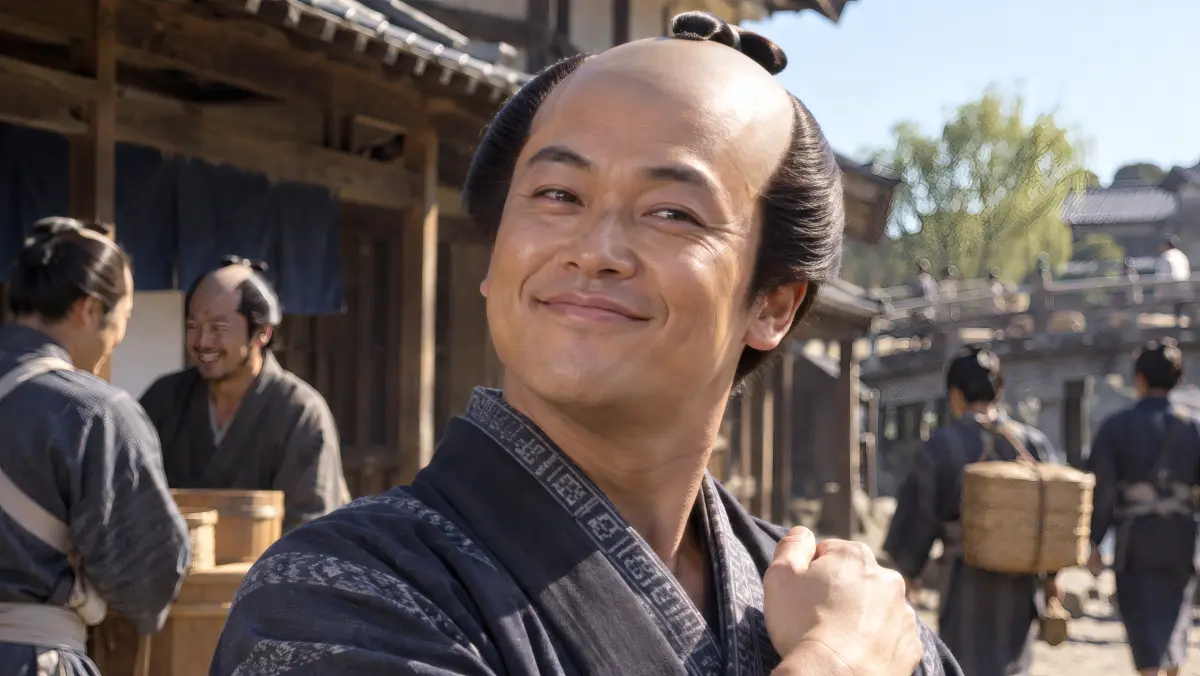
And because everyone was looking, it turned into style. A freshly shaved crown was considered a little too eager. It showed that you had tried. The taste was for a day or two of growth, the topknot sitting slightly loose. Effort, but no visible effort. That is a very Japanese kind of vanity, and I can tell you it has not gone anywhere.
Reading a stranger
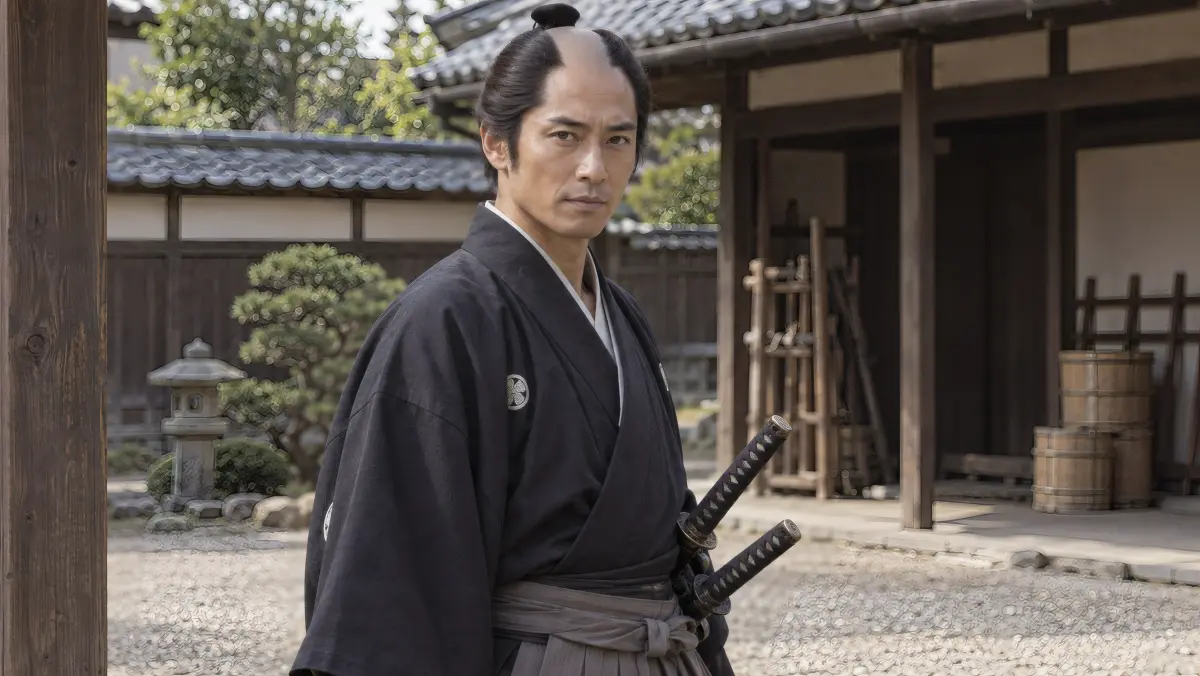
By then the shaved crown had picked up a second job. It told you who a man was. A samurai kept his narrow. Townsmen shaved theirs wide and clean, because a merchant's crown was an advertisement for his own reliability. Craftsmen, doctors, priests, actors — each had a shape. You could stand at a crossing in Edo and read a stranger's work off the top of his head before he opened his mouth.
A public document
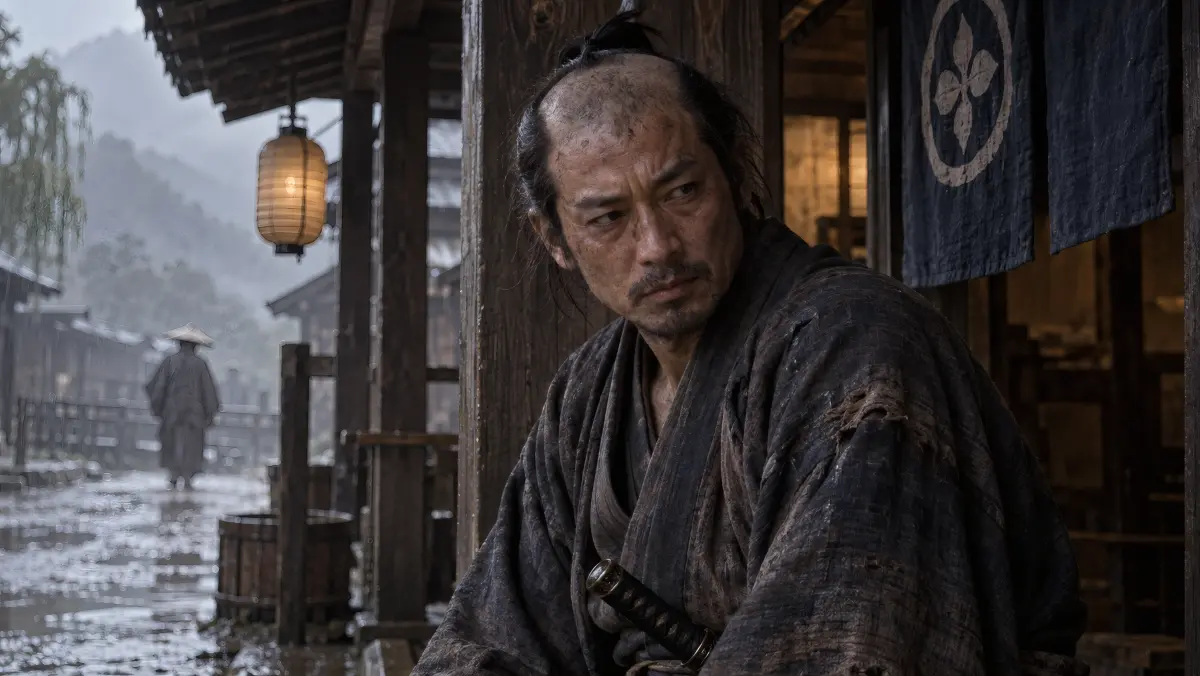
It worked the other way too. A man who had stopped shaving was a man that something had happened to. A ronin with no income. A farmer with no time. In the theatre, that is still the shorthand — when a character's crown goes ragged, you know before anyone says a word. A man's head was a public document. And it was very hard to lie on.
1871: permission, not an order
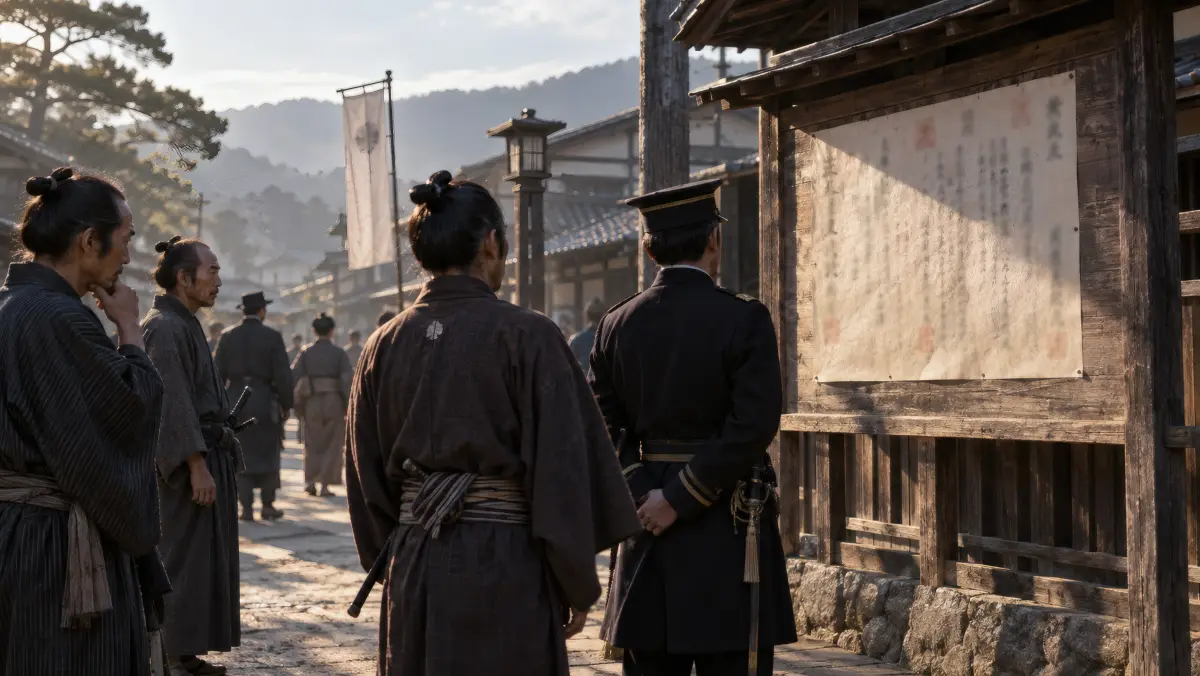
Then, inside one generation, all of it was gone. In 1871 the new government issued the order that everyone remembers as the order to cut off the topknot. Except that it was not. Read the actual text and it says something much smaller. You may wear your hair as you like. It was permission. Not a command.
Nobody took it
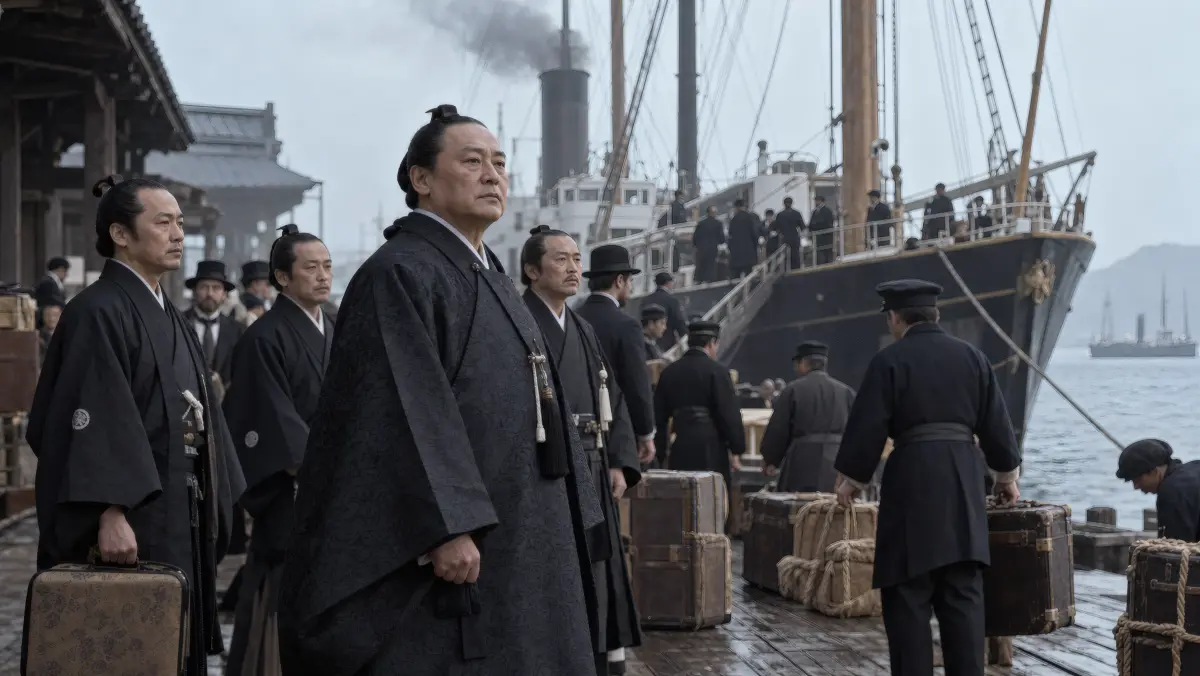
And most men did not take it. Iwakura Tomomi sailed for America with his topknot still tied, and cut it off in Chicago. In Tokyo, about a quarter of men had cut by 1875. Local officials lost patience. Some taxed the topknot. Some sent police out with scissors. What actually moved it was the Emperor cutting his own hair, in 1873. And even then, it took years.
A quarter, then sixty, then ninety
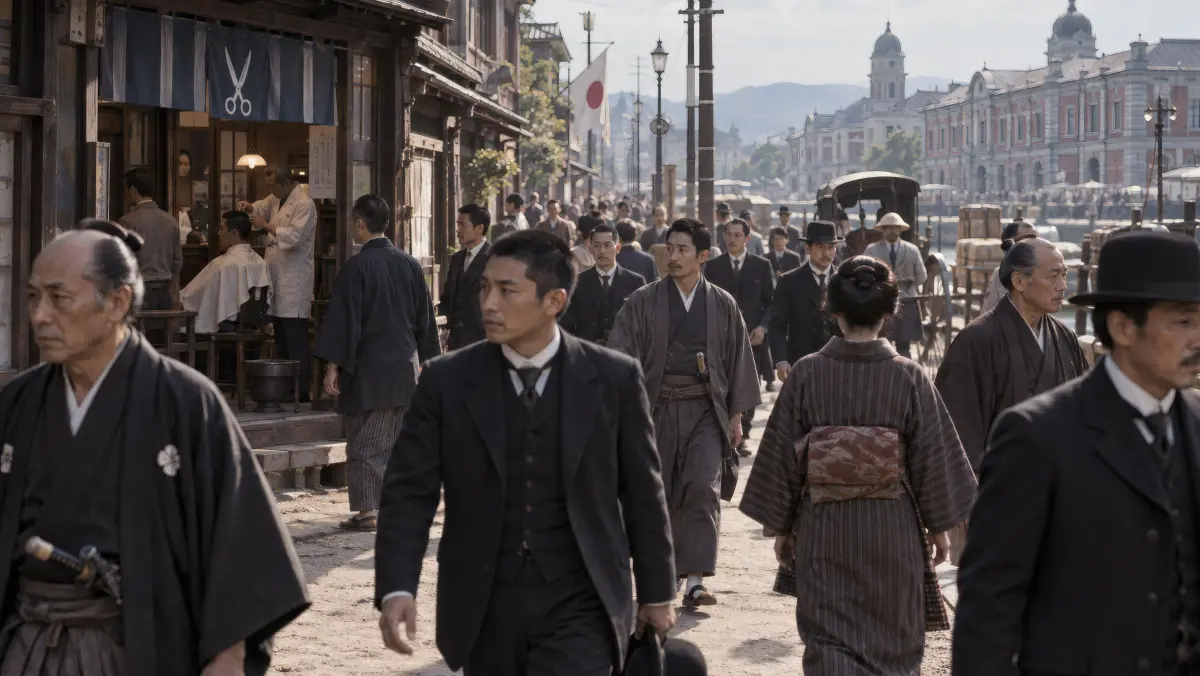
The numbers are slow, and very human. A quarter by 1875. Sixty percent by 1877. Ninety by 1883. It was not really finished until around 1889. And at the ceremony for Japan's first constitution, that same year, one of the old lords of Satsuma walked in with his topknot still tied. Nobody punished him. He had decided not to change, and he did not.
The first morning after
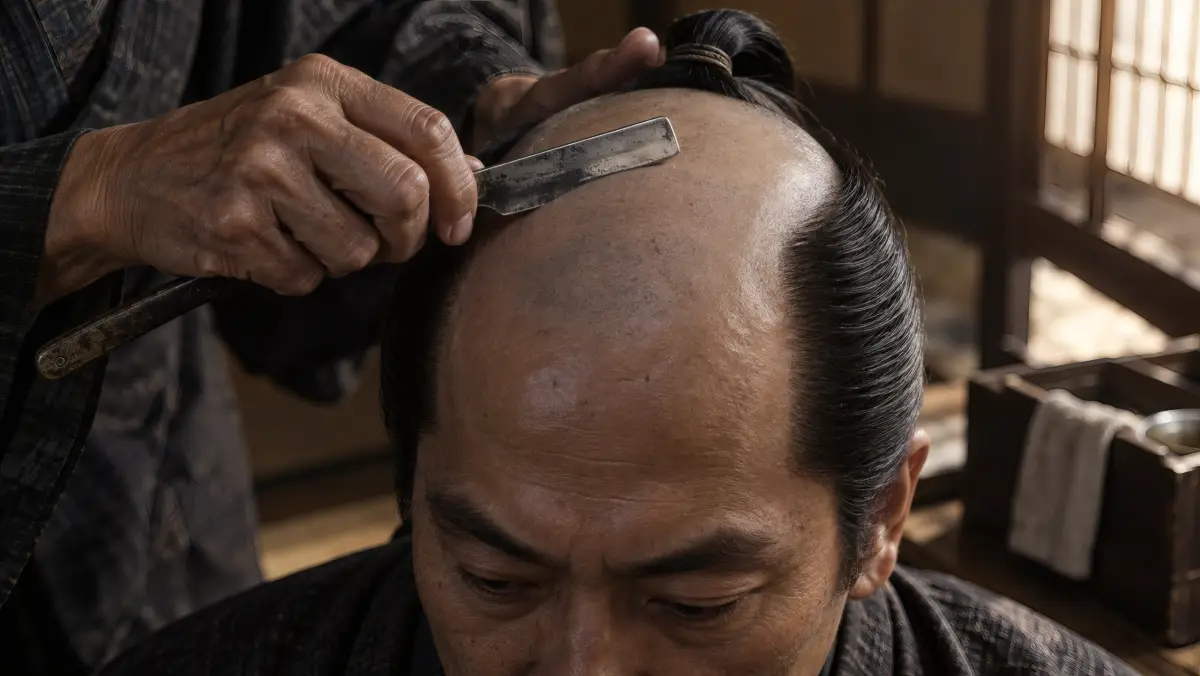
Three hundred years of mornings. A blade, somebody else's hands, the same small patch of skin. And then a generation of men who had to find out what the top of their own head looked like. The thing I cannot picture is the first morning after. A man reaching up out of habit, and finding hair there. Whether he missed it. Or whether he had been waiting his whole life to stop. If you had been in that room in 1873 — would you have cut it? Or would you have been the one who did not?
Enjoyed the story? Sophie answers a new question about Japan every few days on YouTube.
Subscribe on YouTube

