 Why Japan?
Why Did Samurai Wear Such Strange Helmets?
 Told by Sophie, your guide to Japan
A golden crescent, deer antlers, a cliff. Sophie asks why samurai put such things on their heads: the iron bowl and the paper crest, why a crest was “a flag that walked” on a battlefield of thousands, Masamune’s moon and Tadakatsu’s antlers, the slope at Ichi-no-tani, proof on paper, and Boys’ Day in the guest room.
The full story
In this story
Antlers on the Morning Train
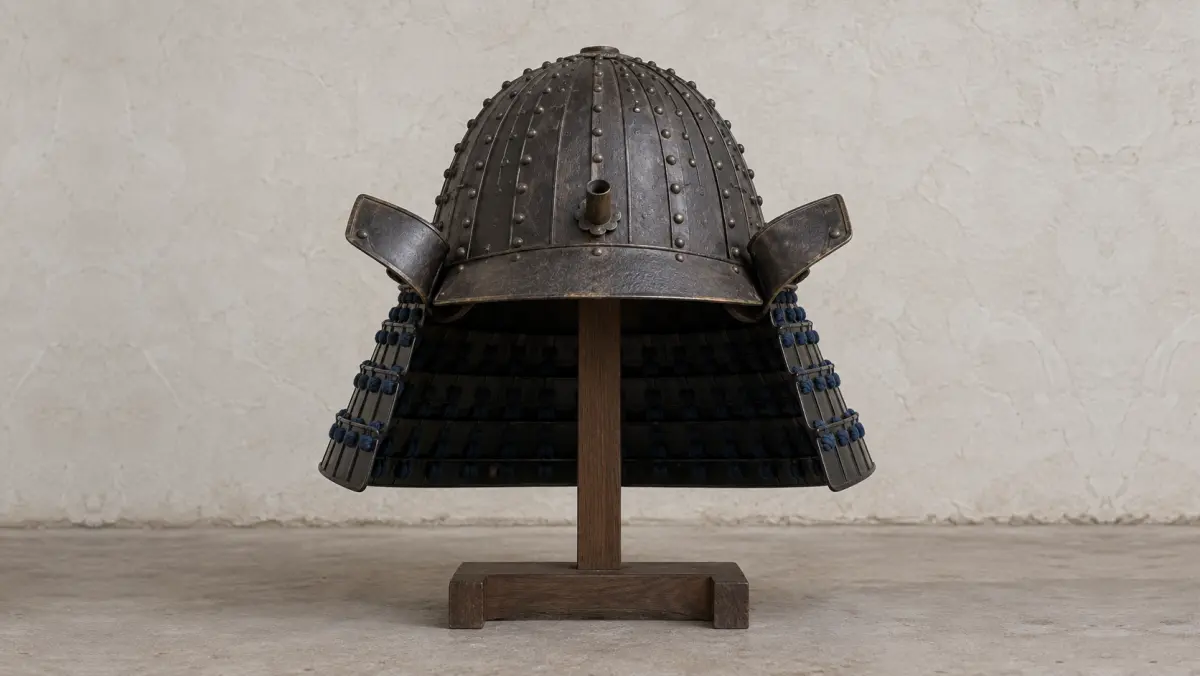
A morning train in Tokyo. A man in armour holds a strap, deer antlers rising from his helmet. Almost nobody looks up. A long stare would feel intrusive. The paper sat on iron. The bowl is called the hachi: plates riveted together. Hanging from the back and sides is the shikoro, a curtain of lacquered strips that covers the neck. The whole thing weighed a few kilograms, on a head that had to keep turning all day. It was hot. It was heavy. It worked.
A Paper Crest on Iron
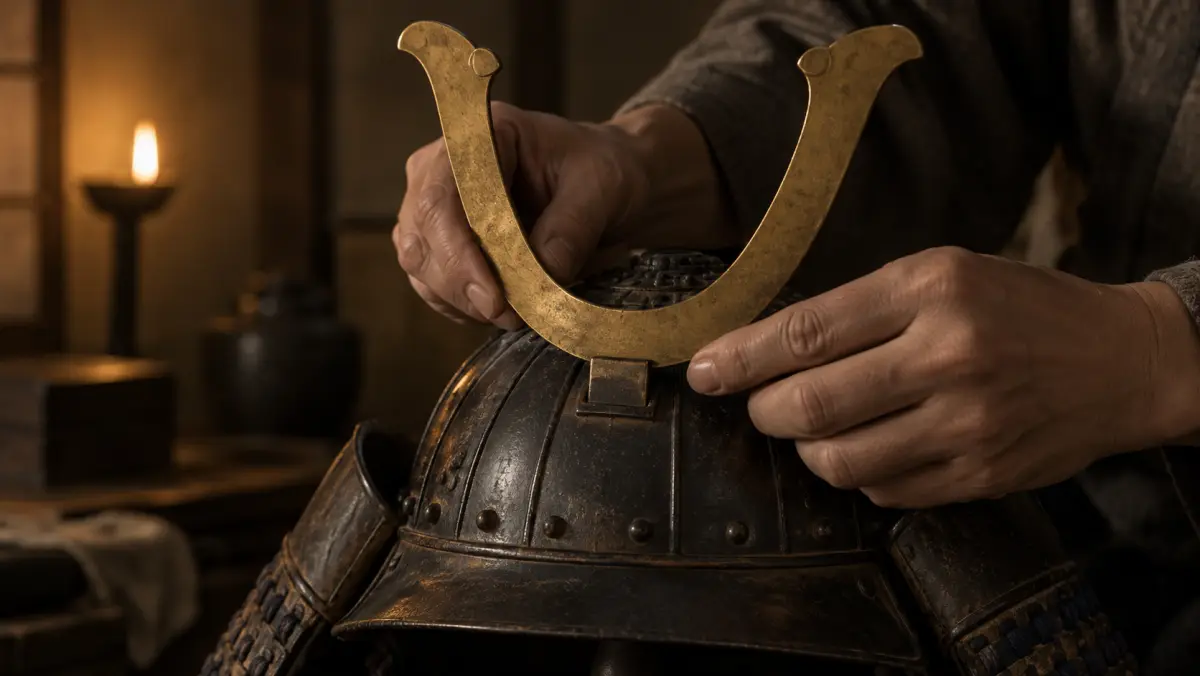
Now look just above the brow. There is a small socket there. Into it a warrior slid a crest, the maedate, the thing that stands in front. Crests could also stand at the sides, or on the very top. Some were iron, but many were wood, leather, or layers of paper, hardened and lacquered and covered in gold. Light enough to wear all day. Which is not the same as convenient.
A Flag That Walked
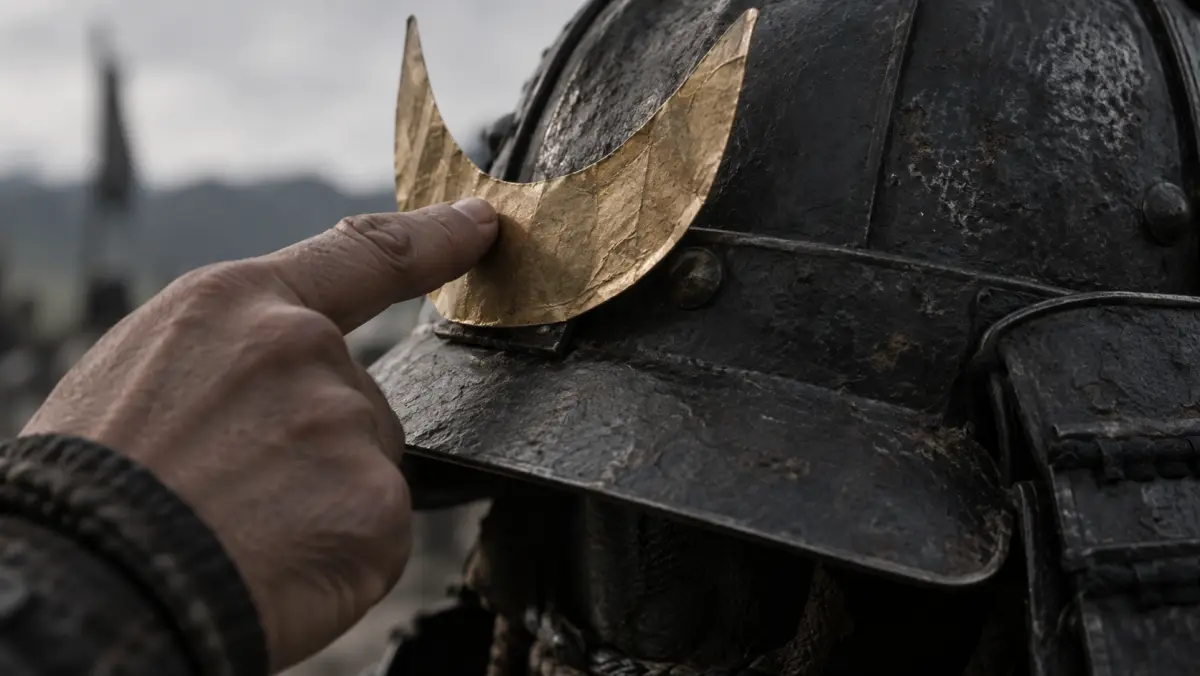
On a battlefield, a paper ornament looks like madness. It also did a job the iron could not. Armour made men look alike, and an iron mask covered the face. Banners on the back and tall standards helped, but banners fall, and men leave them behind. From thirty paces, in dust and smoke, the head was the highest part of a man, and the easiest part to read. A commander's helmet was a flag that walked.
Masamune's Moon, Tadakatsu's Antlers
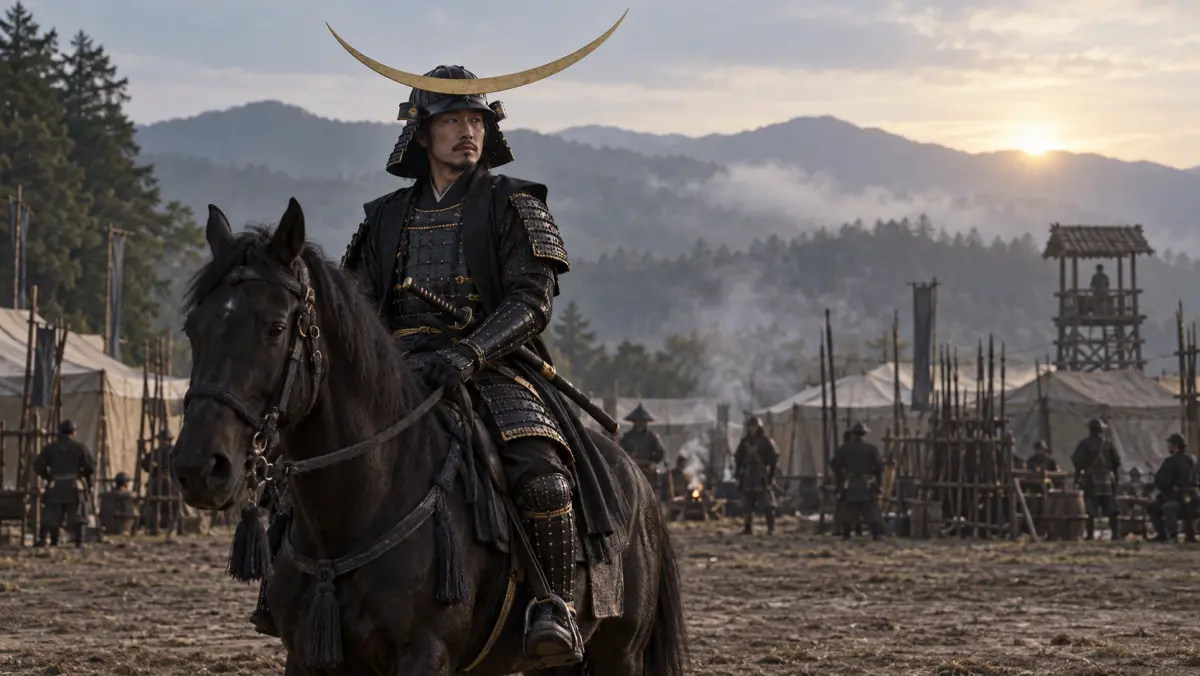
The shapes were not picked to look odd. A huge golden crescent curved above the brow of Date Masamune. The crescent is an old religious form in Japan, although what exactly he meant by it is not certain. Kato Kiyomasa wore an enormously tall helmet shaped like an eboshi, a traditional Japanese cap. Honda Tadakatsu wore deer antlers, taller than his own head. Kuroda Nagamasa wore a cliff.
The Cliff at Ichi-no-tani
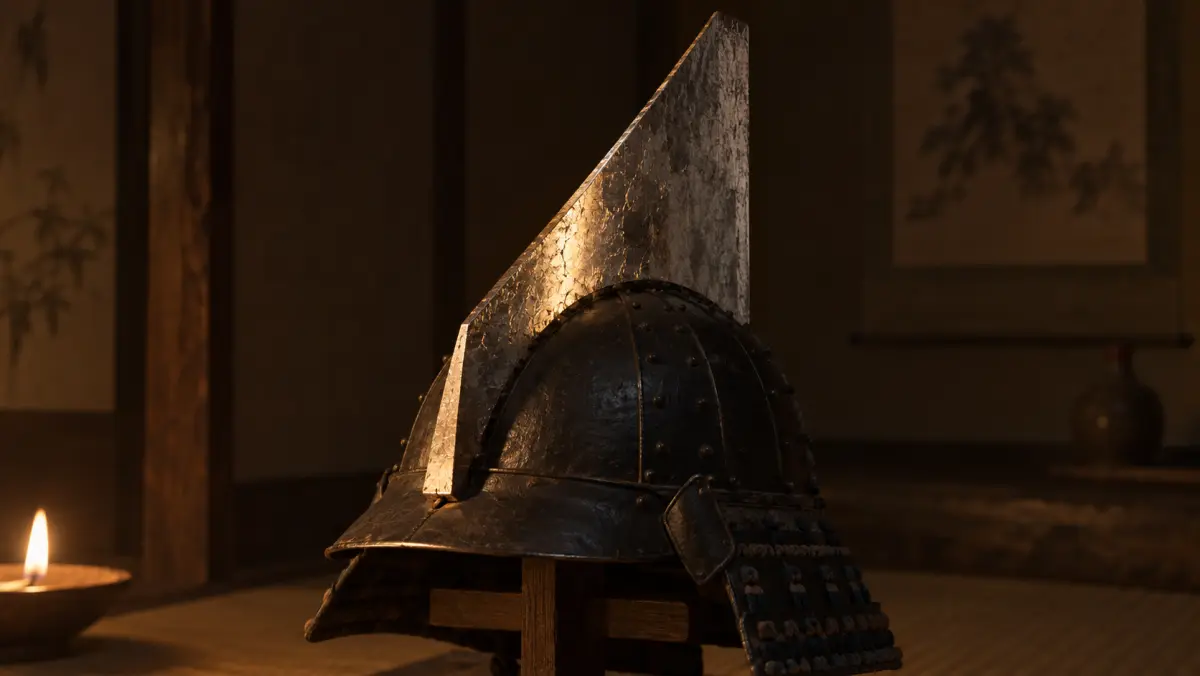
The cliff needs explaining. Four hundred years earlier, at Ichi-no-tani, a young commander named Yoshitsune is said to have brought his men down a slope so steep that riding it looked like suicide. The attack that followed became a famous war story. Nagamasa's crest was that slope. Thin cypress boards, bent into shape, covered with silver foil, standing on a man's head. Other men wore a catfish tail, a conch shell, a pair of rabbit ears. Each shape was a sentence. This is my name. This is what protects me. This is the kind of man you are looking at.
The Character Ai
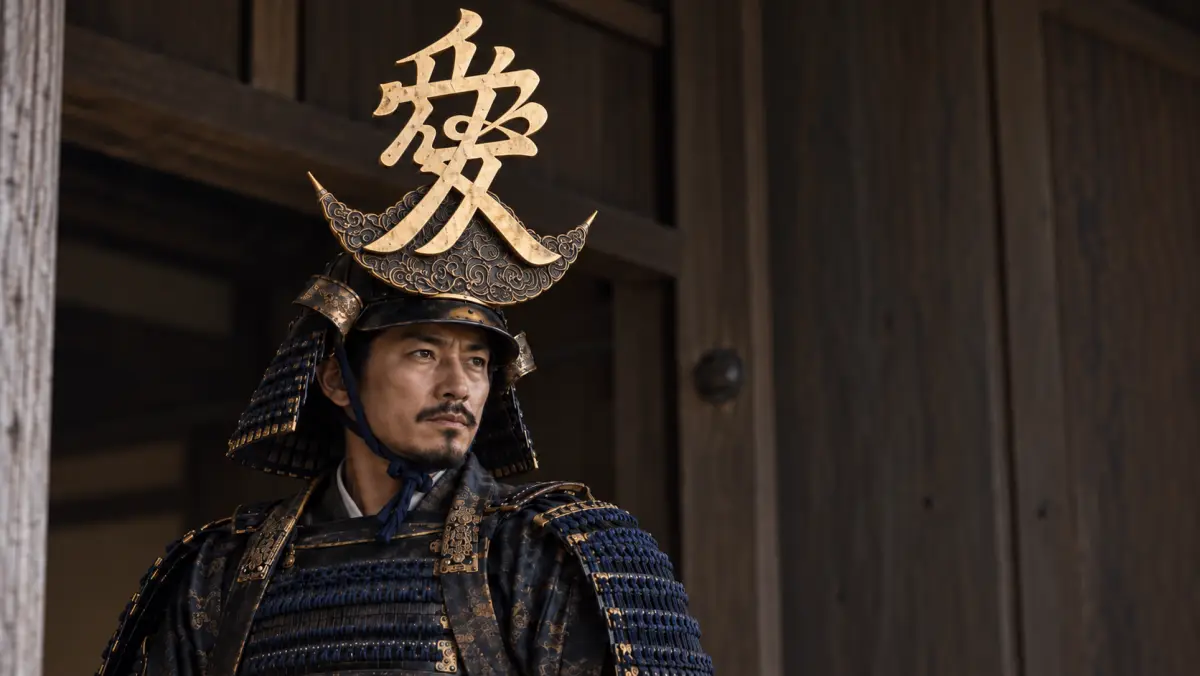
The most famous crest of all is a single written character, ai, worn by Naoe Kanetsugu. Visitors are often told it means love: an officer who rode into battle under the word love. It is a good story. One common reading connects the character instead to the name of a protective deity, either Aizen Myoo or Atago Gongen. Nobody can be certain. But it is probably not a message about love. It is probably a name.
Armies of Thousands
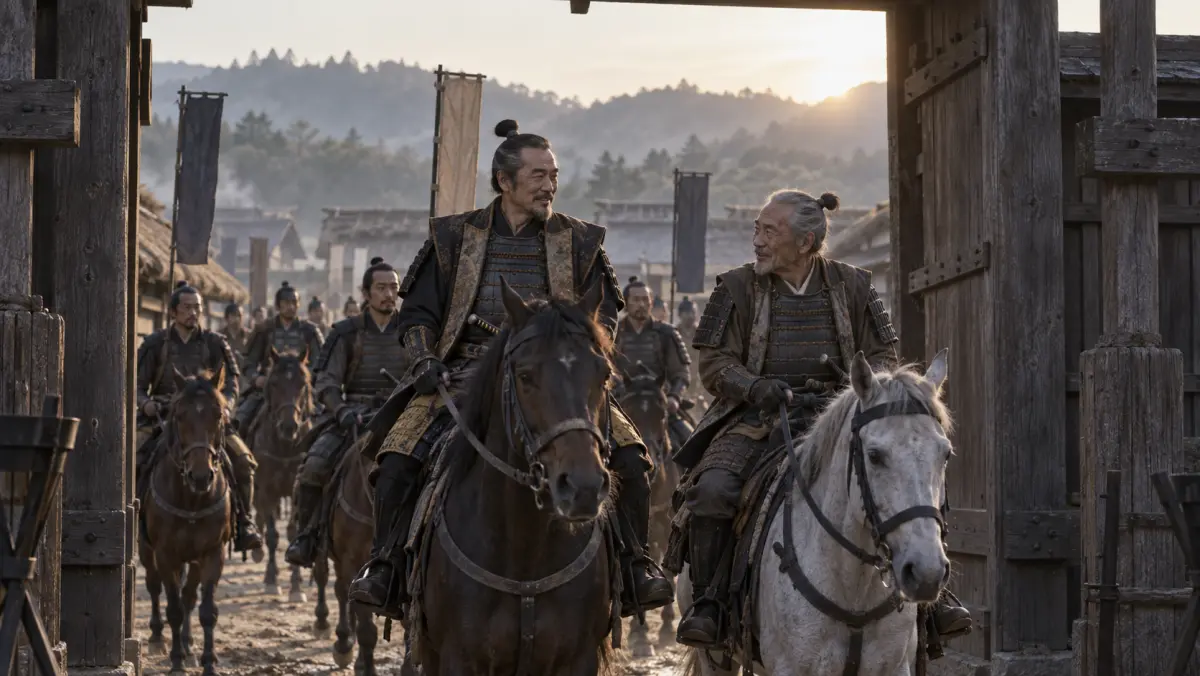
Helmets like these became especially prominent in the late 1500s, and that is also when the armies themselves changed. A lord no longer rode out with a few hundred mounted men he had known since he was a boy. He put thousands of foot soldiers in the field, many of them wearing armour lent out from a storehouse. The bigger the crowd, the more it was worth being recognised from a distance.
Proof on Paper
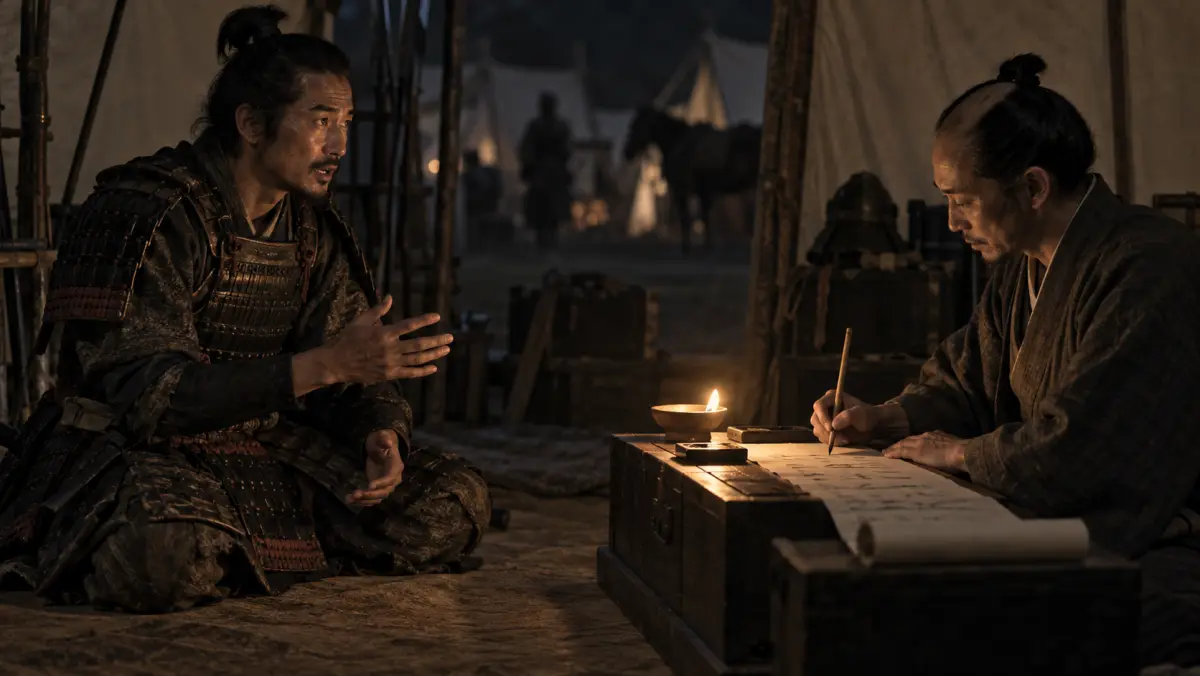
Courage mattered, but so did proof. A man's service could be put in writing, certified by a commander, and used later to support a claim for reward. So it helped if other men could say which one you were. The helmet did not win anything. It made the man underneath it easier to name.
A Shape That Kept a Name
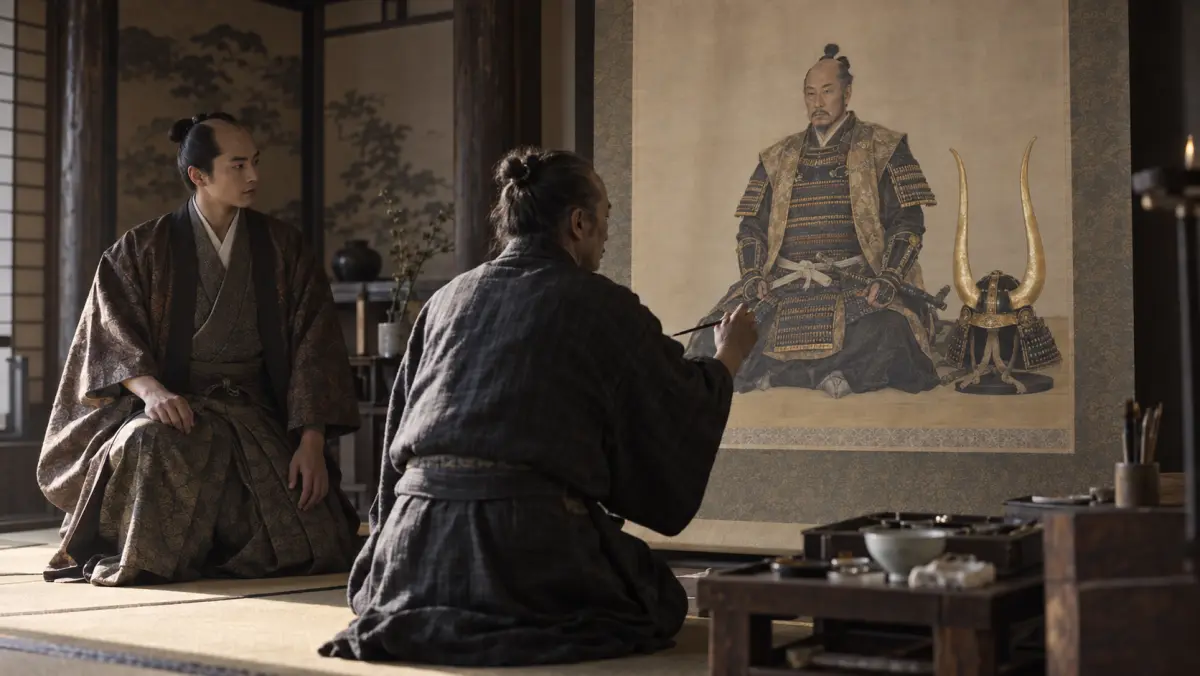
Being easy to name outlived the fighting. A shape that nobody else had stayed attached to a man. It turns up again in written reports, in the portraits his family had painted, in the lists of what the household owned. Four centuries later, in a museum case, the label still says whose it was. The armour was made to keep a man from being killed. The crest was made to keep him from being nobody.
Processions Under the Tokugawa
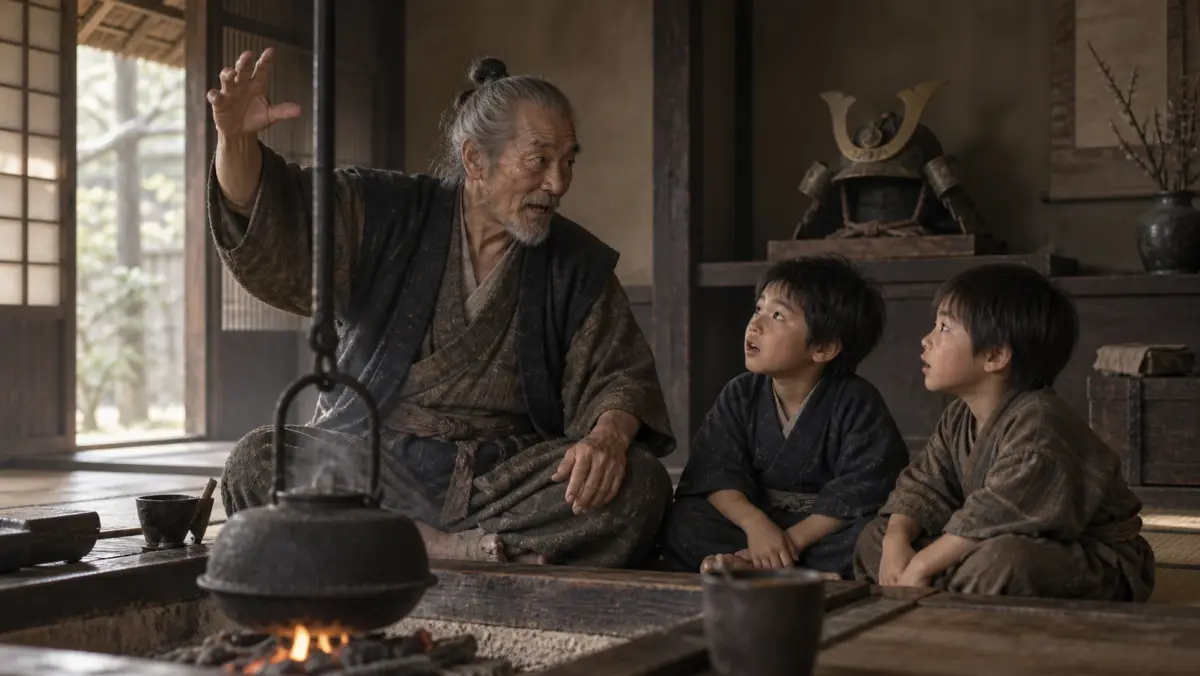
Under the Tokugawa, large-scale fighting became rare, and for most samurai a battlefield was something a grandfather had described. The helmets did not disappear. They moved to where they could still be looked at. Lords travelled to the shogun's city in long processions, and the armour travelled with them, boxed, unpacked, arranged. A helmet was no longer equipment. It was the household itself, in a shape a stranger could read from the edge of the road.
Boys' Day in the Guest Room
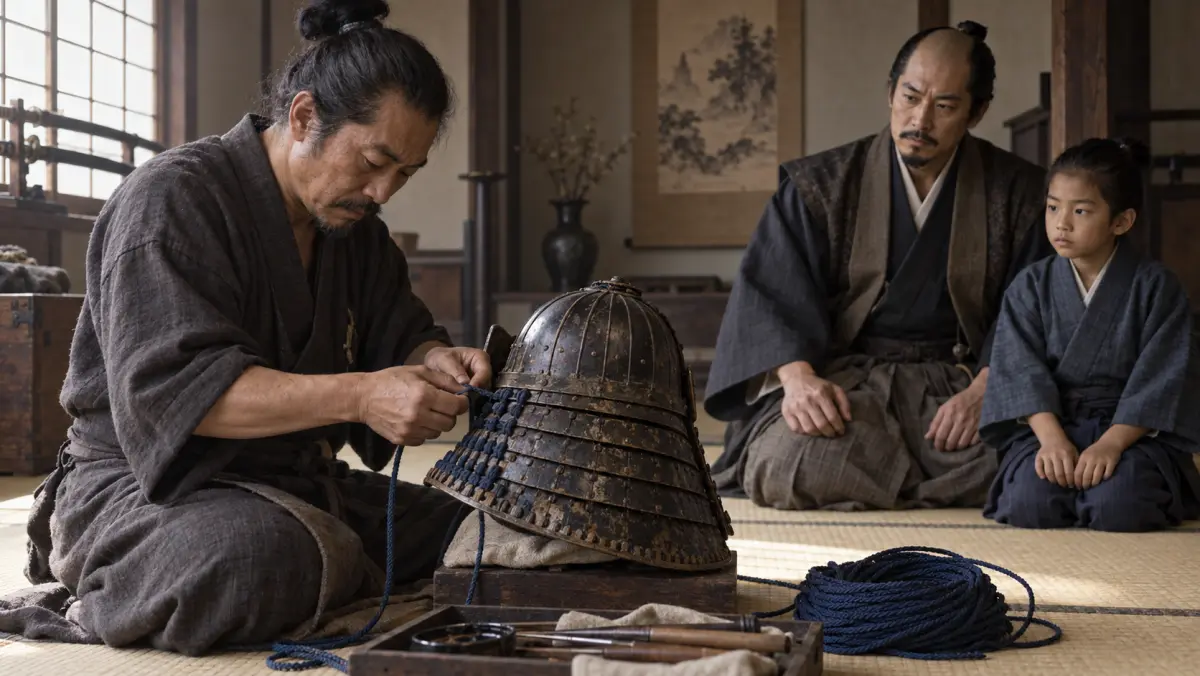
Armour was kept, repaired, and handed down with the family name. On the fifth day of the fifth month it was set out in the room where guests were received, for the sons of the house. During the Edo period, small armour and warrior dolls became part of those displays, made for children who would never see a war. The crest stayed. The iron went.
A Crescent Beside the Television

Today, in a flat in a Japanese city, a small helmet is lifted out of its box every spring and set on a shelf beside the television, a gold crescent on its brow. Children fold paper ones at school and wear them for an afternoon. In a museum, staring is the point. Start at the socket above the brow, where the crest slid in. Then the flared plates at the neck; a recent exhibition in London pointed out that Darth Vader's helmet drew on armour like this. Finally, the label: read the name first, and look back at the shape. Four hundred years on, the crest is still doing the job it was made for. It is being looked at.
Where to see it
- Ichi-no-tani, Kobe — The cliff behind the 1184 battle — the story behind one famous helmet crest. Google Maps
Enjoyed the story? Sophie answers a new question about Japan every few days on YouTube.
Subscribe on YouTube

