 Why Japan?
Why Is a Sumo Match So Short?
 Told by Sophie, your guide to Japan
A sumo bout can be over in five seconds — after four minutes of preparation. Sophie looks at what is actually happening in that ring: why the salt and the stamping are there, what is buried under the clay, why the clock is the newest thing in sumo and the starting signal was never invented, how a single handwritten sheet decides who gets paid, and why the number of young men entering the sport has fallen from a hundred and sixty in one spring to twenty.
The full story
In this story
- Four minutes, five seconds
- What the waiting is for
- The clock arrives by radio
- The ring is rebuilt every time
- What is buried under the clay
- The referee, and who may step up
- No weight divisions
- One sheet decides everything
- The rank you cannot fall from
- A modern professional sport
- A hundred and sixty, then twenty
- If you go: three things to watch
Four minutes, five seconds
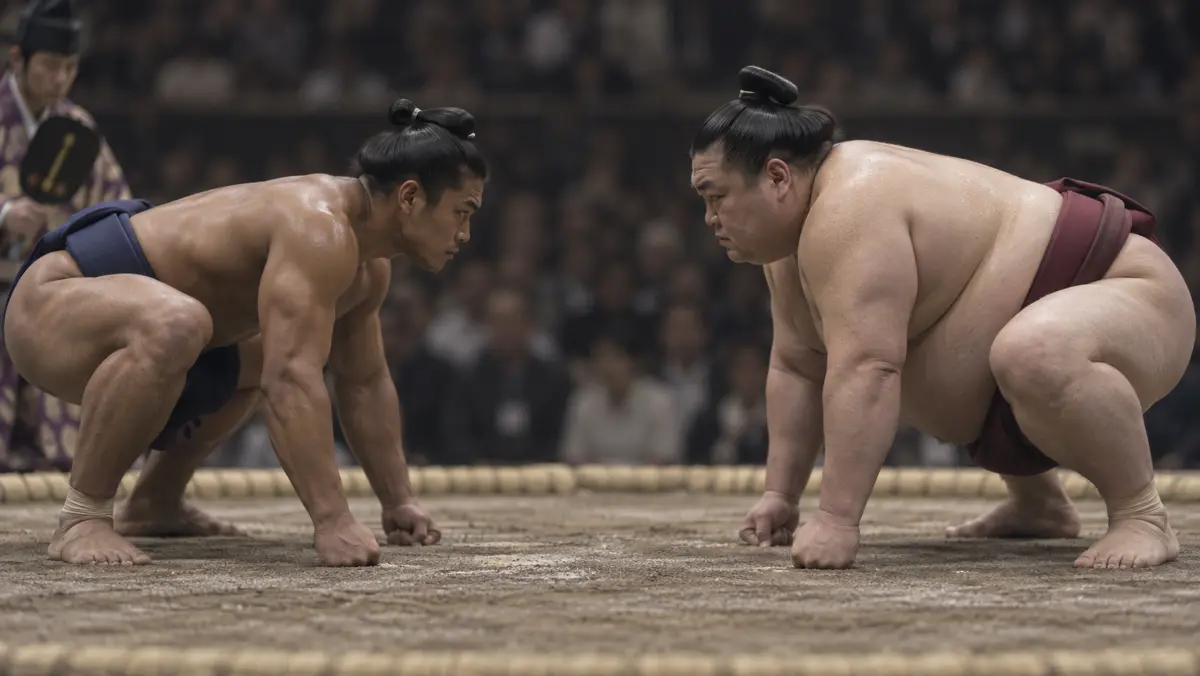
Two men squat at the centre of a circle of clay, close enough to hear each other breathe. They stare. Then they stand, walk back to their corners, and start again. They will do this for about four minutes. When they finally charge, most bouts are finished inside ten seconds. Two visitors at their first tournament look at each other. They waited all that time. For that.
What the waiting is for
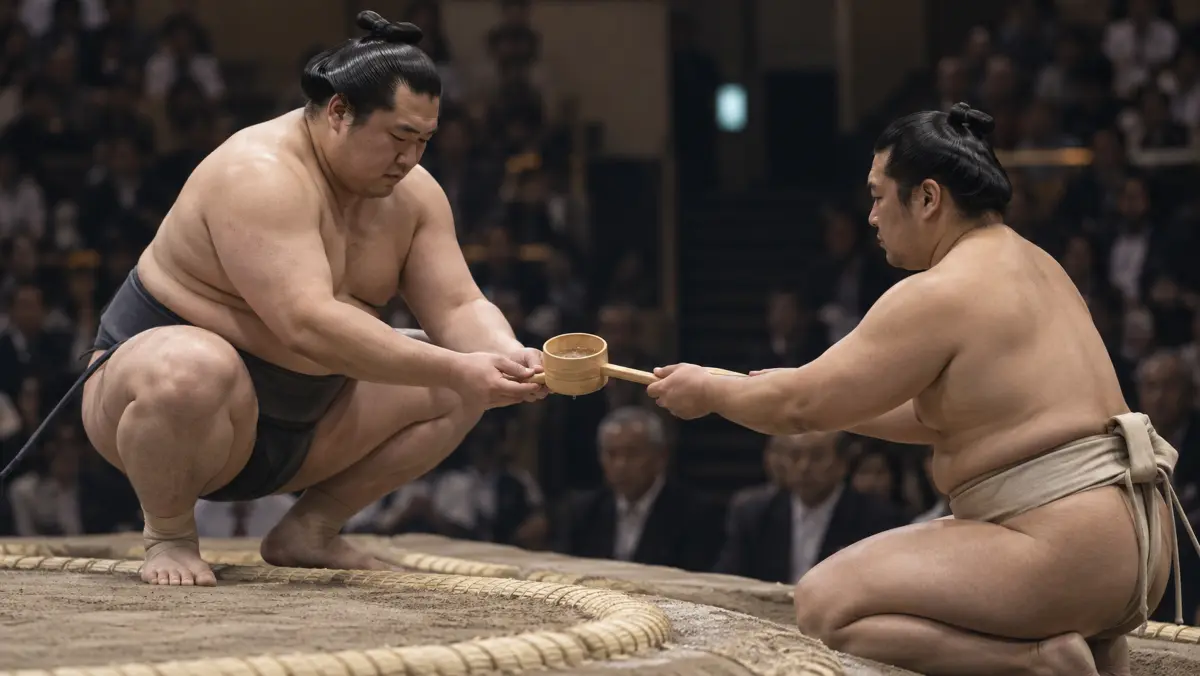
In the top divisions, each time a wrestler returns to his corner, he repeats the same movements. He rinses his mouth with water handed to him by another wrestler, and wipes his lips with paper. He takes a handful of salt and throws it across the clay. Then he lifts one leg high and stamps it down, and then the other. The stamping is part of basic sumo training, and also, by tradition, a way of driving out what is in the ground. The water, the paper and the salt are for cleansing.
The clock arrives by radio
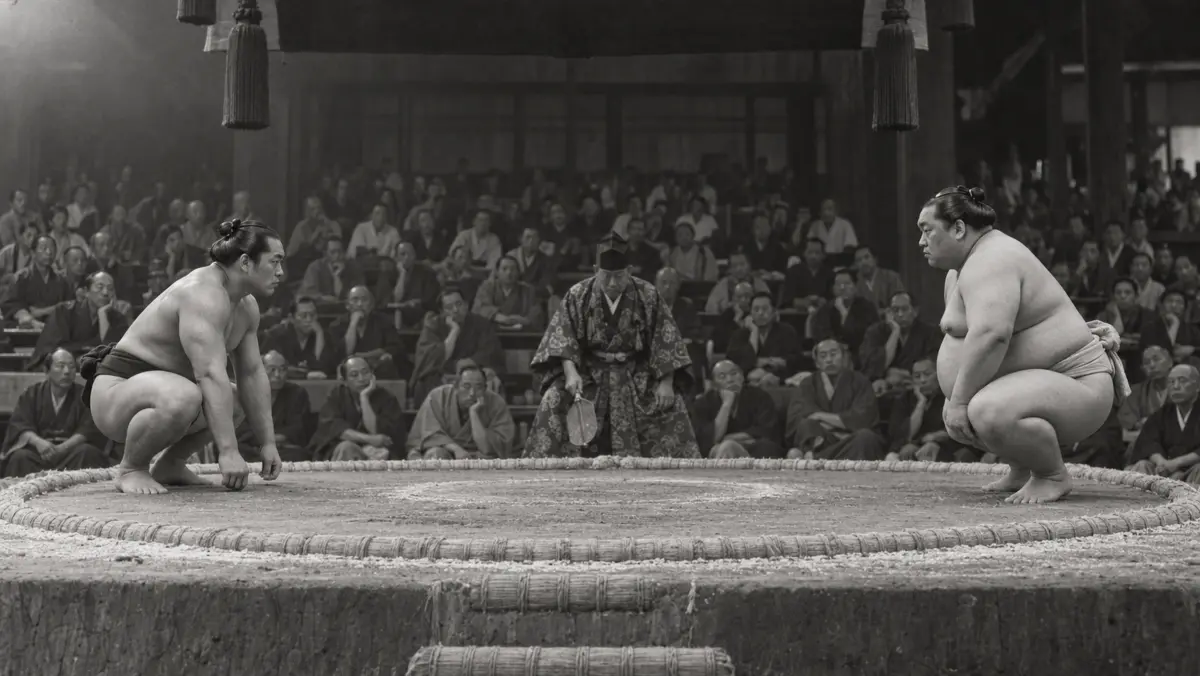
The staring is old. The clock is new. Before the late 1920s, two men could size each other up for as long as they liked. Then regular radio broadcasts began in 1928, and a broadcast has to end on time. A limit was set. Today it is four minutes in the top division, less further down, timed by a judge at ringside. The limit is on the waiting, not the fighting. If a bout drags on, the referee stops it, gives them water, and puts them back in exactly the grip they had. Both men have to put their hands down and find the moment together.
The ring is rebuilt every time
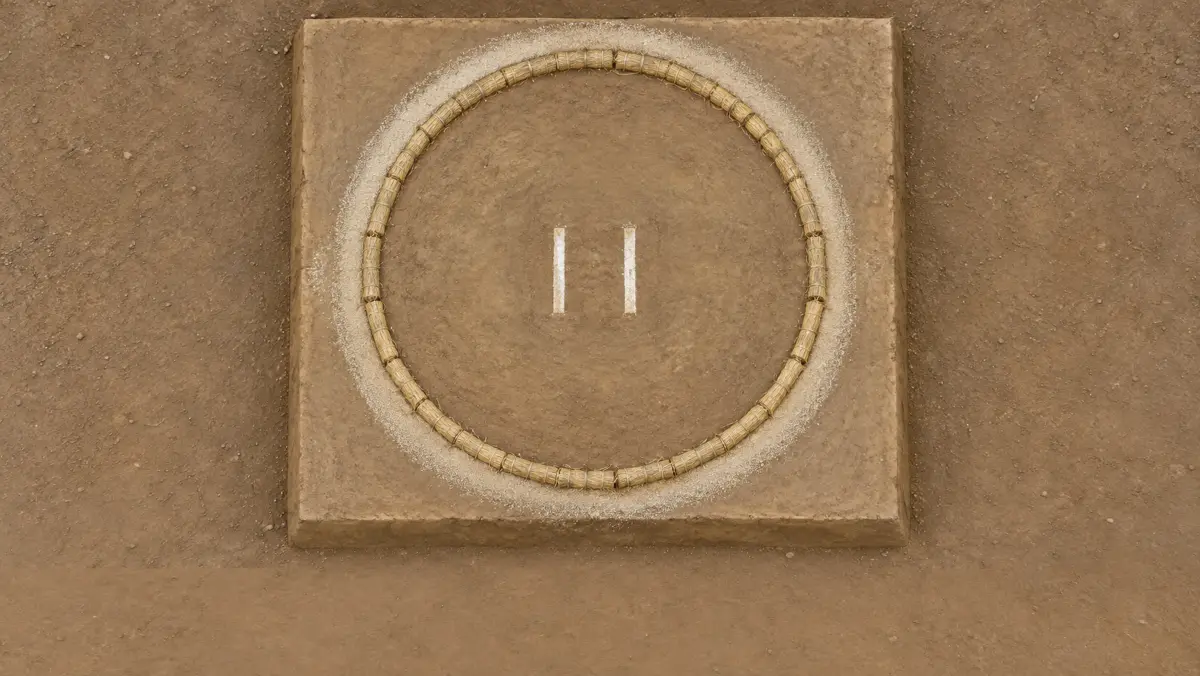
The ring is called the dohyo, and it is packed clay, built by the same men who call the wrestlers up and sweep the surface between bouts. Outside Tokyo it is raised from the base each time; at the hall in Tokyo, the base stays, and the top is broken off and laid again. Bales of rice straw are buried in the clay to form the circle. Step outside it, or touch the clay with anything but the soles of your feet, and the bout is over. Fine sand is brushed around the outside, so a foot over the line leaves a mark. The ground itself helps decide who lost.
What is buried under the clay
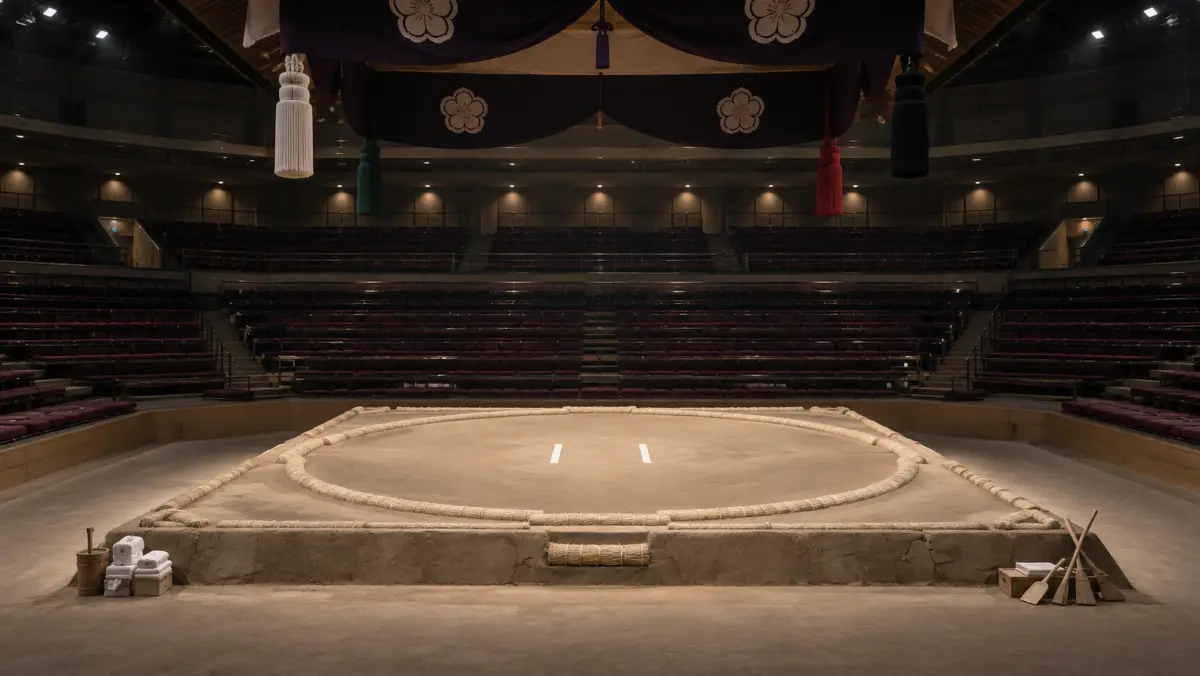
The day before the first bout, the senior referee, dressed closer to a Shinto priest than a sports official, purifies the ring. Offerings go into a hole at its centre: salt, washed rice, dried squid, kelp, nuts and chestnuts. The hole is sealed. For the next fifteen days, the wrestling happens directly above it. And above that hangs a roof built like the roof of a shrine. Those corners used to be pillars. The pillars blocked the view of the crowd, and later of the cameras. In 1952 they came out, and the roof was hung from the ceiling instead. Radio gave sumo its clock. Television took its pillars.
The referee, and who may step up
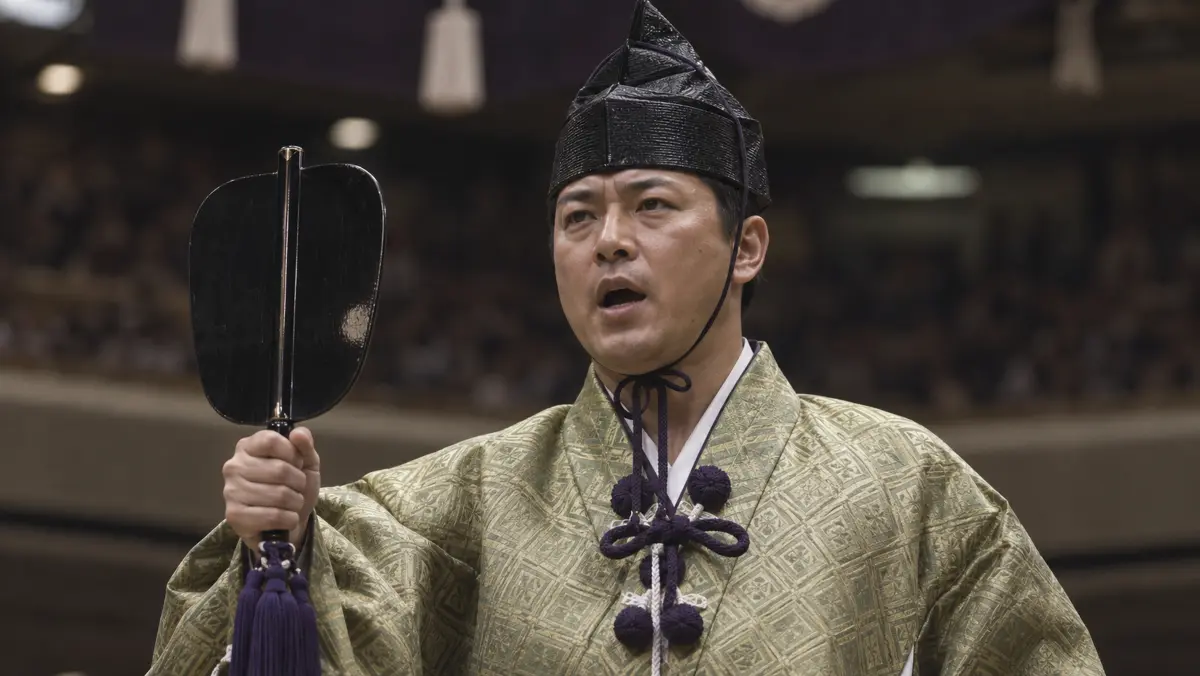
The referee looks ancient too, in robes from the samurai age and a lacquered hat. The form was settled in 1910. Only the highest-ranked referees carry a short sword at the waist, which by tradition stands for the weight of calling a bout wrong. Women do not enter the ring in professional sumo. In 2018, at an event in Maizuru, a mayor collapsed while speaking in the ring. Women came forward to give first aid, and an announcement told them to leave the clay. The association apologised for it afterwards.
No weight divisions
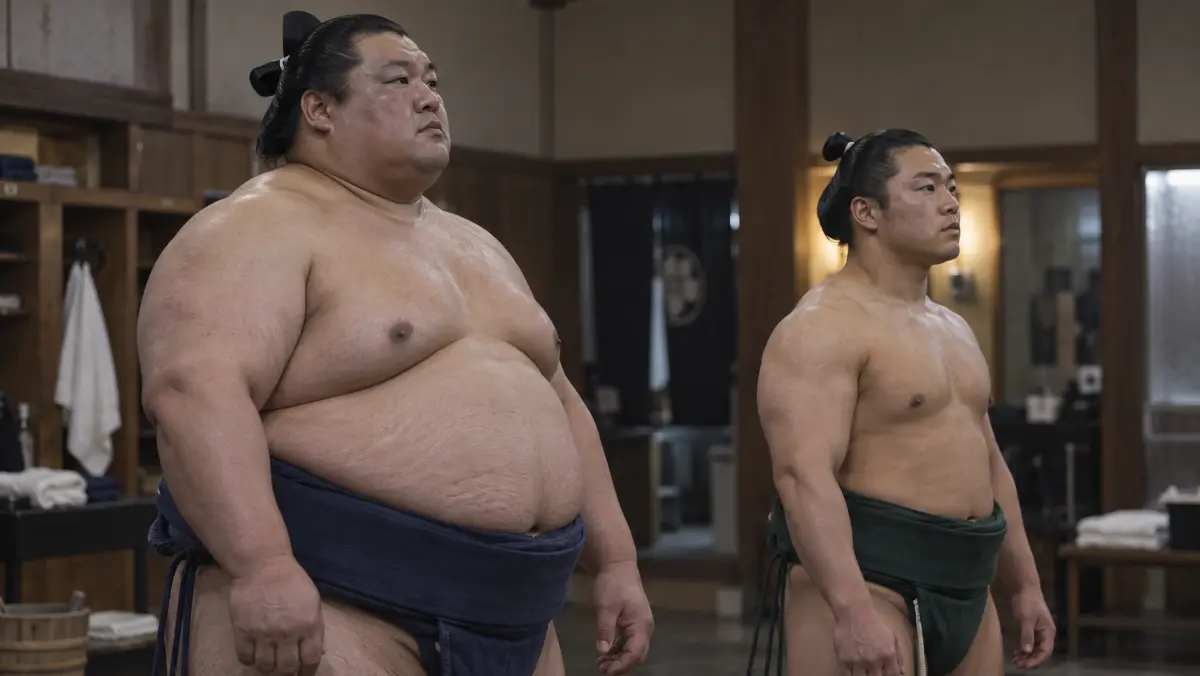
There are no weight divisions in professional sumo. A light man can be drawn against someone far heavier. But you cannot walk into a stable and start. A recruit is taken on by a stablemaster, has to meet the association's requirements, and goes through screening and a medical. After that, everything is arranged by rank. The junior men live together in the stable, train before dawn, and do the cooking and the cleaning for the men above them.
One sheet decides everything
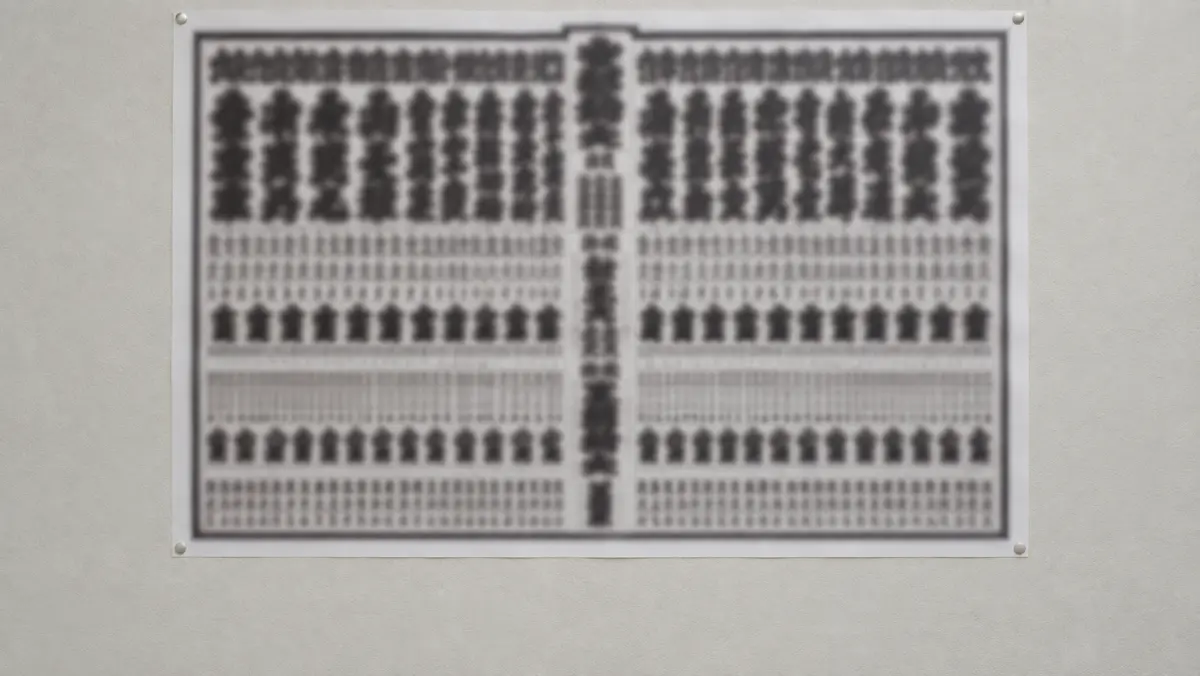
Rank is published on a single sheet before every tournament, the banzuke. The master copy is written by hand by the referees, in a thick, crowded brush style, and the names shrink as you go down the sheet. Where your name sits decides what you may wear in the street, whether you have attendants, whether you sleep in a shared room, and whether you are paid. Only the top two divisions draw a salary. Below them, wrestlers receive an allowance for each tournament. At the bottom of the sheet your name is tiny. So is everything else.
The rank you cannot fall from
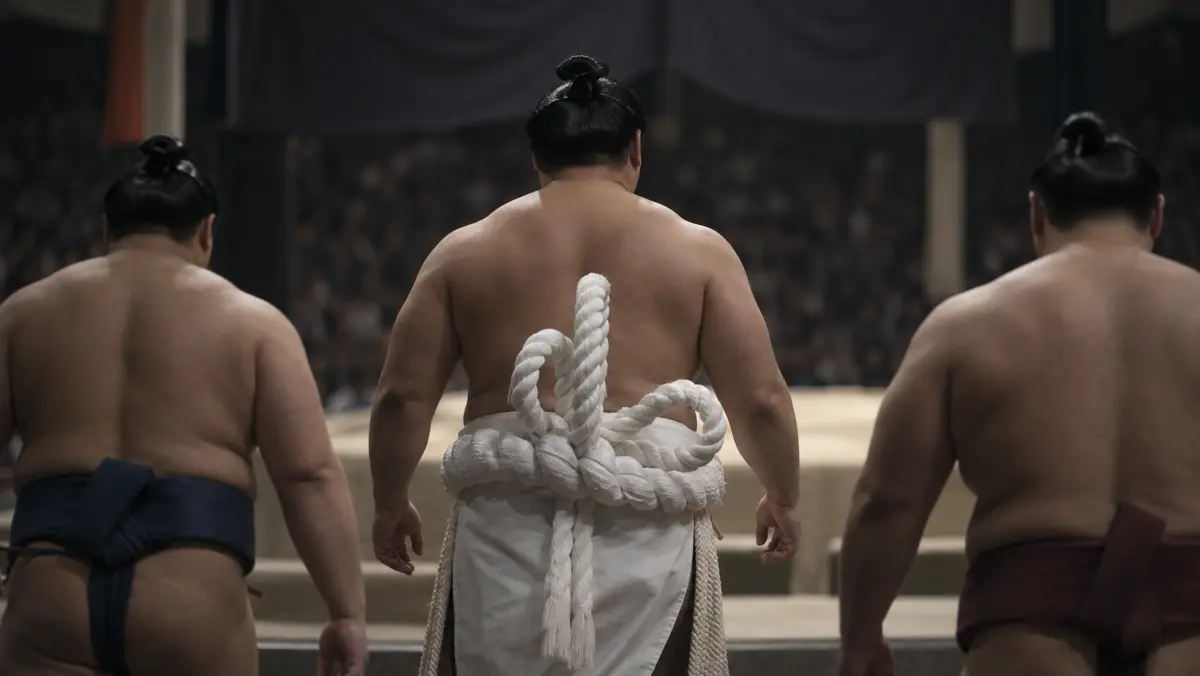
At the top of the sheet is the yokozuna. For his entrance ceremony he wears a heavy white rope around his waist, the same kind of rope that marks a boundary at a shrine. An ozeki can fall. A sekiwake can fall. In practice, a yokozuna is not demoted. So when he can no longer wrestle at the level the rank demands, the outcome is not a lower rank. It is retirement. There is nothing below it. Only out.
A modern professional sport
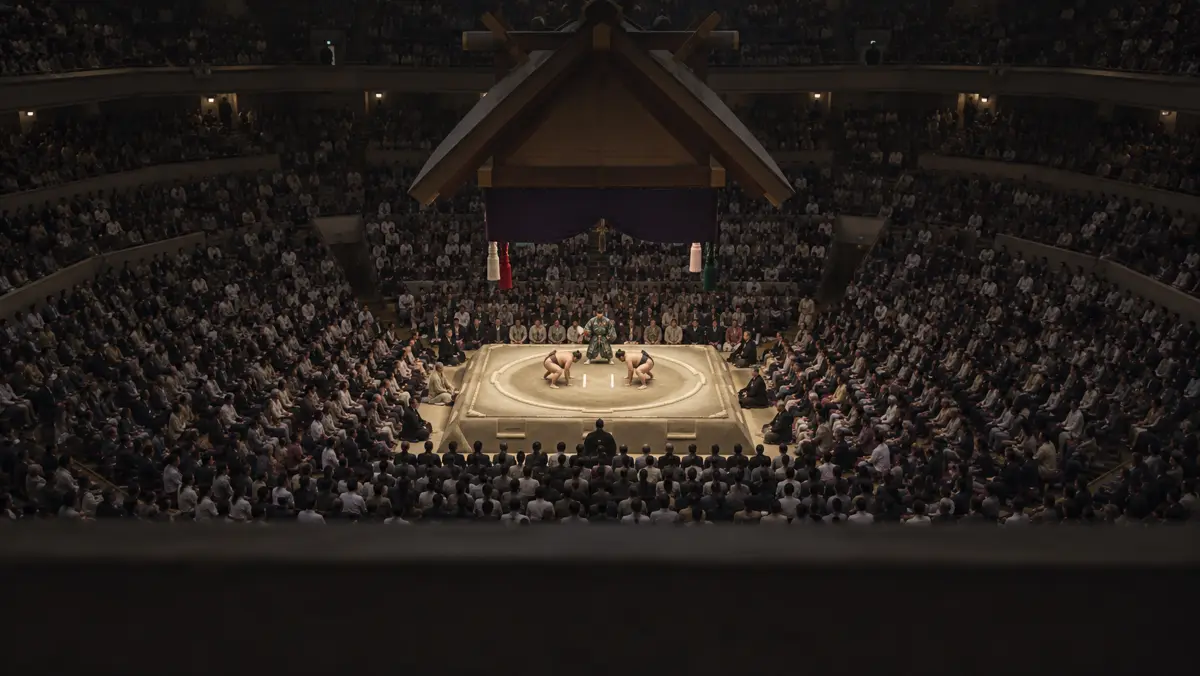
And all of this now runs as a professional sport. Six tournaments a year, fifteen days each, broadcast live every afternoon. In 1972, a wrestler from Hawaii won a top division championship. In 1993, another became the first foreign-born yokozuna. Since then, several men born in Mongolia have held that rank, some of them for years.
A hundred and sixty, then twenty
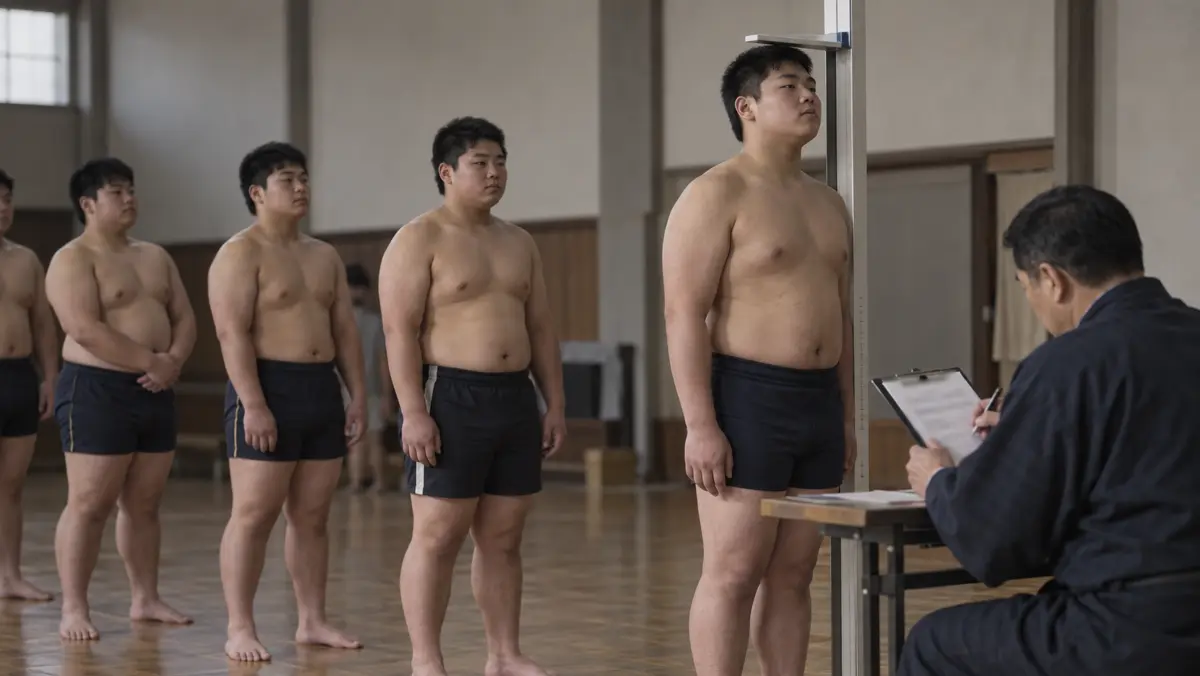
The harder problem is further down the sheet. To join, you take an entrance examination. At the spring tournament of 1992, a hundred and sixty young men took it. At the spring tournament of 2026, twenty did. That is the lowest since the current entry rules came in, in 1973. School sumo has shrunk. The big, strong fifteen-year-old now gets found by baseball, or judo, or rugby.
If you visit
What to watch at a sumo tournament
If you go, watch three things, and none of them is the bout itself. First, the salt. Again and again they go back to their corners for it. By the end of a tournament day, around forty-five kilos has gone onto the clay. Then the judge at ringside who keeps the clock. Then the hands. When both men have their fists on the clay, no whistle or bell sends them off. They go on their own. Our two visitors have stopped looking at each other. They are watching the clay. The contest is short. Almost nothing else about it is.
Where to see it
- Ryogoku Kokugikan, Tokyo — Tokyo’s sumo hall. Three of the six yearly tournaments are held here — in January, May and September. Google Maps
Enjoyed the story? Sophie answers a new question about Japan every few days on YouTube.
Subscribe on YouTube

