 Why Japan?
Why Did Japan Build Castles Like This?
 Told by Sophie, your guide to Japan
Almost everyone knows what a Japanese castle looks like: a white tower, layers of curling roof, a tall base of stone. But most lords did not live in that tower, the real defence began far outside it, many of the best-known castles took their familiar shape as the age of war was ending — and many of the towers you can visit today are not the originals.
The full story
In this story
- Inside Himeji's tower
- The tenshu and the goten
- A tower to be seen
- Moats and curving stone walls
- The box gate
- The path that leads away
- Building after Sekigahara
- One main castle
- Castles in the long peace
- The Meiji government decides
- Fire, war, and concrete
- Rebuilding the towers today
- Which tower are you climbing?
Inside Himeji's tower
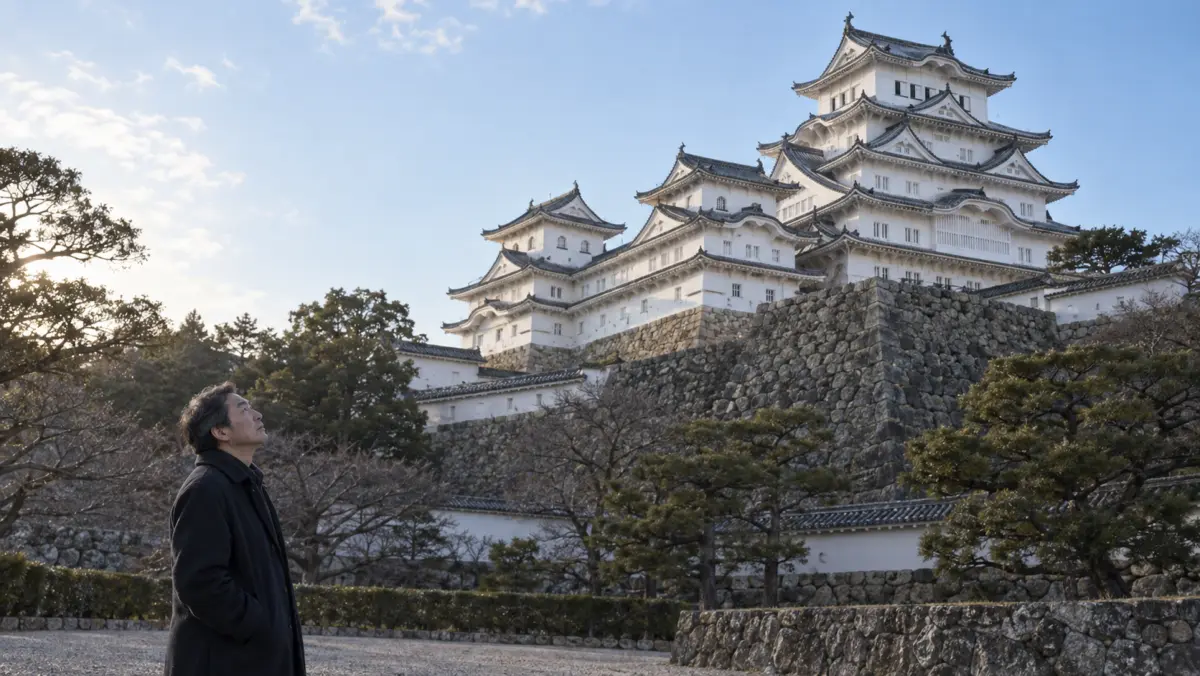
From the city below, Himeji Castle looks like somewhere a family could live for generations. Walk inside, and the rooms are nearly empty. Bare wooden floors. Stairs closer to ladders. Visitors climb slowly, holding the rail, and duck under the beams. Most of them duck a little too late.
The tenshu and the goten
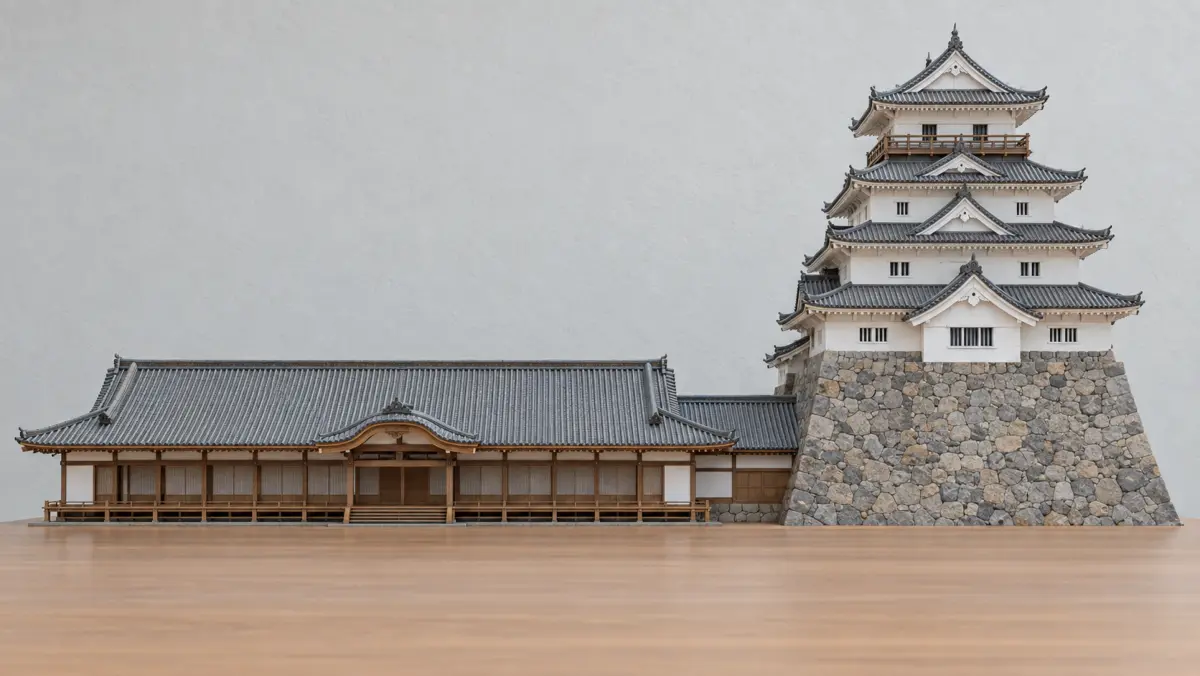
The tower is called the tenshu. The lord usually lived below it, in a low palace called the goten, with tatami rooms, painted sliding doors, and a garden. The tower stood above all of that. It could hold rice and weapons. It was a lookout, and a last place to fall back to. The famous exception is Oda Nobunaga, who is said to have lived in his tower at Azuchi. Most lords after him chose the palace.
A tower to be seen

So the tower was, first of all, something to be seen. A tall white shape on a hill of stone told every farmer and every rival who ruled this land, from miles away. Some lords rarely climbed their own towers. In many castles, for long stretches of time, the tenshu was used mostly for storage. A very tall attic.
Moats and curving stone walls
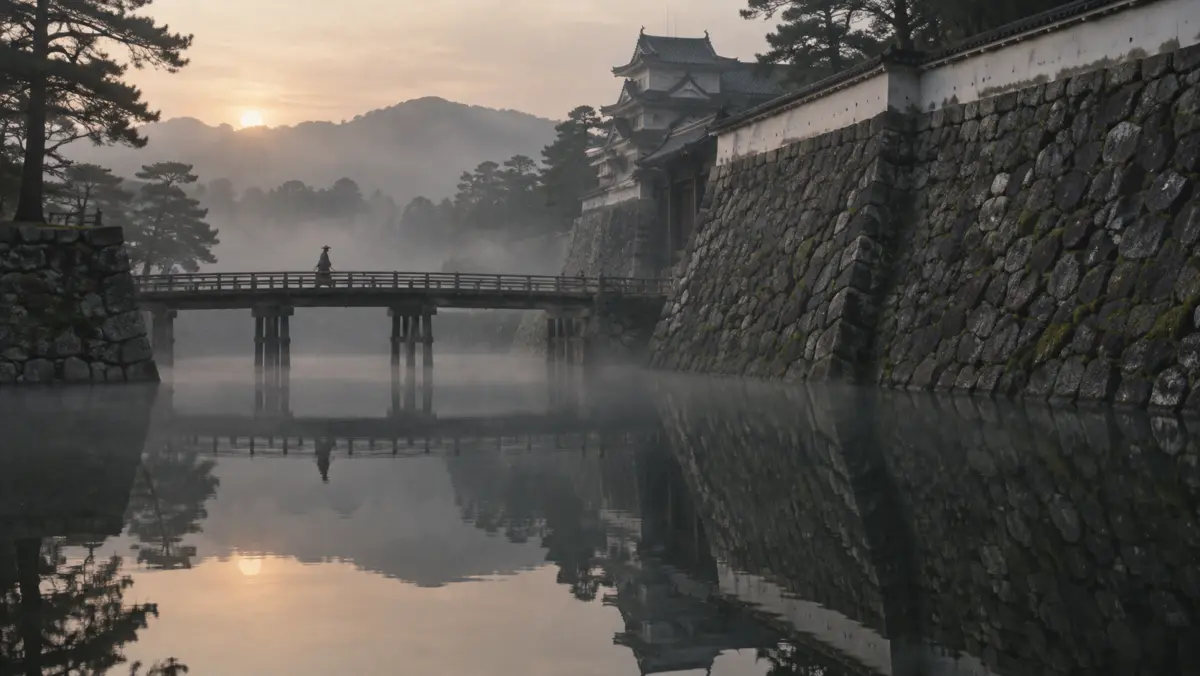
The real defence starts much further out. First, a moat, full of water or dug dry. Then the stone walls, laid without mortar. Large stones on the face, and behind them, packed layers of smaller stones, so rain can drain through. And on many castles, the walls curve. Near the bottom, the slope is gentle enough to start climbing. Near the top, it rises almost straight up.
The box gate
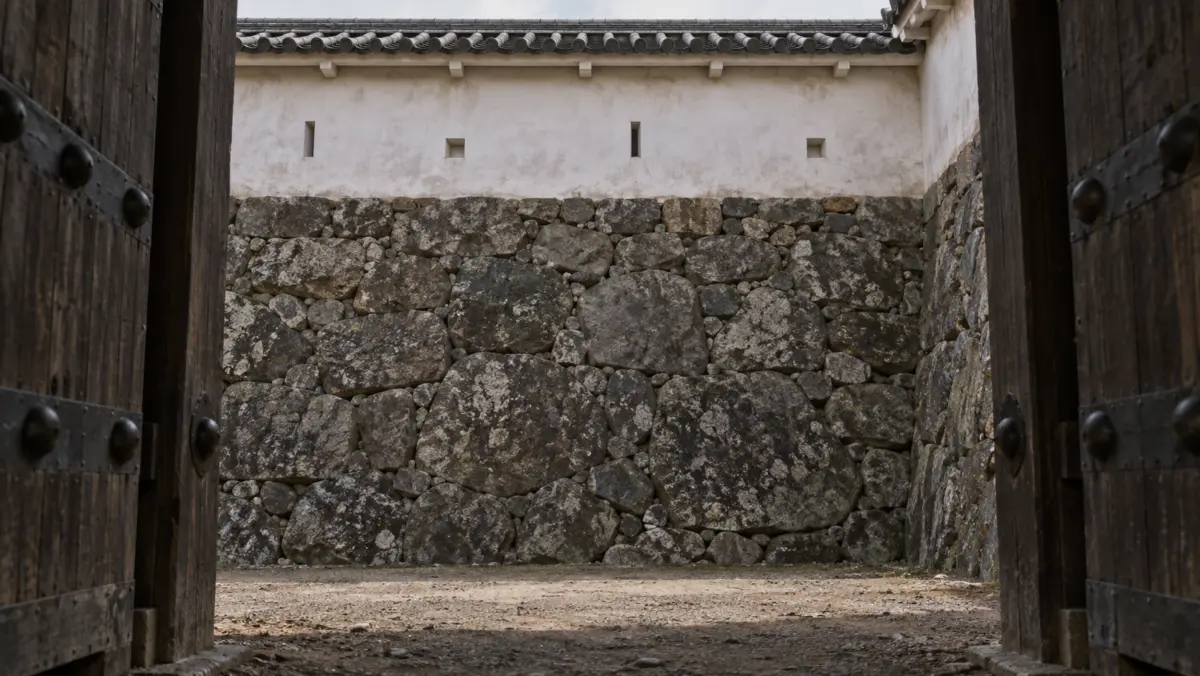
Get past the moat and the wall, and you reach a gate. Go through it, and there is no road ahead. There is another wall. You are in a small square yard, and the second gate is off to one side, at a right angle to the first. This is a masugata, a box gate. An army that pours through the first door cannot keep running. It has to stop, crowd together, and turn. The walls around that square often have small openings, triangles and squares, just big enough for a bow or a gun.
The path that leads away
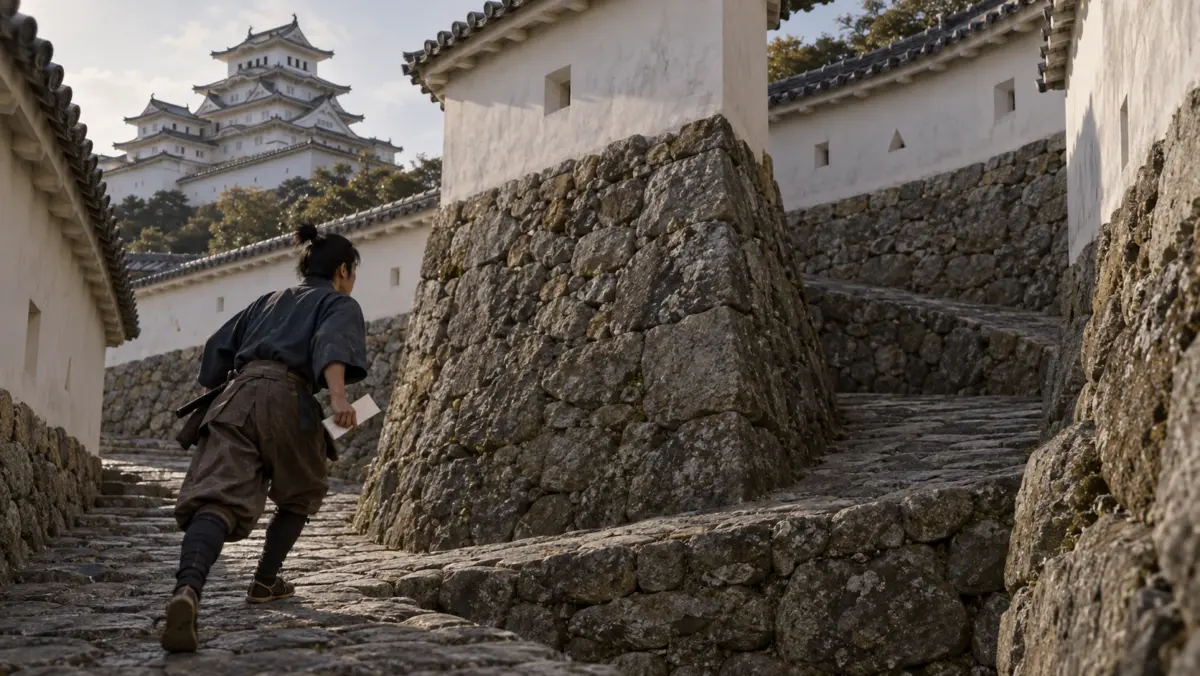
Past the gates, the path to the tower does not simply go to the tower. At Himeji, it climbs, doubles back, squeezes through narrow passages, and passes through gate after gate. For one stretch, it seems to lead away from the building you are trying to reach. Some walls and turrets jut out over the path, with openings in their floors, for dropping stones or shooting straight down. Visitors today follow the route with a map, stop, turn around, and check the map again. That was the idea.
Building after Sekigahara
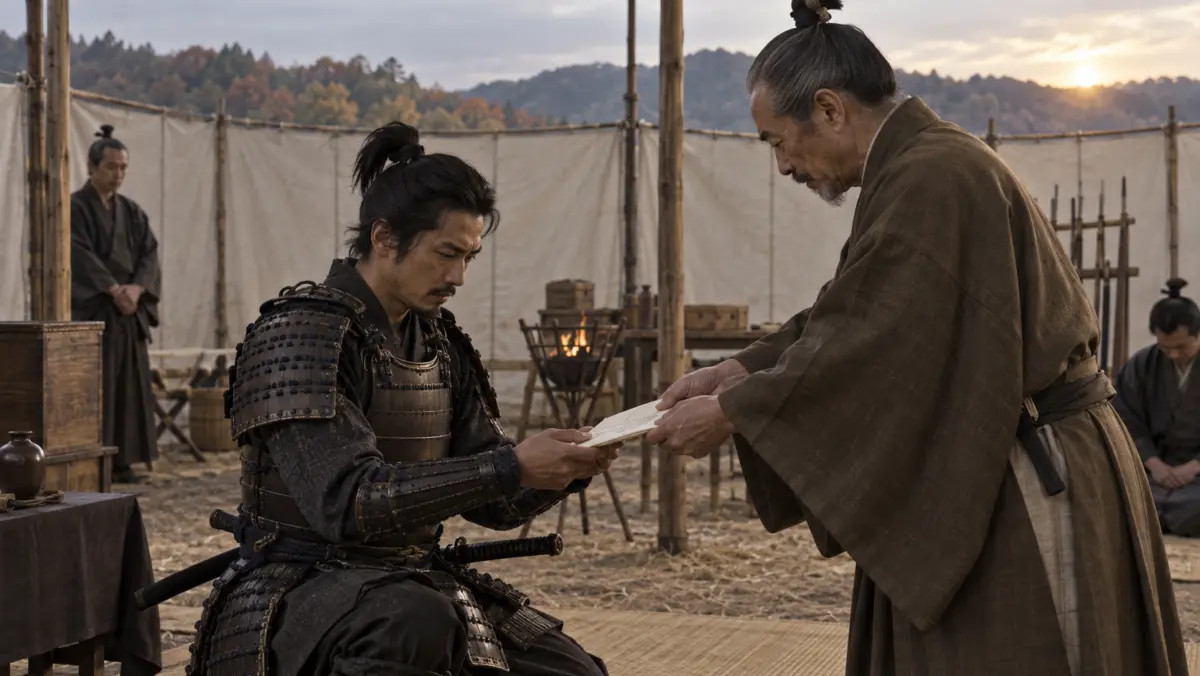
The wars were ending, but lords were still being moved to new lands. After the Battle of Sekigahara in 1600, many built new castles to hold them. Himeji was rebuilt into its present shape in these years. Nagoya Castle went up soon after, built for the Tokugawa, the new ruling house, with the stonework divided among lords from western and northern Japan. Look closely at Nagoya's stone walls, and you will find symbols carved into many of the blocks. They are thought to show which lord's crews each stone belonged to, so that no one's stones got mixed up with anyone else's. Even a boulder needed a name tag.
One main castle
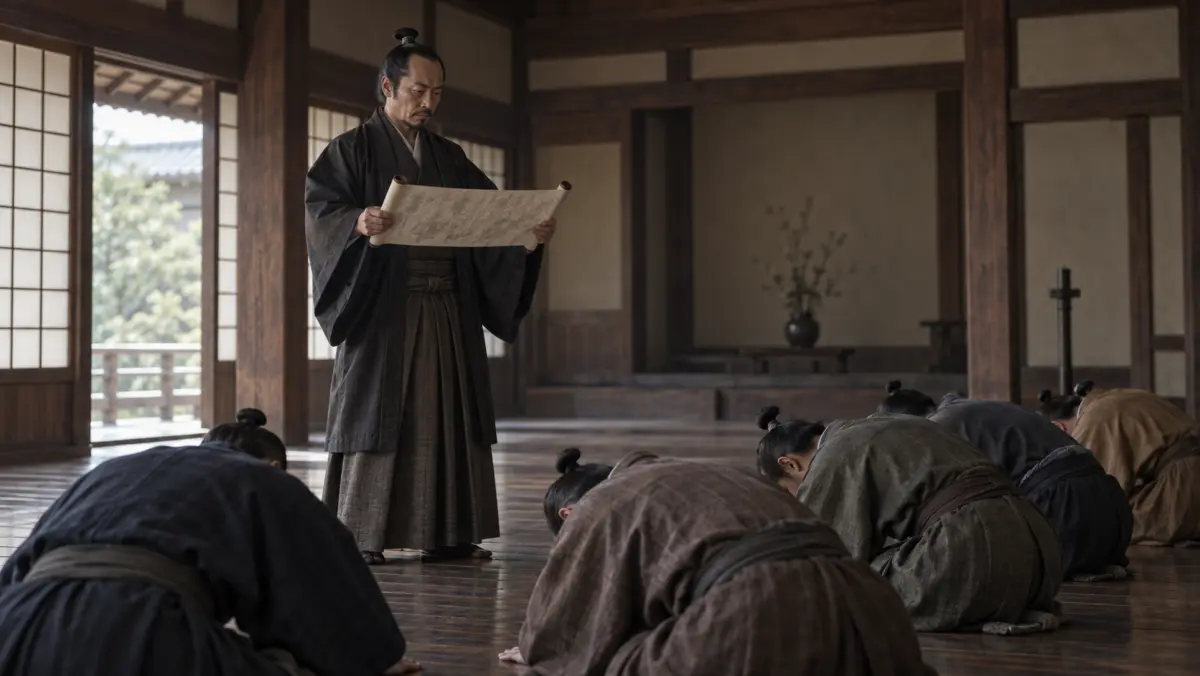
Then, in 1615, the shogunate ordered lords to keep their main castle and tear down most of the others. Large numbers of smaller castles disappeared. New castles were forbidden, and repairs came under the shogunate's watch. Home improvement was no longer a private matter. Four years later, Fukushima Masanori, the lord of Hiroshima, was moved to much smaller lands. The reason given was work on his castle that the shogunate had not properly approved.
Castles in the long peace
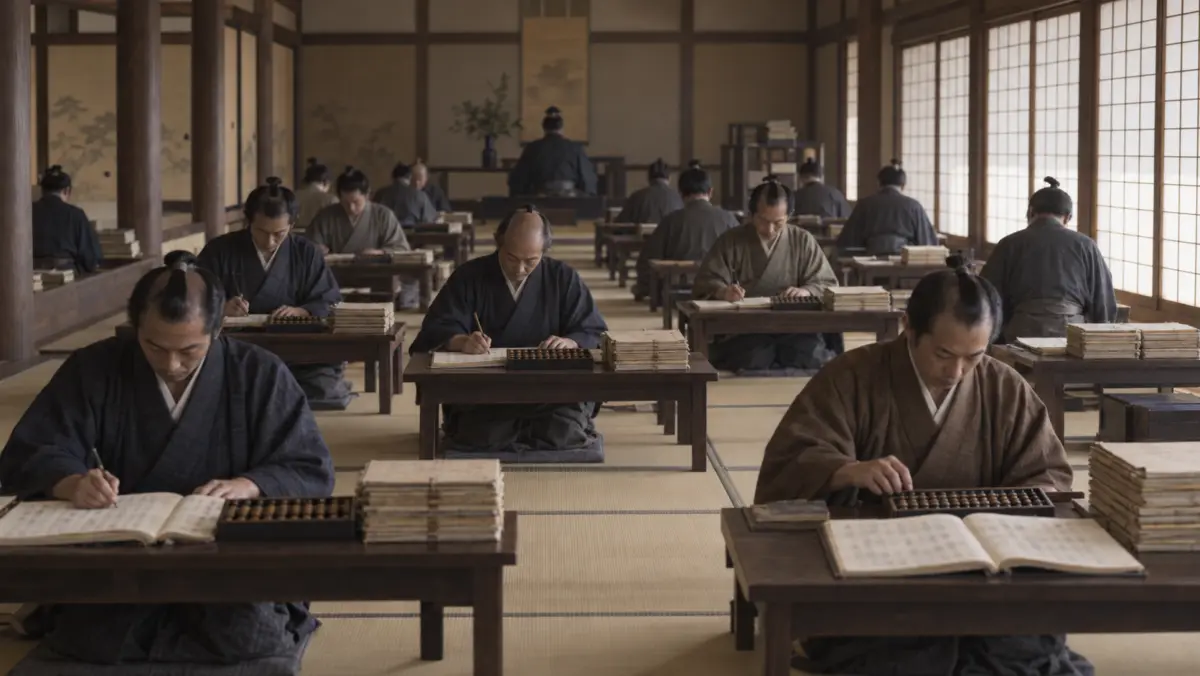
During the long peace, the palaces inside castles were homes, and also the centre of government. Officials there kept tax records, heard disputes, and received guests. The towers mostly stood and waited. When the great tower of Edo Castle, in what is now Tokyo, burned in a city fire, it was never rebuilt. The shogunate is said to have spent the money on the city instead. For the rest of the Edo period, the shogun's own castle had no tower. At Matsumoto, a moon-viewing room was added to the tower, it is said, for a planned visit from the shogun. The shogun never came.
The Meiji government decides
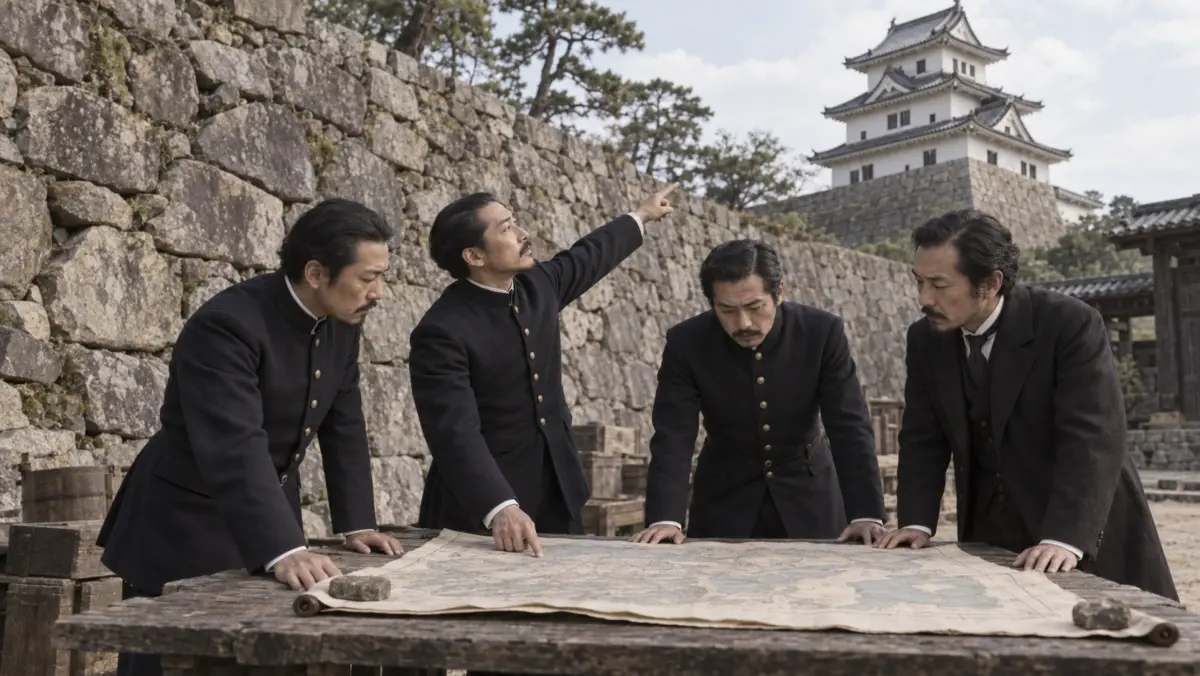
Within a few years, the new Meiji government decided which castle sites the army needed. Most of the others were to be sold or taken down. Even at the ones it kept, many old buildings were cleared away. To many people, castles now belonged to an old order, and were costly to maintain. Towers were sold off for timber and tiles.
Fire, war, and concrete
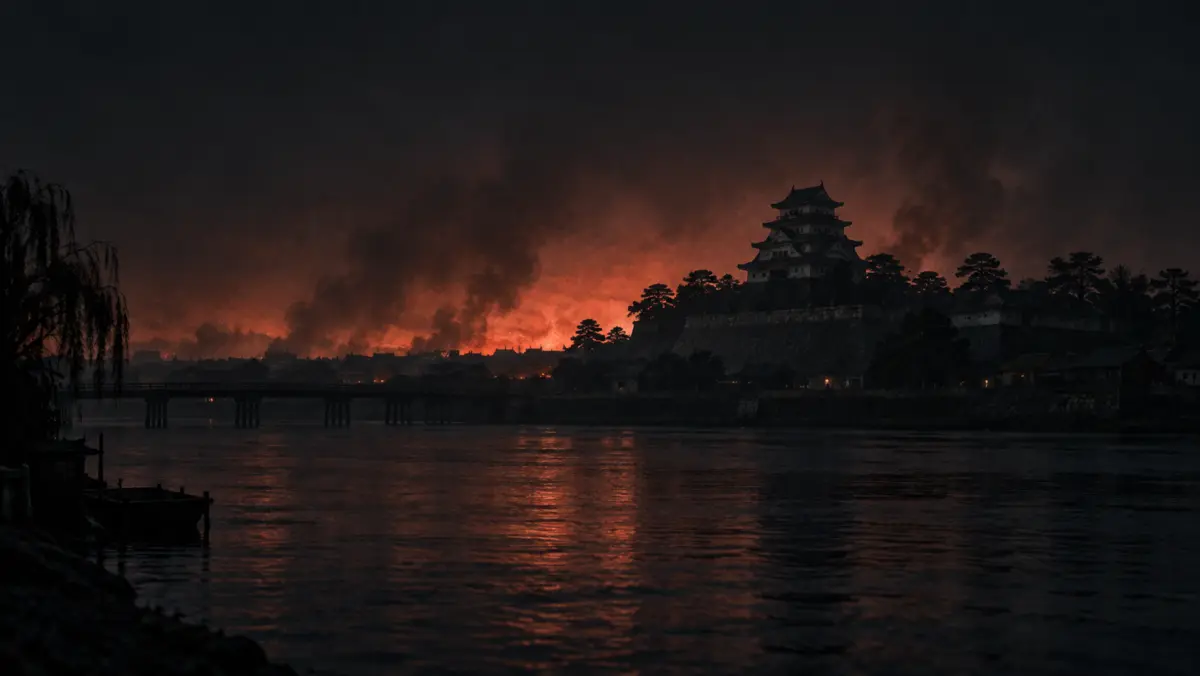
Fire and neglect took more. Then, in 1945, air raids burned the towers of Nagoya, Okayama, and several other cities, and the atomic bomb destroyed Hiroshima's. After the war, towns built them again, very often in reinforced concrete, with museums inside. And Osaka's famous tower? It is not from the age of the samurai at all. It went up in 1931, already in concrete. With an elevator.
Rebuilding the towers today
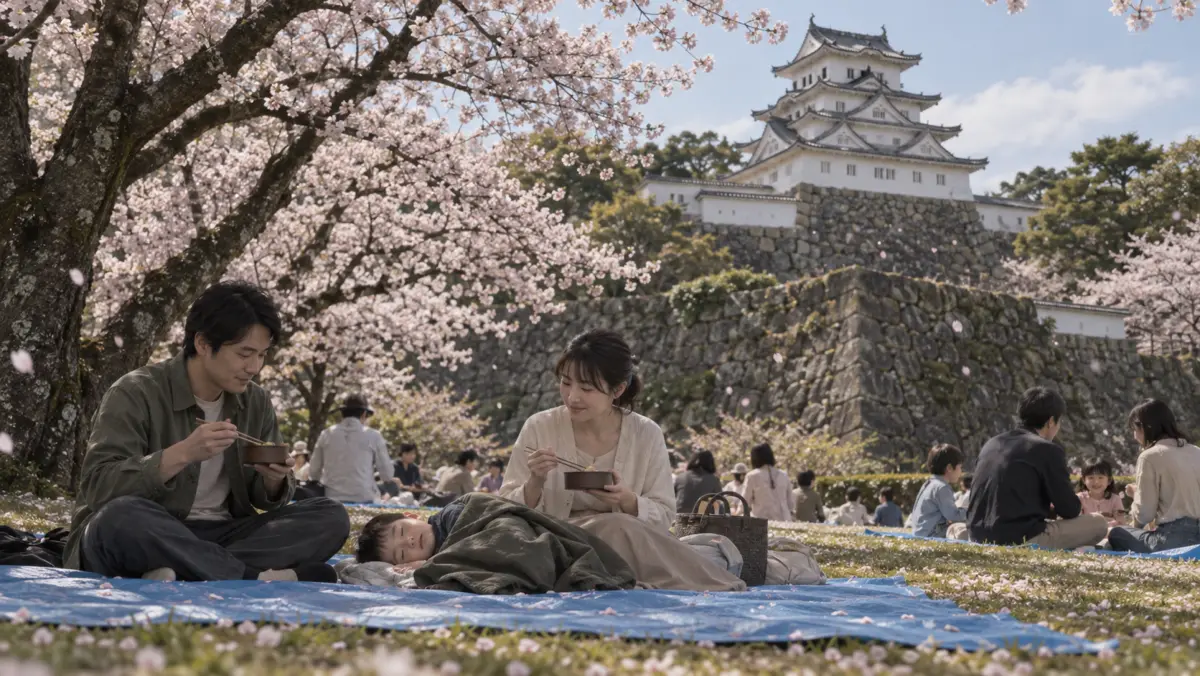
Today, families come for the cherry blossoms under the walls. School groups ride up to the top floor and look out at the city. And some towns now want to go back to wood. Nagoya's concrete tower has been closed to visitors for years. The city is preparing to rebuild it in wood, as it was. It is also testing a small lift, for people who cannot use the stairs.
If you visit
Which castle tower are you climbing?
The tower most lords never lived in is now the one so many visitors want to climb. So know which kind you are climbing. Himeji and Matsumoto are two of the twelve originals. Many rebuilt towers are concrete. Osaka's has the elevator. In an original, keep a hand on the rail. And duck early.
Where to see it
- Himeji Castle, Hyogo — One of the twelve original towers. The path to the top climbs, doubles back and squeezes — duck early. Google Maps
- Matsumoto Castle, Nagano — Another of the twelve original towers, with steep wooden stairs inside. Google Maps
- Osaka Castle — The famous tower went up in 1931, already in concrete — with an elevator. Google Maps
- Nagoya Castle, Aichi — Burned in 1945, rebuilt in concrete, and now being prepared for rebuilding in wood. Google Maps
- Okayama Castle — Its tower burned in the 1945 air raids and was rebuilt after the war. Google Maps
- Hiroshima Castle — Its tower was destroyed by the atomic bomb and rebuilt after the war. Google Maps
Enjoyed the story? Sophie answers a new question about Japan every few days on YouTube.
Subscribe on YouTube

