 Why Japan?
Why Does Japan Have Both Shrines and Temples?
 Told by Sophie, your guide to Japan
Japan has shrines and temples, and most people use both. Sophie follows how the gods of Japan and the Buddha came to share one country: a statue thrown into a canal, a god who protected the Great Buddha of Nara, a thousand years of shared grounds, and a quiet division of life that still shapes Japan today.
The full story
In this story
- A Monk and a Priest on a Train
- More Believers Than People
- Foxes at a Zen Temple
- The Buddha Arrives
- A God Protects the Great Buddha
- A Thousand Years Together
- Temples Take the Endings
- Shrines Take the Beginnings
- Younger Than the Eiffel Tower
- Two Altars, One Home
- Shrine or Temple? How to Tell
- Born Shinto, Married Christian
- A Calendar Growing Thin
A Monk and a Priest on a Train
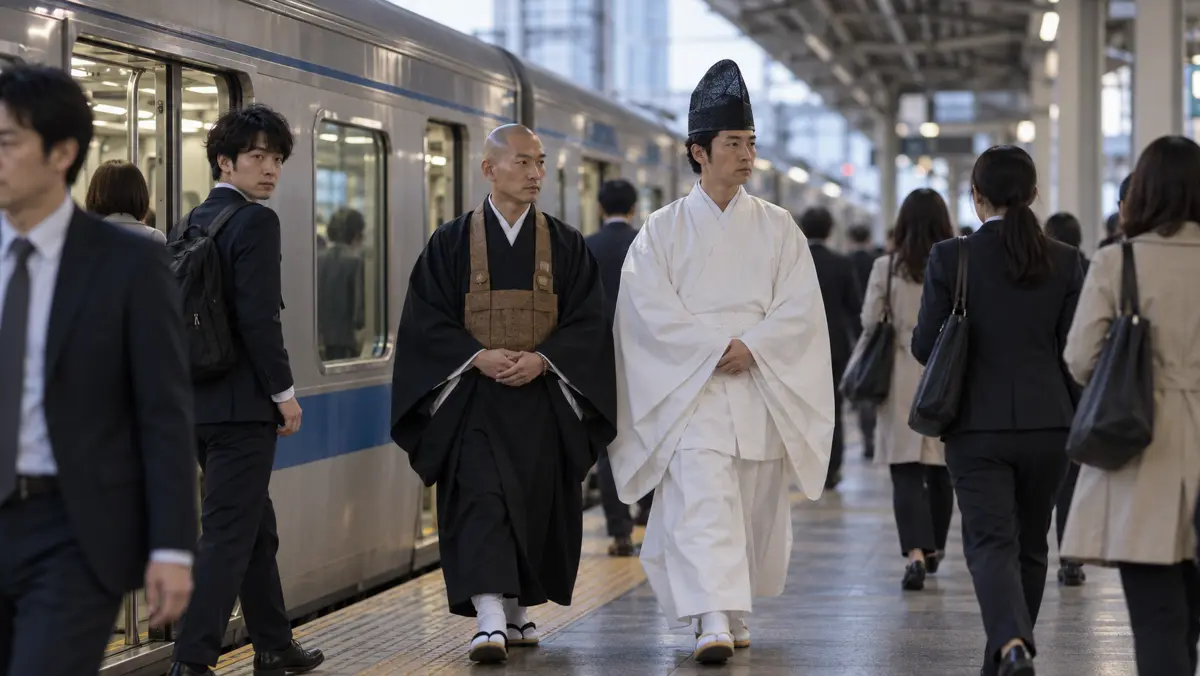
Picture a Buddhist monk and a Shinto priest side by side on a Tokyo train, in full robes. People might glance once. At Asakusa, both get off. A baby is often taken to a shrine about a month after birth. The family grave is often at a Buddhist temple.
More Believers Than People
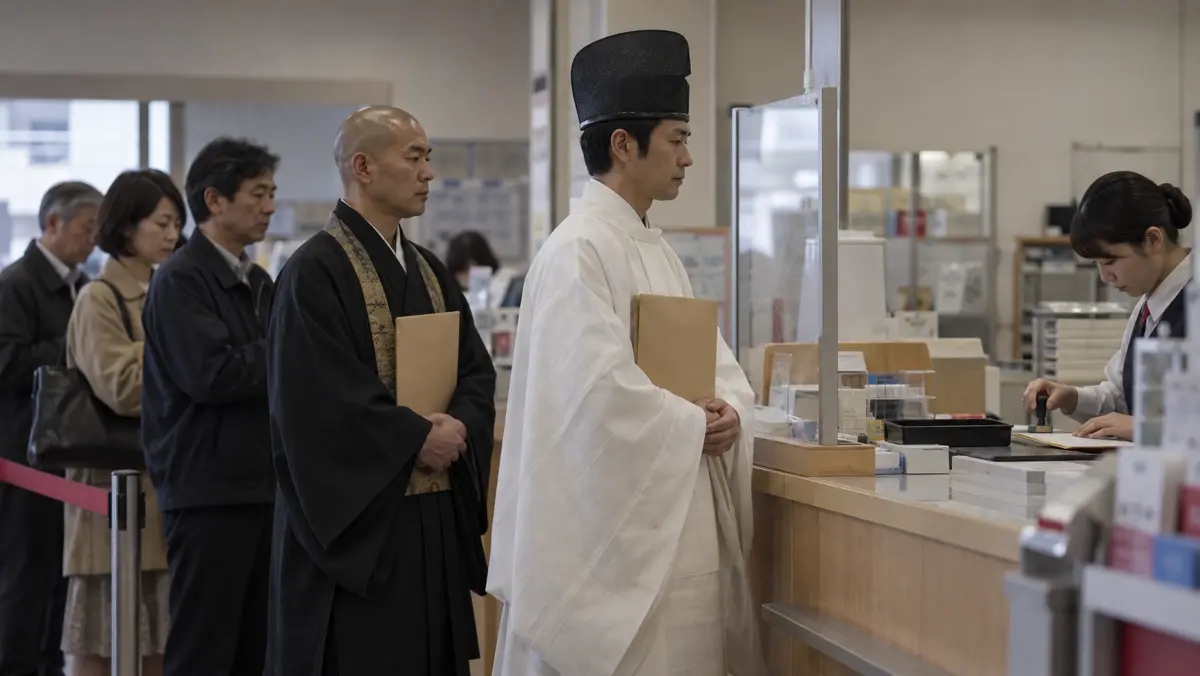
Every year, Japan's religious groups report how many followers they have. At the end of 2023, Shinto groups counted about eighty-three million. Buddhist groups counted about eighty-one million. Japan's population was about one hundred and twenty-four million. Each group counts in its own way, and the same family can be counted twice: once by its local shrine, once by its family temple.
Foxes at a Zen Temple
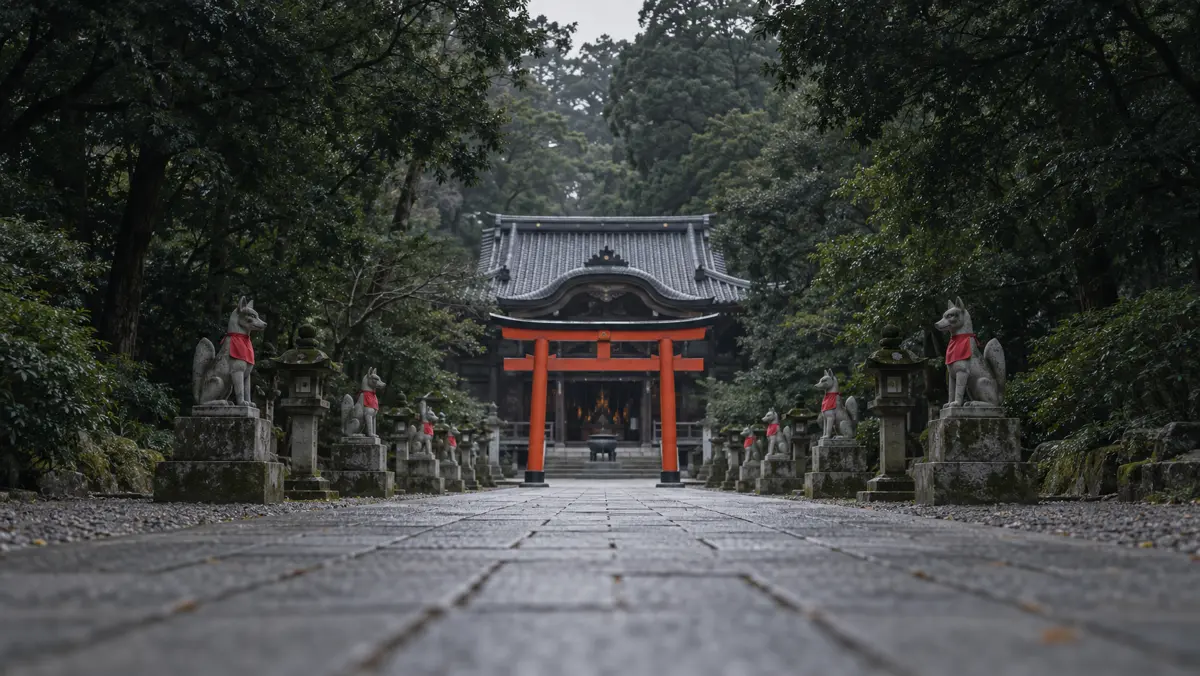
Some places do not choose at all. In Aichi, Toyokawa Inari has a red torii gate, rows of stone foxes, and a name that sounds like a shrine. It is a Zen Buddhist temple, and has been for centuries. Back at Asakusa, Sensoji, the city's oldest temple, stands right beside Asakusa Shrine, which honors the three men of the temple's founding legend. Every May, the shrine's great festival fills the temple grounds too. Stone foxes, beside Zen monks.
The Buddha Arrives
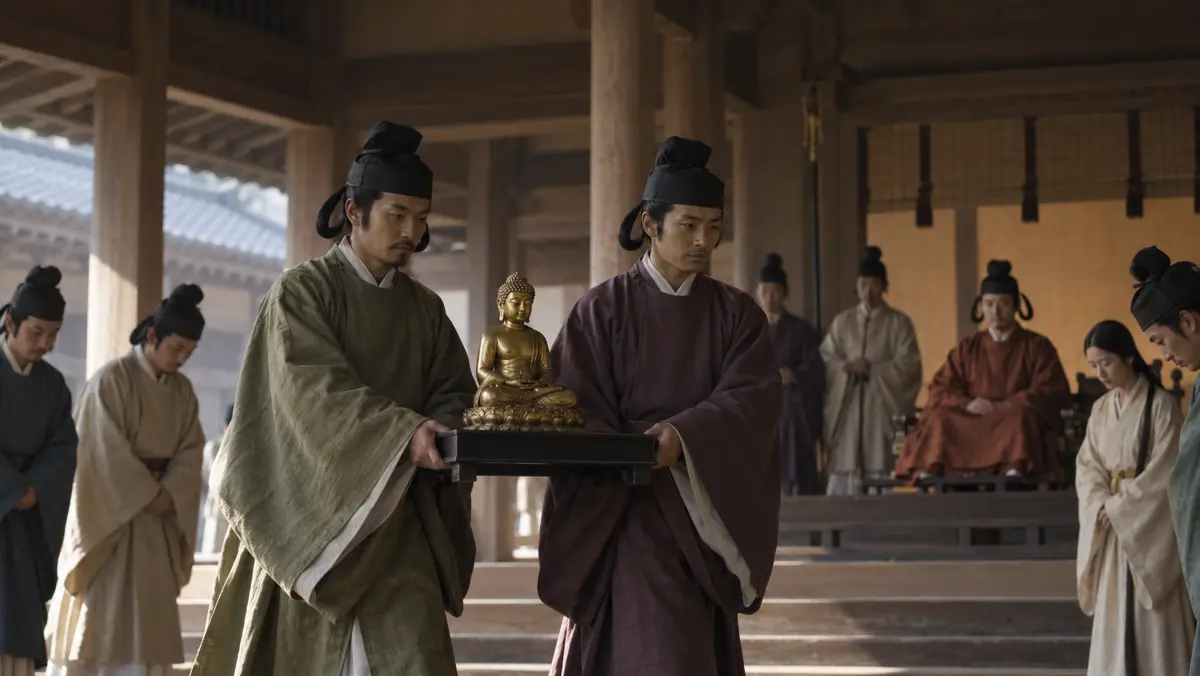
Buddhism reached the Japanese court in the sixth century, from a kingdom in Korea, along with a gilded statue of the Buddha. Not everyone welcomed it. Some powerful families warned that honoring a foreign god would anger Japan's own kami. When a plague broke out, an eighth-century chronicle says, the statue was thrown into a canal. Within a few decades, the court was building temples.
A God Protects the Great Buddha
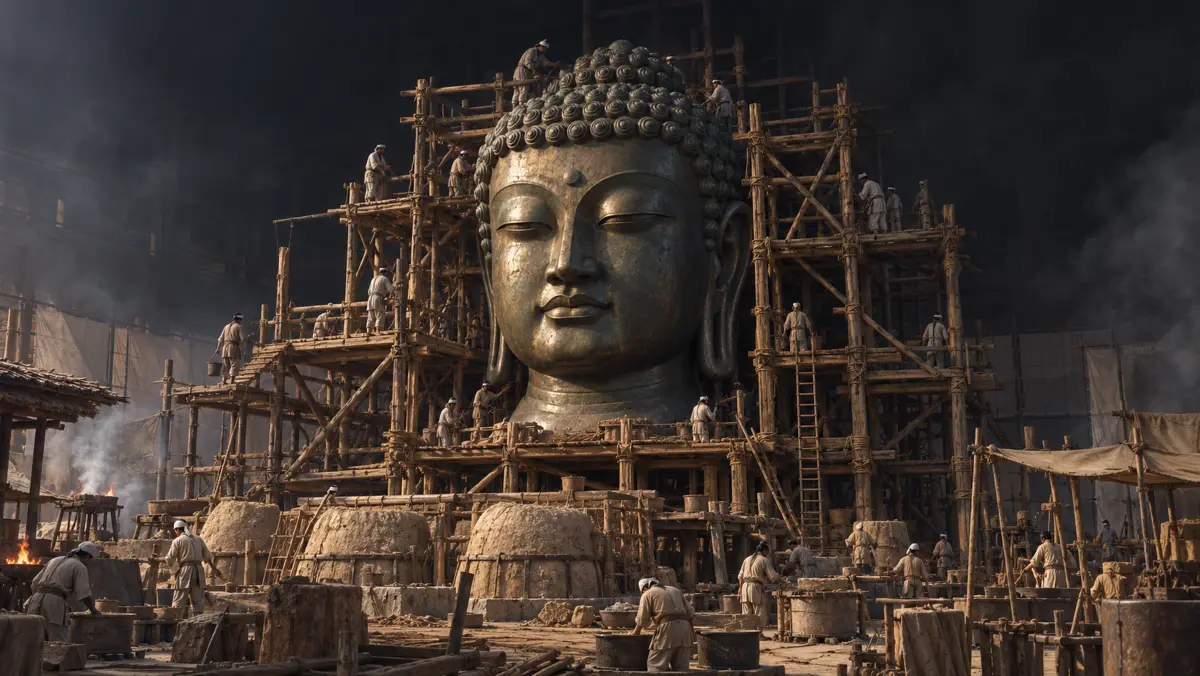
What followed was not a war, but a slow blending. In 749, while the giant bronze Buddha of Nara was being built, the god Hachiman was welcomed from Kyushu to the capital to protect the work. Later, Hachiman was given a Buddhist title: Great Bodhisattva. Across the country, small temples were built inside shrine grounds, and monks read sutras for the kami, who were thought to need the Buddha's teaching too.
A Thousand Years Together
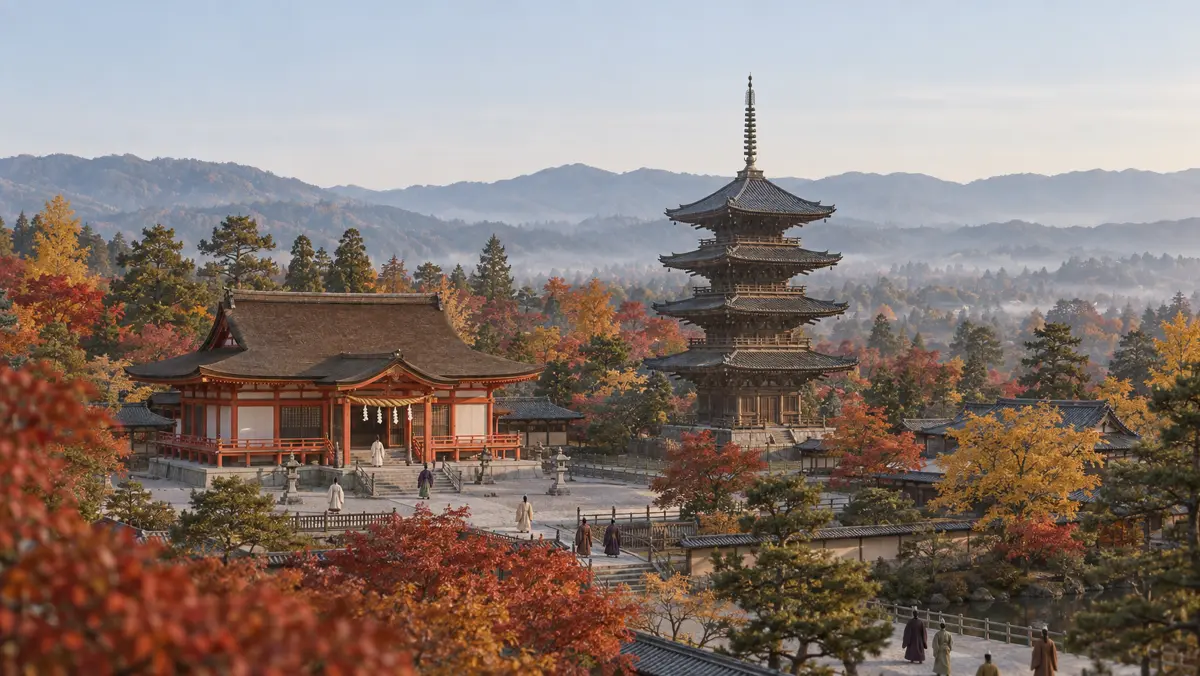
By the Heian period, one influential idea held that many kami were local forms of Buddhas and bodhisattvas. The sun goddess Amaterasu was linked with the cosmic Buddha, Dainichi. For roughly a thousand years, shrine and temple were often one place. At many great shrines, the people in charge were Buddhist monks.
Temples Take the Endings
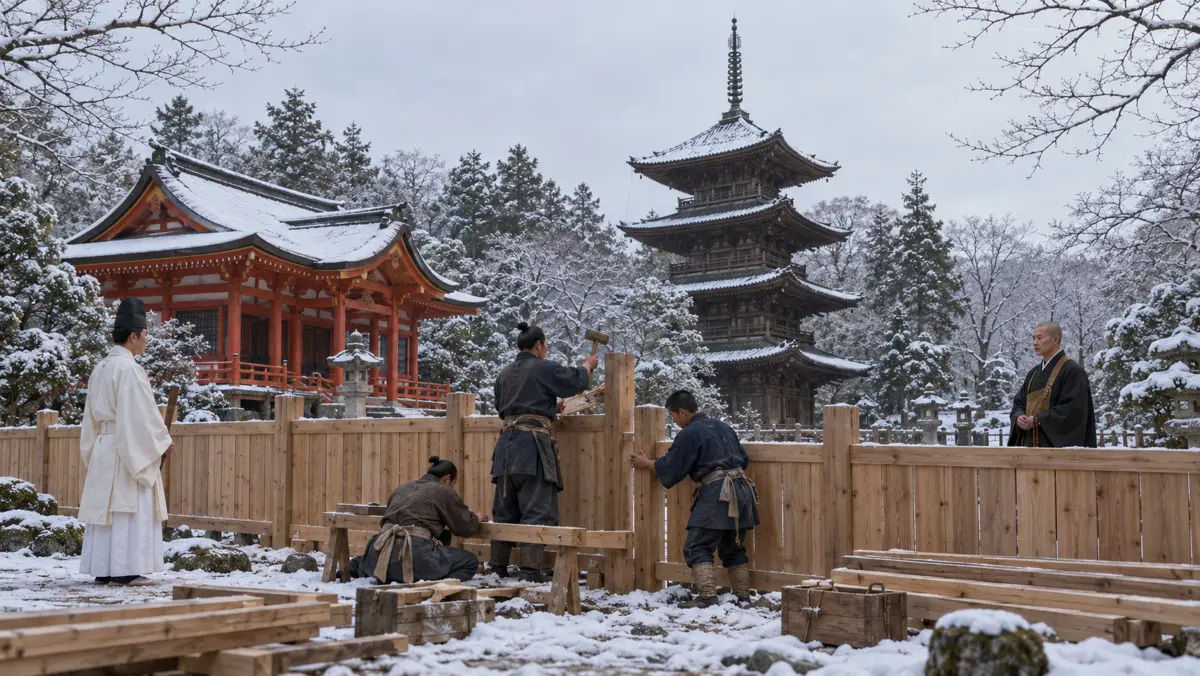
By 1868, a rough division of the work of a human life was already visible. The temple side of it owes much to a rule from the 1600s. To root out Christianity, the shogunate required almost every household to register with a Buddhist temple. The temple vouched for each family. And so temples came to handle funerals and memorial rites for most families.
Shrines Take the Beginnings
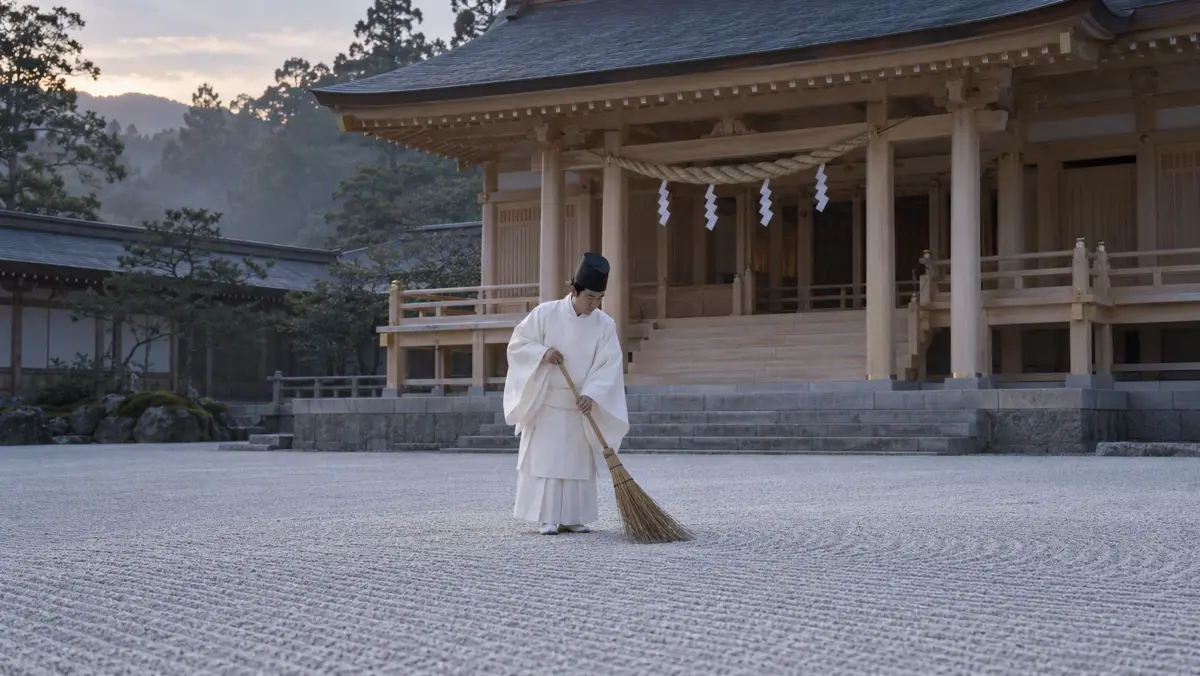
Shinto took the other end. In Shinto, death brings impurity, called kegare, and shrines have long kept it at a distance. Families in mourning often stay away from shrines for a while, and funerals at a shrine are rare. The gods took the beginnings. The Buddhas took the endings.
Younger Than the Eiffel Tower
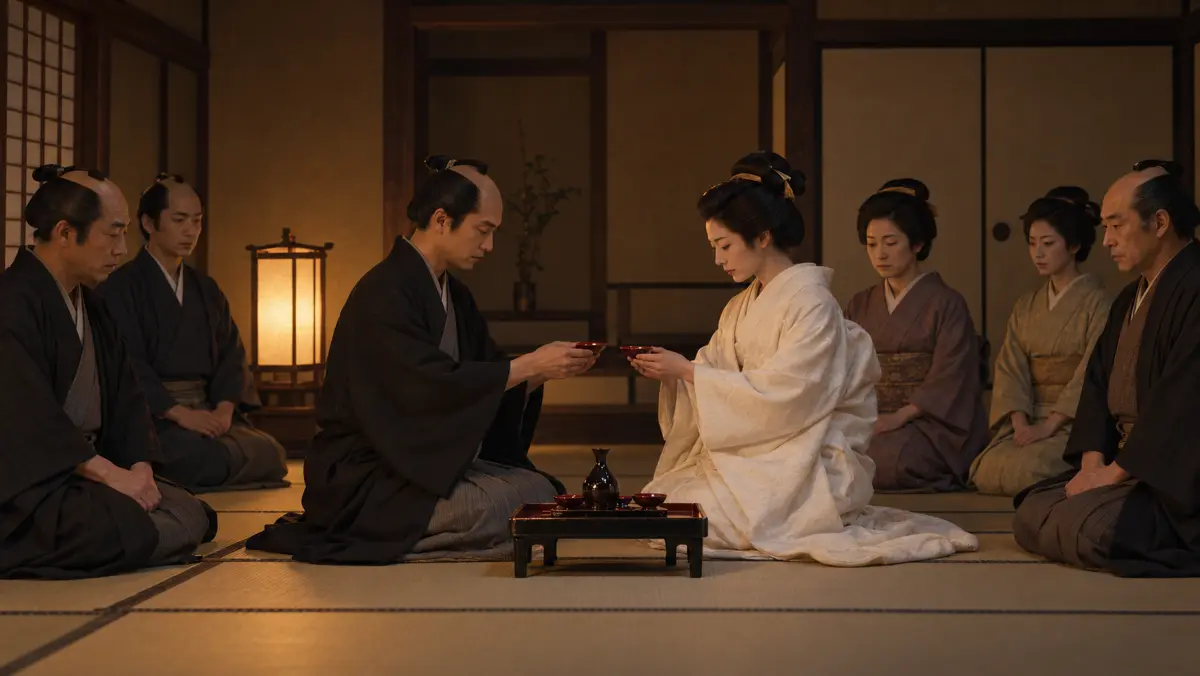
And the middle? For centuries, most Japanese couples married at home. The Shinto wedding in its modern form spread after the Crown Prince married before the gods in 1900. A Tokyo shrine began offering the ceremony to the public soon after. In this form, the shrine wedding is younger than the Eiffel Tower. And by the 1990s, more couples were choosing a Christian-style chapel instead.
Two Altars, One Home
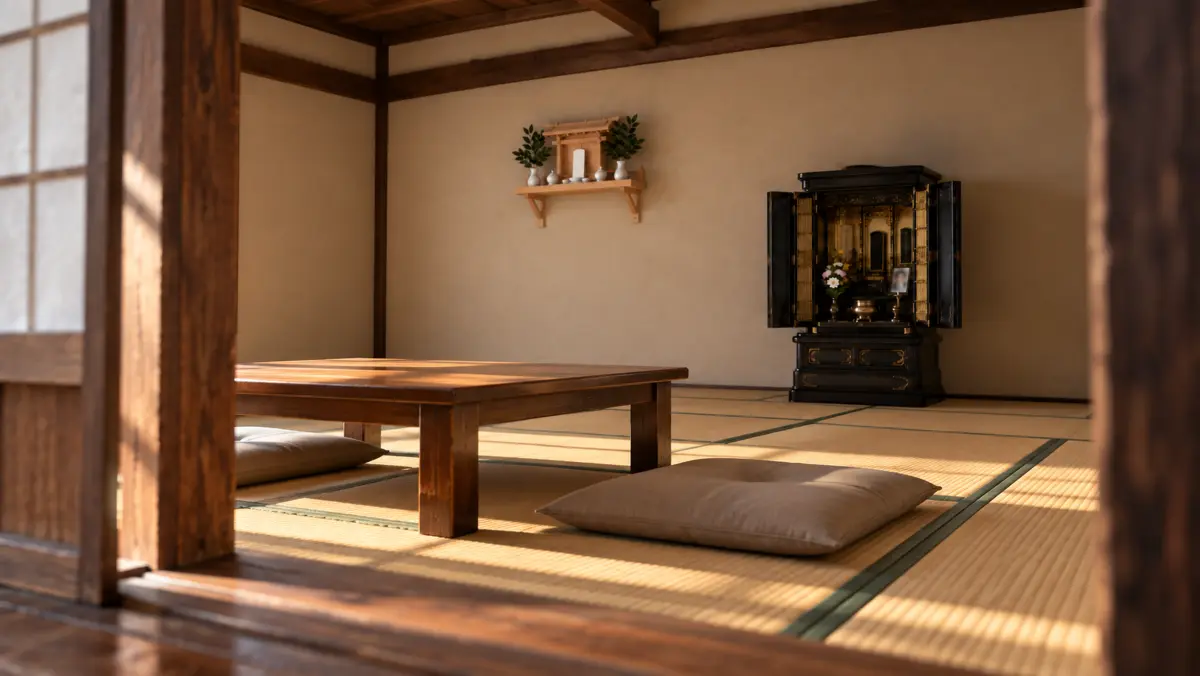
In many Japanese homes, you can find both under one roof. A kamidana, a small shelf for the kami, often holding a charm from the local shrine. And a butsudan, a Buddhist altar for the family's ancestors, with small tablets bearing their Buddhist names, and often a photograph nearby. In the morning, one household might offer fresh water to the gods, and rice to the ancestors, a few steps apart.
Born Shinto, Married Christian
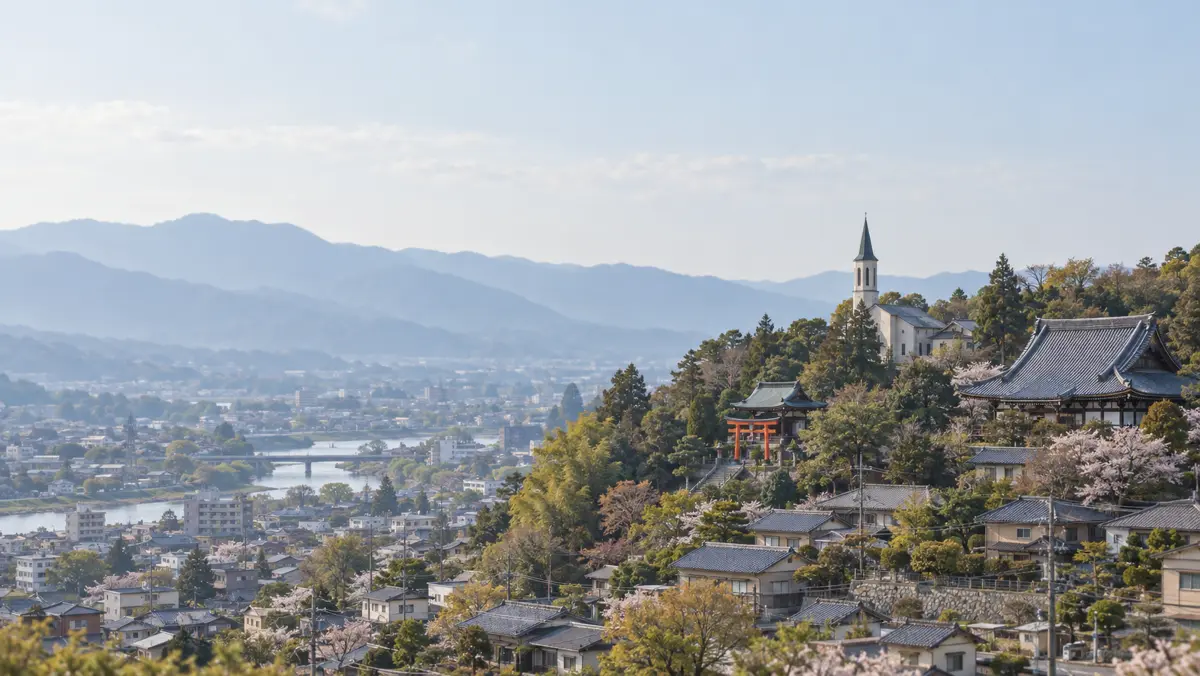
There is a saying about how one life uses both. Born Shinto, married Christian, die Buddhist. Many people who say they have no religion still bow at a shrine at New Year, light incense at a family grave in summer, and eat cake at Christmas. Japan is not undecided. It keeps a calendar.
A Calendar Growing Thin

Now even that calendar is thinning. Many homes today have neither a kamidana nor a butsudan. Many family temples are losing their members. In the year to March 2025, Japan recorded about one hundred and seventy-six thousand relocations of remains to a new resting place: a record, and roughly double ten years earlier. And yet, on the first days of every new year, the lines still form, at shrine gates and at temple bells.
If you visit
Shrine or temple? How to tell, and how to pray
For a visitor, the easiest test is the gate. A torii, two posts and two crossbars, usually means a shrine. Usually. Remember the foxes. A roofed wooden gate, often with two fierce guardians inside it, means a temple. At most shrines, bow twice, clap twice, and bow once more. At a temple, put your palms together and bow. No clapping. If there is a big incense burner, the smoke is for you: wave a little toward yourself. Clap at a temple, and you may draw a glance.
Where to see it
- Shibuya Crossing, Tokyo — Ask the crowd their religion and the official numbers add up to more believers than people in Japan. Google Maps
- Sensoji and Asakusa Shrine, Tokyo — Tokyo’s oldest temple stands right beside a shrine; the shrine’s May festival fills the temple grounds too. Google Maps
- Toyokawa Inari, Aichi — Red torii and stone foxes — and it is a Zen Buddhist temple. Google Maps
- Todaiji (the Great Buddha), Nara — In 749 the god Hachiman was welcomed from Kyushu to protect the building of the Great Buddha. Google Maps
Enjoyed the story? Sophie answers a new question about Japan every few days on YouTube.
Subscribe on YouTube

