 Why Japan?
Why Does Japan Have So Many Shrines?
 Told by Sophie, your guide to Japan
Japan has more shrines than convenience stores. Sophie looks at what a shrine actually is, why the number grew so large — a kami's presence can be divided and enshrined somewhere new without the original losing anything — what is kept inside the hall that visitors never see, why Ise is rebuilt from new timber every twenty years and where the old timber goes, and how the state first ranked these places, then decided there were too many of them.
The full story
In this story
A shrine on a department store roof
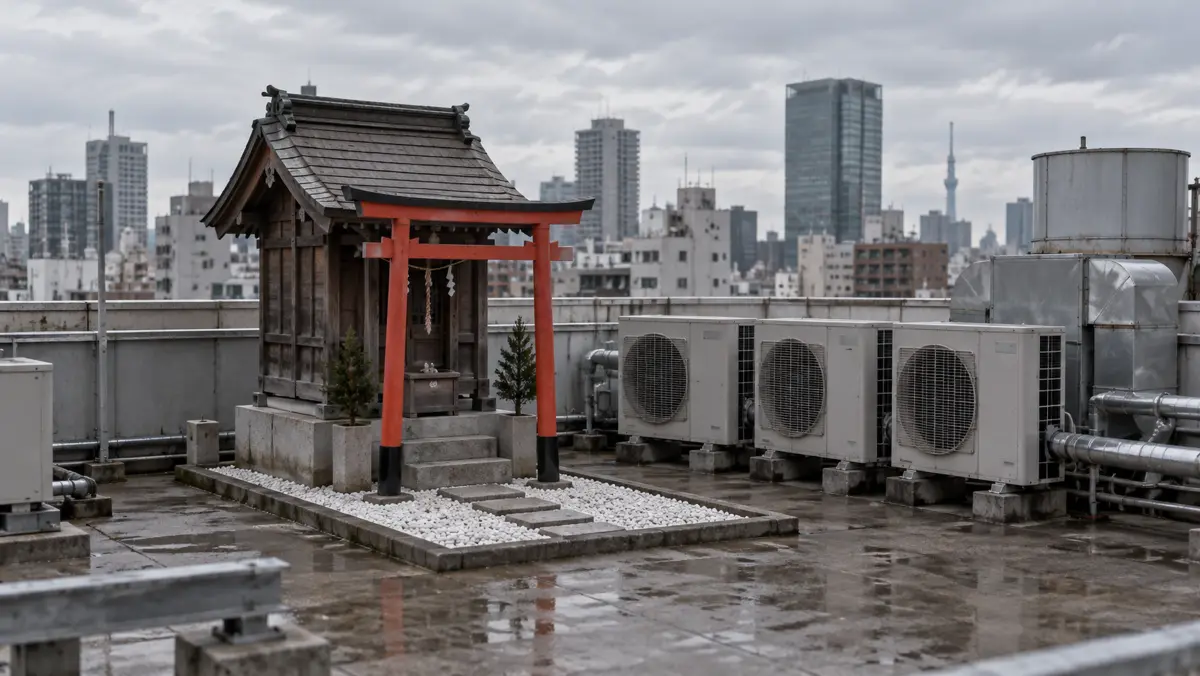
On the roof of a department store in central Tokyo, between the air conditioning units, there is a path of white gravel. Seven floors below, people are shopping. Up here, above them, sits a shrine. A red gate squeezed between two office buildings. A stone fox at the end of a shopping street.
What a shrine is
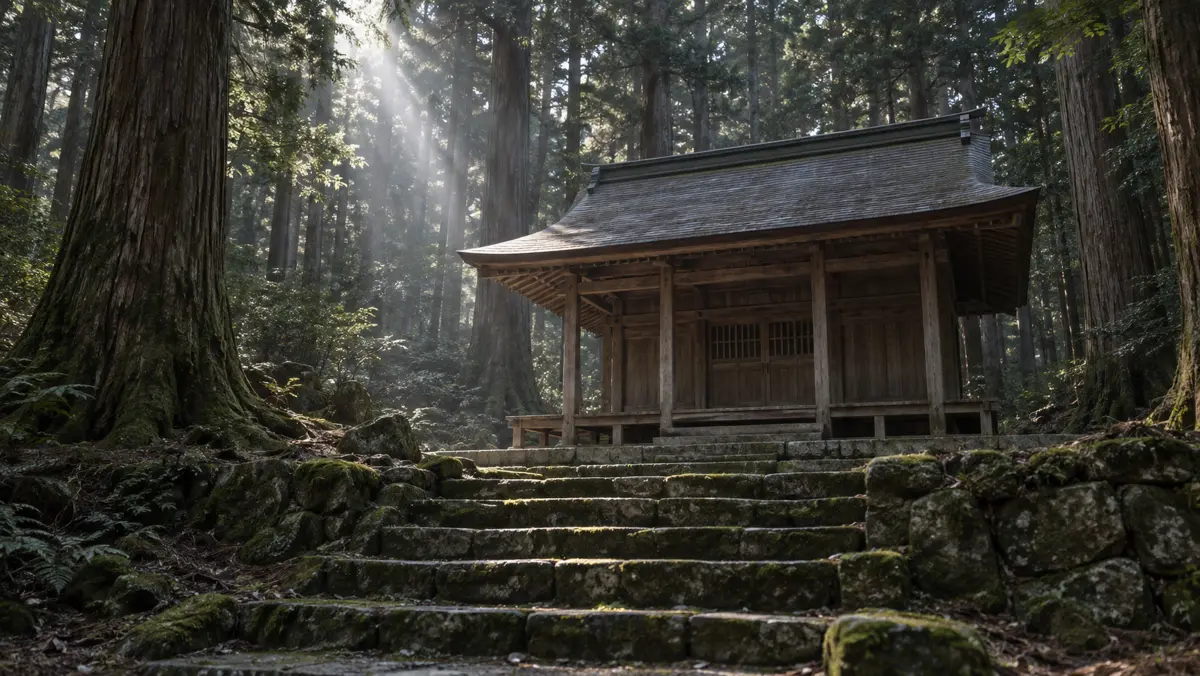
A shrine is a place where a kami is said to be. A kami may be associated with a storm, a mountain, a river, or with rice and the harvest. A kami can also be a person. At Dazaifu, in Kyushu, a shrine enshrines a scholar who died in political exile 1100 years ago. After his death, disasters in the capital came to be blamed on his angry spirit, and worship of him spread partly as a way of calming it. Today, students come to him before their exams.
How the number grew
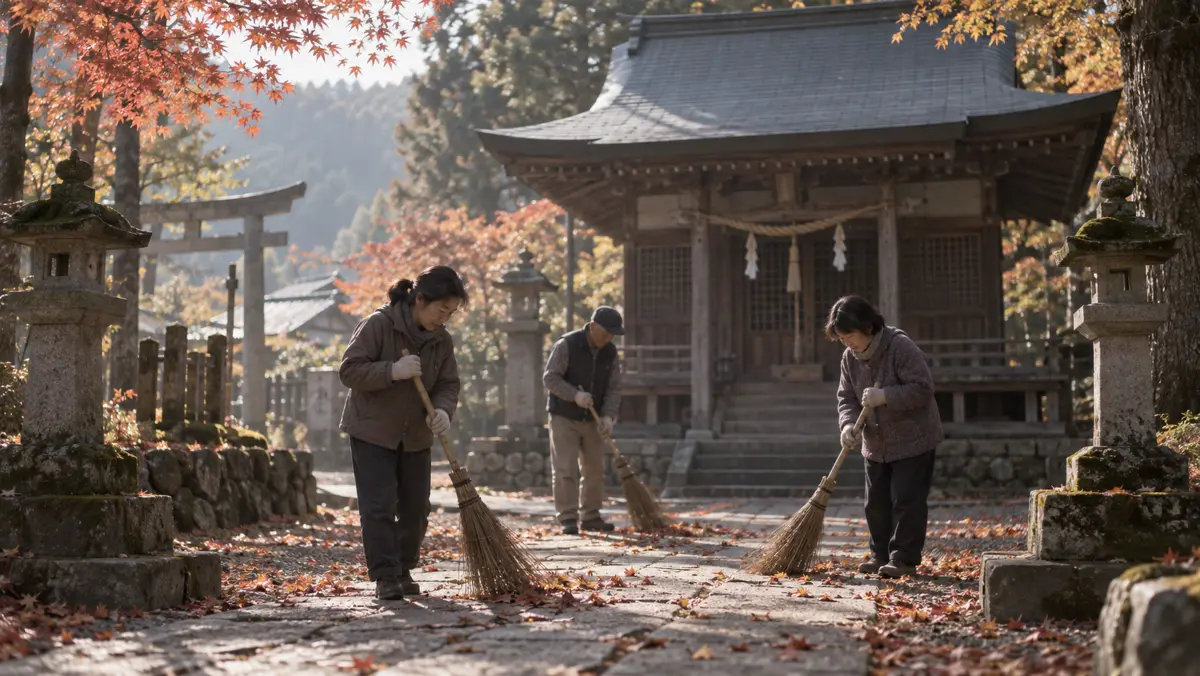
And here is one part of what explains the number. Communities have long looked after a local guardian shrine, rooted in the ties of the land itself and the families living on it. And through a practice called bunrei, a kami's sacred presence can be divided and installed at a new shrine somewhere else, without the original losing anything. A fishing village, a merchant house, a castle town, a factory: each could invite a kami and build a place for it. So could a department store. The shrines dedicated to Inari alone are said to number around thirty thousand.
Rebuilt every twenty years
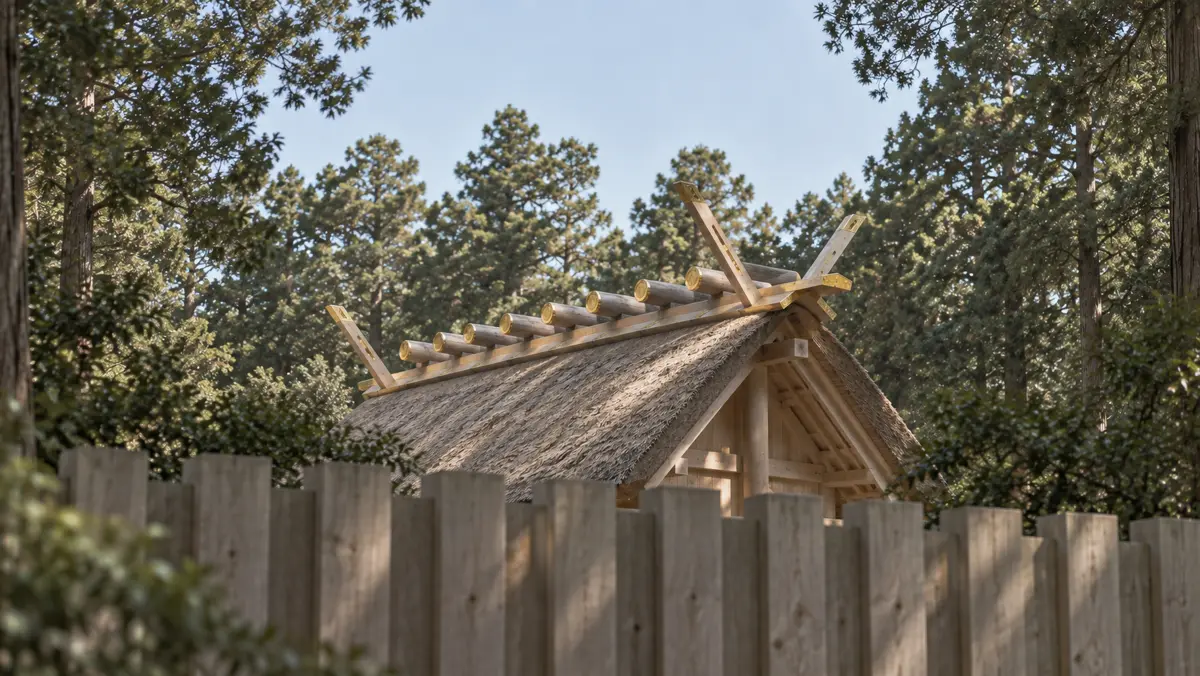
At Ise Jingu, one of the most prominent shrine complexes in Japan, the main sanctuaries are built new every twenty years, on a second plot of ground beside the old one. The kami is moved across into the new buildings. Only then are the old ones taken apart. This has been done, with interruptions, sixty-two times. Some of the old timber is reused at shrines around the country. The great pillars of the sanctuary become the torii at the bridge into the shrine. Visitors walk in under them.
What is inside the hall
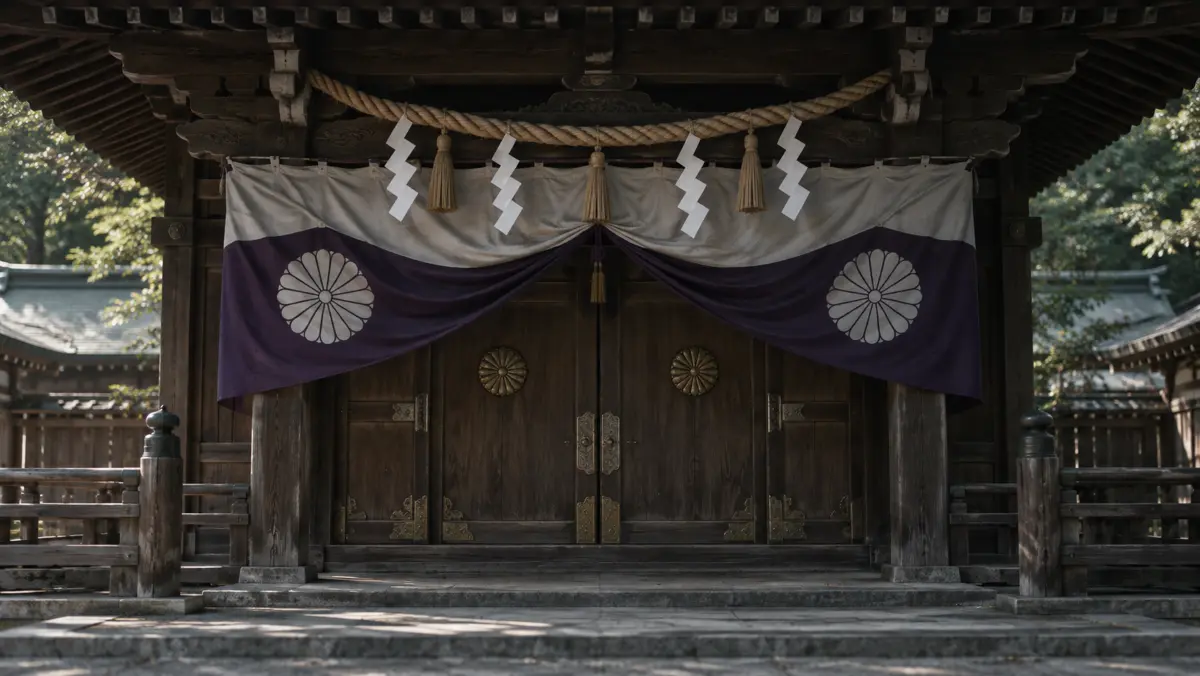
Inside the inner hall of most shrines is a shintai: a sacred object associated with the presence of the kami. Often a mirror. Sometimes a sword, or a stone. It is normally kept out of public view, and not shown to visitors. At some shrines there is no inner hall at all, because a mountain behind the grounds serves as the shintai. A mountain is harder to keep out of view.
Four percent, thirty-eight percent
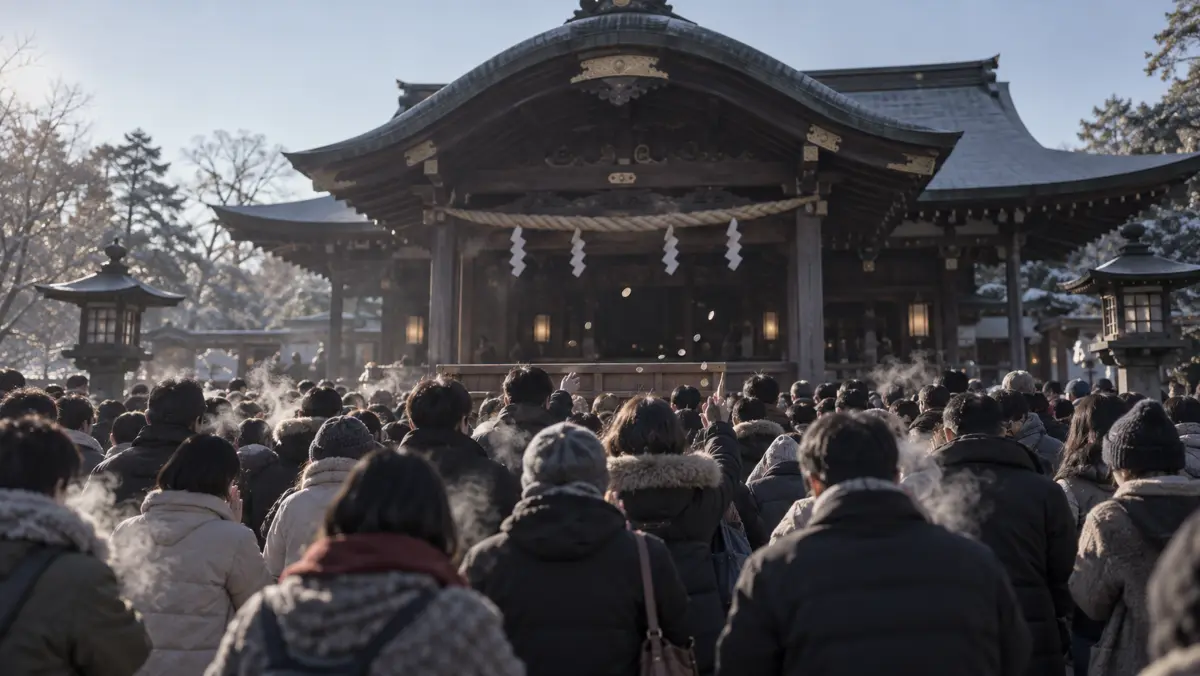
In a survey taken in 2024, four percent of adults in Japan named Shinto as their religion. Twenty-seven percent said they felt a personal connection to the Shinto way of life. Thirty-eight percent said they pray to kami, or pay their respects to them. The practice is much wider than the label.
When shrines and temples stood together
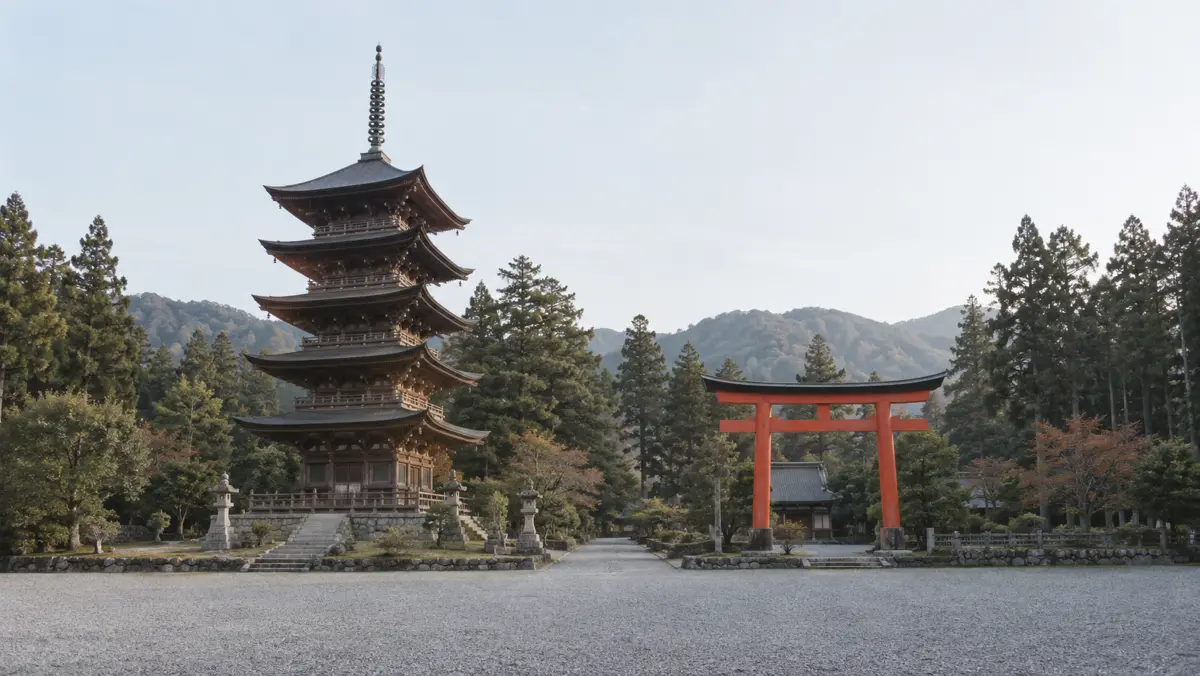
For more than a thousand years, shrines and Buddhist temples stood together, often on the same grounds, and monks served at shrines. Under the influential theories of the time, kami were widely explained as local appearances of buddhas and bodhisattvas, though later traditions complicated and sometimes reversed that. For most people praying in the year 1500, shrine and temple were not two boxes you had to choose between.
1868
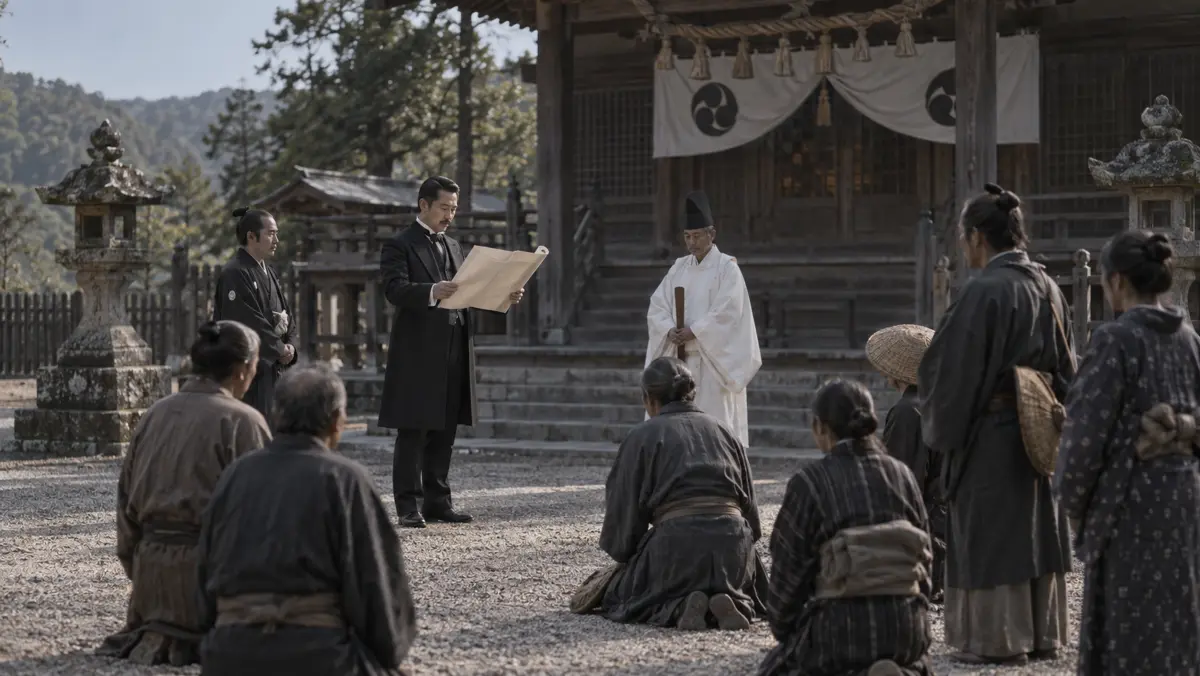
Then the new government began choosing for them. In 1868, it ordered the two to be separated. Buddhist images, bells and sutras were to be removed from shrine grounds. The order did not call for destruction. In some regions, temple buildings and statues were smashed all the same. Three years later, shrines and their priests were ranked and regulated by the state. Through the 1880s, the government increasingly treated shrine rites as public or national rites. Officially, not as religion.
1906
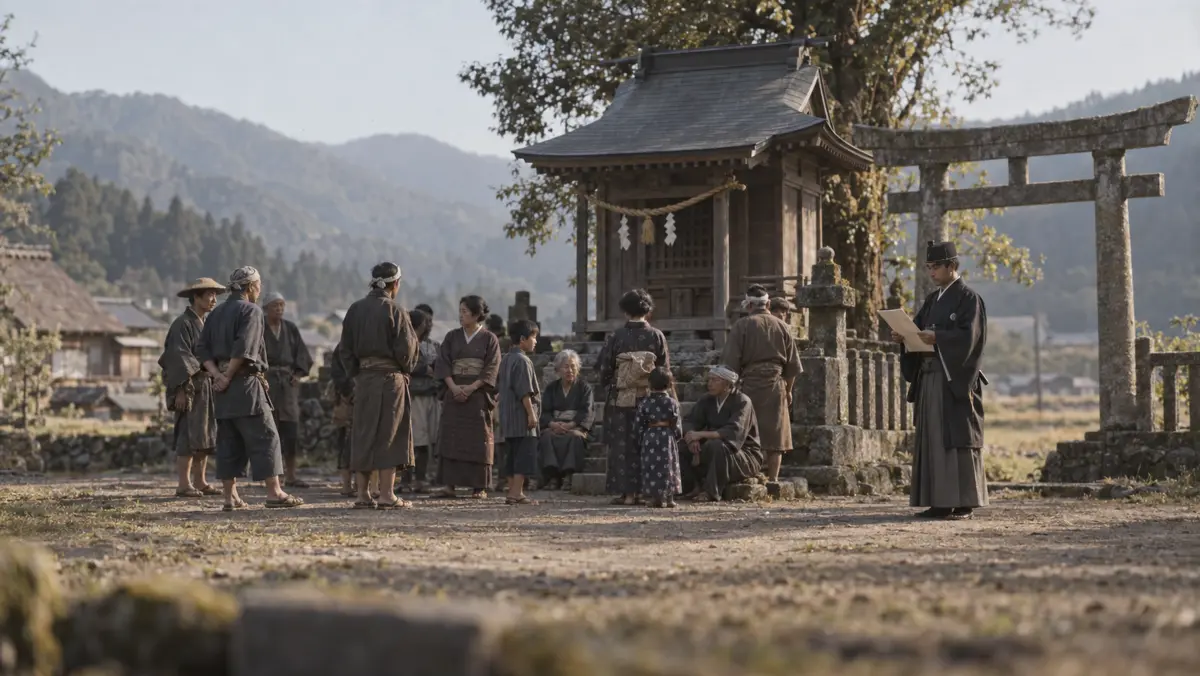
The government's answer, from 1906: often one shrine for each town or village. In some prefectures almost nothing happened. In others, whole clusters of local shrines were closed, their kami moved elsewhere, and the old groves around them cut down. In eleven years, the official count of shrines fell by more than a third. One naturalist fought the policy for years, as much for the forests as for the shrines.
December 1945
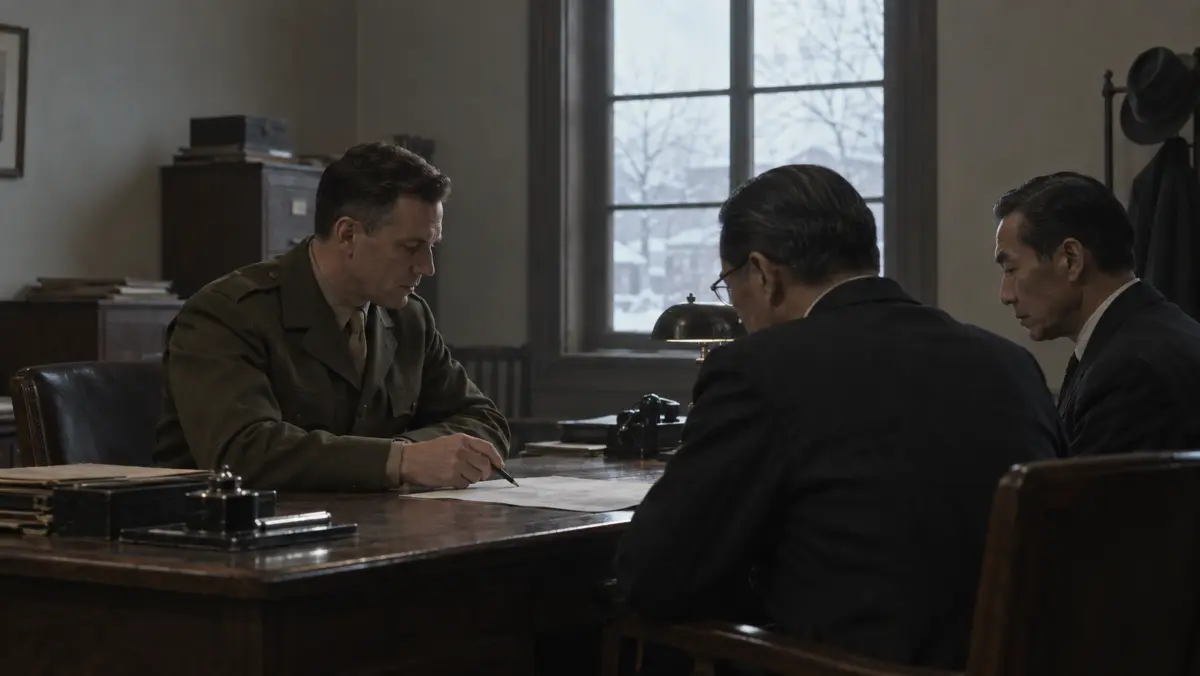
In December 1945, the occupation ordered the government out: no state sponsorship, no state support, no state control of shrines. The ranking system was dismantled. Shrines were reorganised as private religious bodies, supported by whoever chose to support them. The rebuilding at Ise, suspended by the war, went ahead again in 1953, paid for by donations. This time, by choice.
Who looks after them now
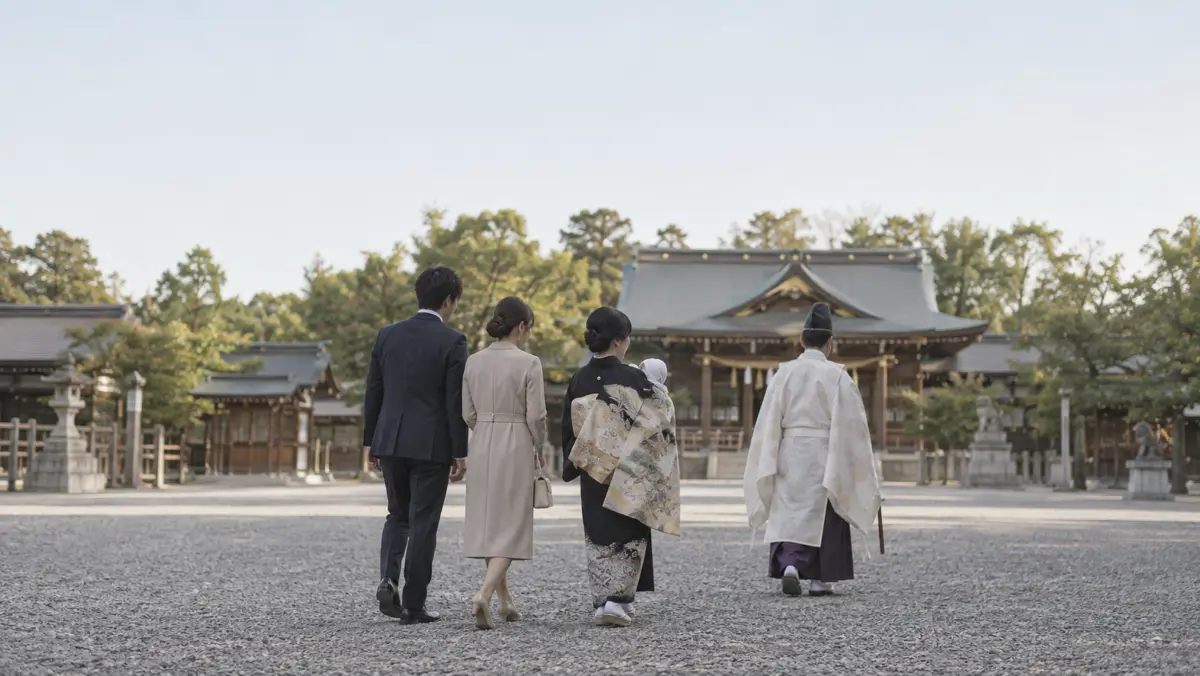
So what is left is a set of doors that people use at certain moments. A baby is brought at a month old. Children in tiny formal clothes are photographed at three, five and seven. Some couples marry in front of the hall. Every January, the queue outside the big ones runs around the corner. The quieter problem is arithmetic: there are around twenty-one thousand shrine clergy for some seventy-eight thousand shrines, and in the countryside one priest may serve several of them, driving between villages that are emptying. Bunrei does not work on priests. And at Ise, the preparations for the sixty-third rebuilding have already begun. On a department store roof, you bow and clap just as you would at any other shrine.
If you visit
What to do at a shrine
What visitors do is short, and broadly similar from place to place, though details vary. You pass under the gate, which marks where the ordinary ground ends. Many people move a little to one side of the path. At a stone basin near the entrance, you rinse your hands and your mouth. Then, in front of the hall, a coin into the slatted box, and, if there is a rope, the bell above you. Two bows. Two claps. A prayer, of thanks or of asking, or both. One bow to finish. At Izumo Taisha they clap four times instead of two. On the way out you can buy a small cloth charm, and bring it back to be burned when the year is out, or when whatever you asked for has happened.
Where to see it
- Ise Jingu, Mie — One of Japan’s most prominent shrine complexes, rebuilt every twenty years. Google Maps
Enjoyed the story? Sophie answers a new question about Japan every few days on YouTube.
Subscribe on YouTube

