 Why Japan?
Why Do Japanese Restaurants Put Fake Food in the Window?
 Told by Sophie, your guide to Japan
Why do so many Japanese restaurants put plastic copies of their food in the window? Sophie looks at the samples themselves (often moulded from the restaurant's real dish, and sometimes pricier than the meal), a 1923 Tokyo dining hall that paired them with meal tickets, the Osaka clerk who rented them out by the month, the fork that hangs in mid-air, and why lasting forever became a problem for some makers. Plus how to read a sample window when you visit Japan.
The full story
In this story
Food Nobody Can Eat
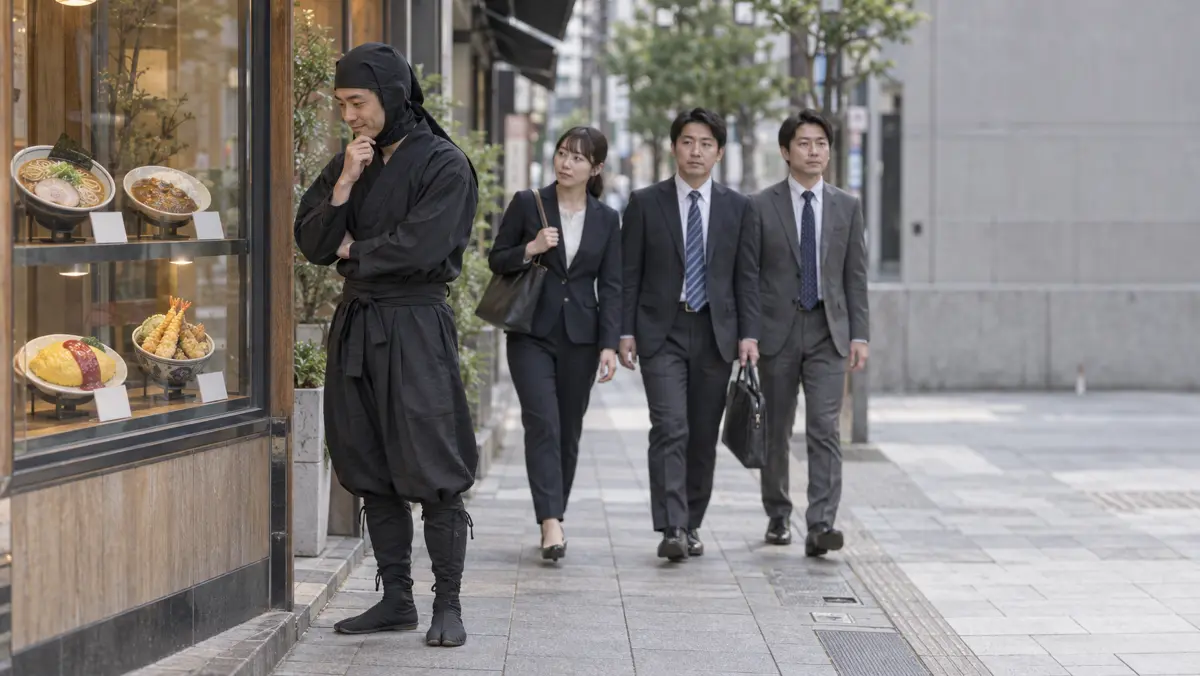
Lunchtime in Tokyo. A ninja is standing very still in front of a restaurant window. Behind the glass: a bowl of ramen, a curry, an omelette on rice. All of it plastic. He has spent his life pretending to be something he is not. So has the omelette. He taps the glass. The omelette does not move. Neither does he. Step closer. You can see how big the bowl is. You can see what comes with it: the rice, the miso soup, the little dish of pickles. You can see the price. All before you open the door. In much of the West, a menu explains a dish in words. Here, a model can explain the dish without its name. You see them at noodle shops, family restaurants, and on the dining floor of a department store. The ninja has read the window. He is still looking for the flaw.
Cast from the Real Dish
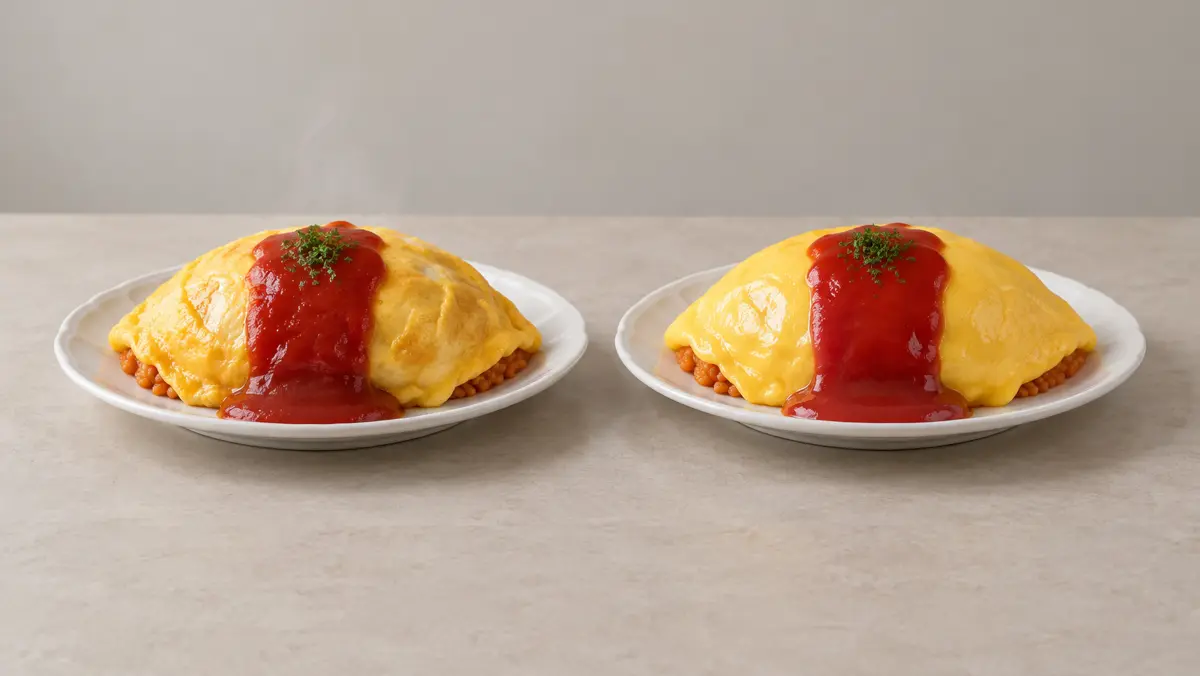
The food in the window is called a sample, and a restaurant's samples are usually life-size. To make one, a maker often starts from the restaurant's real dish. It is taken apart, and pieces of it are set in silicone. The next day, the real food is pulled out, and what is left is a mould. Other parts come from stock. Colored vinyl goes in, and someone paints the browning on by hand. So that is not a picture of an omelette. Parts of it were cast from one.
Dearer Than Lunch
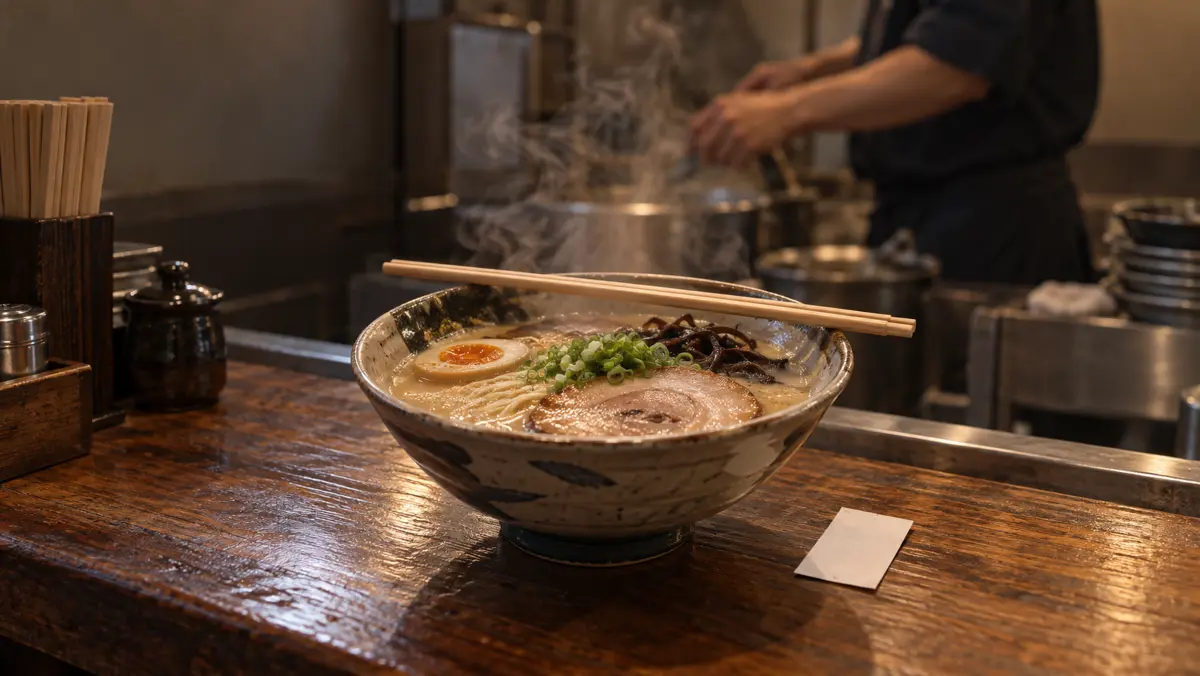
It is not cheap. A standard bowl of ramen in Japan costs about a thousand yen. One of the oldest sample makers lists a plastic bowl of Yokohama-style ramen at more than twenty-eight thousand. For the same money, you could eat the real one every day for four weeks. The fake ramen costs more than the ramen. And a full window may need a whole row of them.
Not Built for Tourists
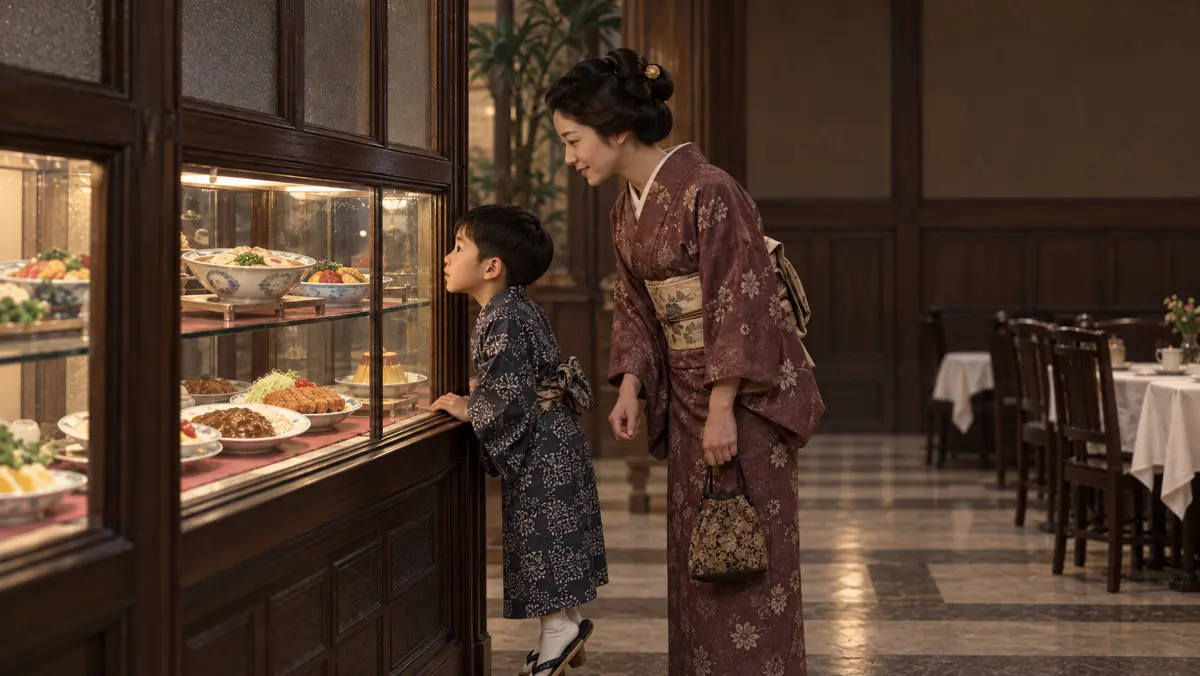
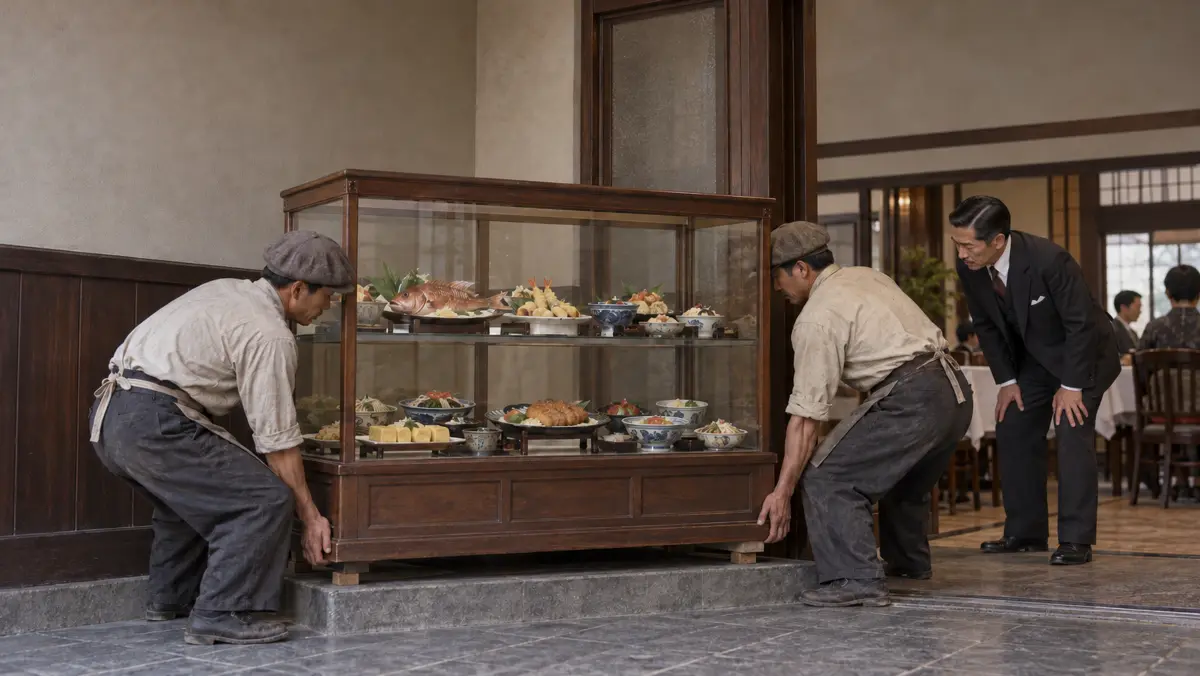
It was not built for tourists. Food models appeared on their own in several cities, over about fifteen years. Big Japanese department stores ran large dining halls. In Tokyo, in November 1923, two months after an earthquake and fire had destroyed much of the city, the Shirokiya department store opened its dining hall in a temporary building. In a glass case, it put models of the food. Beside it, it sold meal tickets. You looked, you chose, you paid, you handed over the ticket. It is said to have eased the crowds and lifted sales. One explanation: people were moving into the cities in large numbers, and many had never eaten restaurant food like this.
The Wax Flower
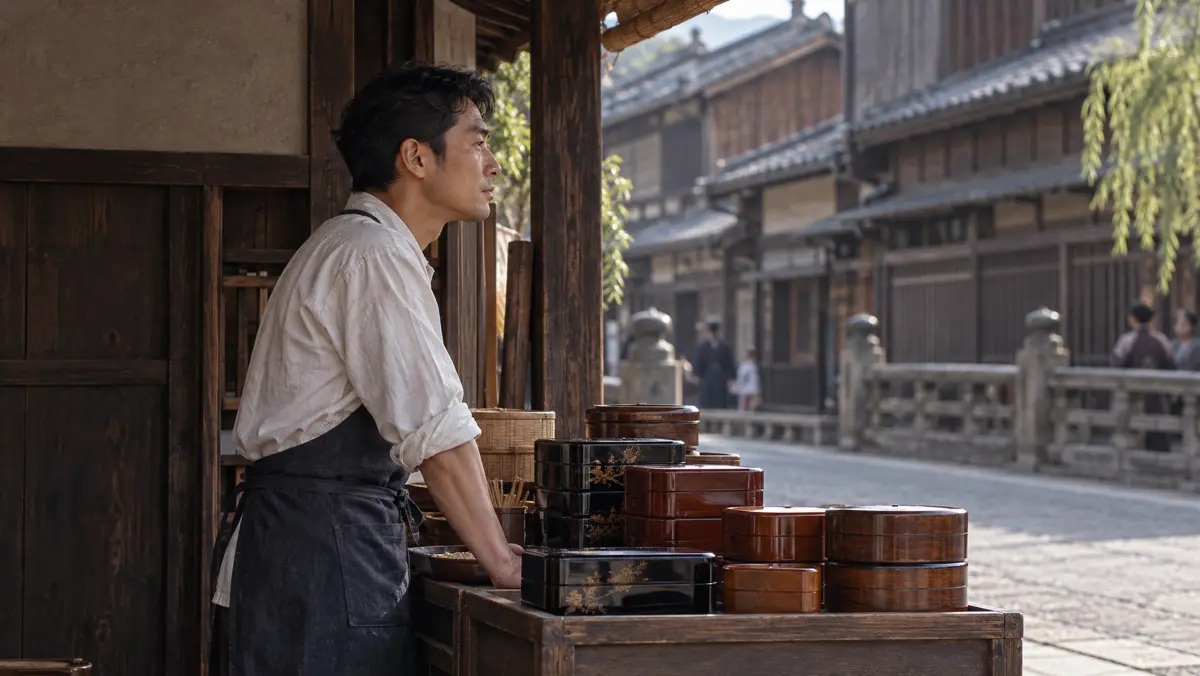
In 1932, Takizo Iwasaki was a lunchbox-shop clerk in Osaka, from a mountain town called Gujo Hachiman. The company he founded tells it this way. He saw a food model, and it reminded him of a game from his childhood: dripping candle wax into water, where it opens like a flower. It was wax, he decided. Then his wife, Suzu, made an omelette in the kitchen. He copied it, wrinkle for wrinkle, and set the two side by side. She said she could hardly tell which one was real.
Rented, Not Sold
That year, a department store in Osaka took his models. Then he walked from restaurant to restaurant, carrying wooden boxes of samples in both hands. A sample cost about ten times the dish it copied. So he offered them on a small monthly lease. Restaurants could rent their fake food. Some still do. Inside, the ninja's omelette arrives. He checks it against the window, wrinkle for wrinkle. They match. Then he taps it with his spoon. This one moves.
The War
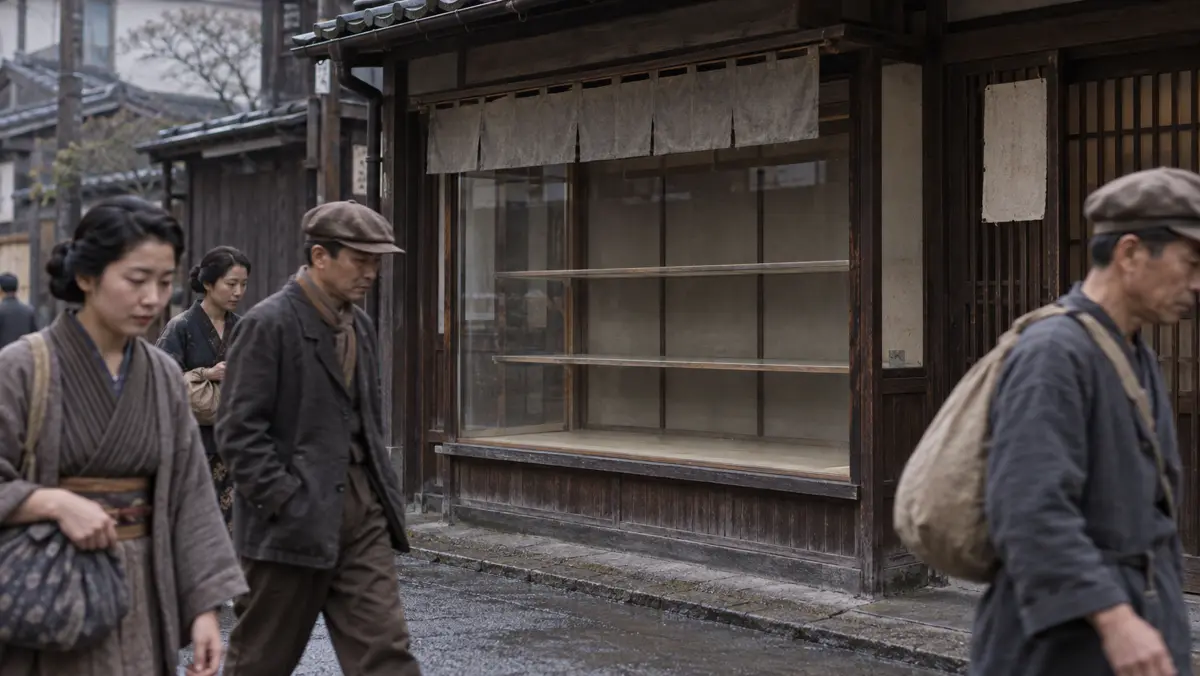
Then the war came. Paraffin wax ran short, and Osaka banned food models in windows. Iwasaki went home to Gujo Hachiman. His company history says women from the town helped him make model food for a different kind of table: offerings at funerals for soldiers who had died. After the war, people ate out again, and the windows came back.
A Fork in the Air
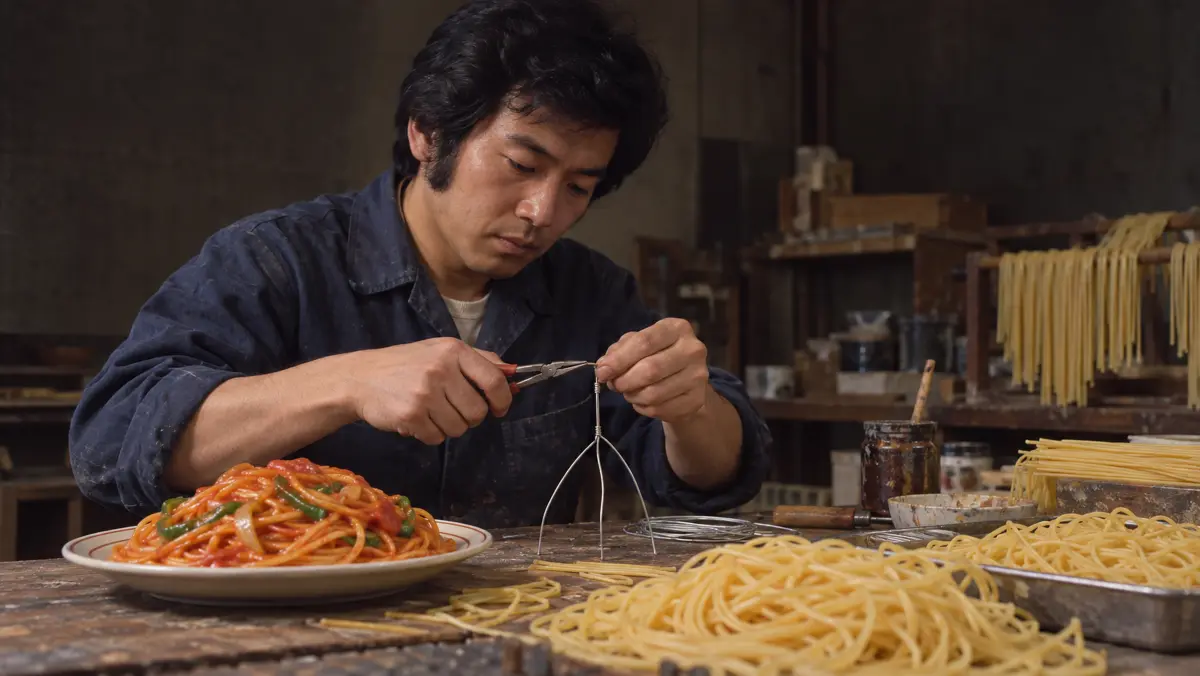
Makers began to show food doing things real food cannot. In 1972, a craftsman named Shigeharu Takeuchi made a plate of spaghetti with the fork hanging in the air, lifting the noodles. Later he made fried rice flying out of a wok. It won a special prize at an art exhibition. A real lunch cannot stop at its best second. A fake one can. The idea has been hanging in the air ever since.
Just Dust It Off
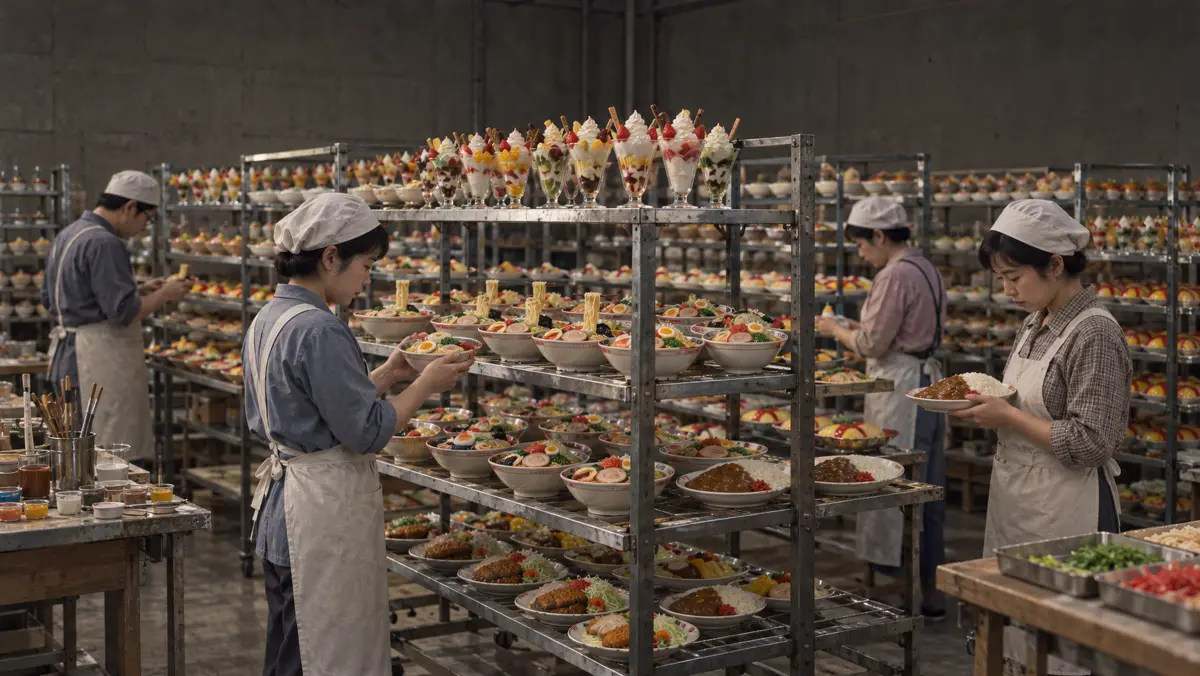
Between the 1970s and the eighties, wax gave way to vinyl. Vinyl lasted far longer. For some makers, that became a problem. In 1994, a Tokyo maker admitted that fewer restaurants needed replacements. A shopkeeper explained why. All you have to do is dust it off. Inside the window, the ninja does not move. A waiter with a feather duster dusts the curry, the ramen, and the ninja.
Same Window, New Readers
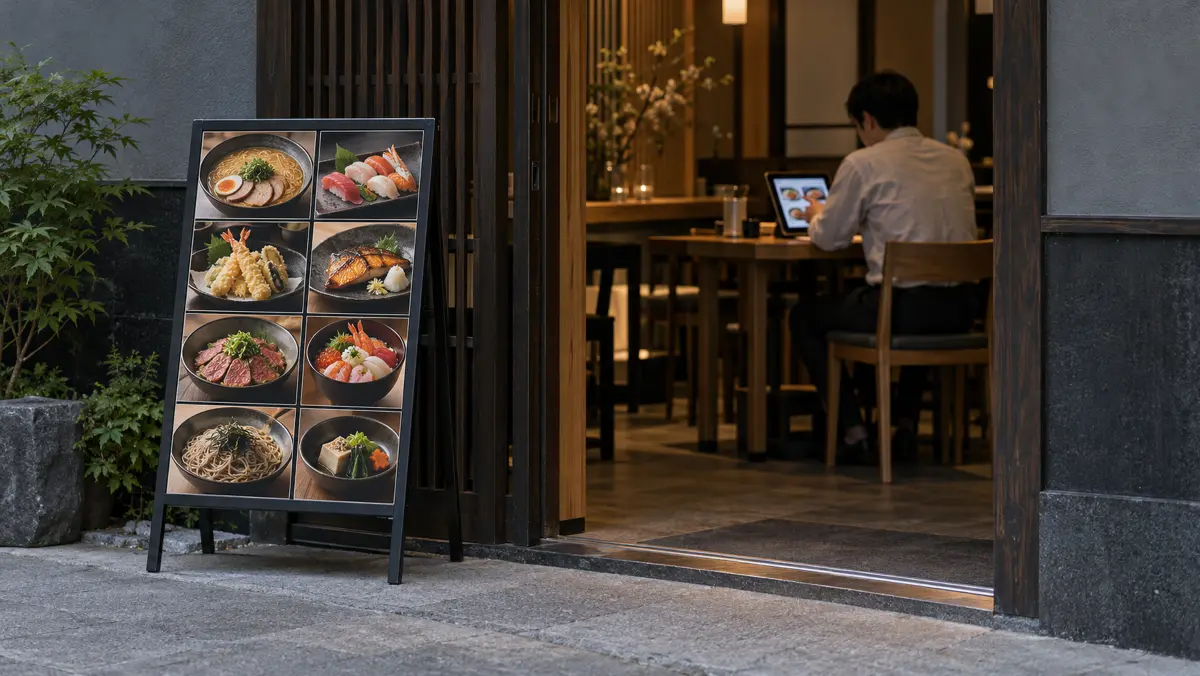
Makers say restaurant orders have fallen. Photographs do part of the job now. But the same window also helps someone who cannot read the menu at all. A visitor from abroad. In 1923, the newcomer may have come from the countryside. Today, the newcomer might come from Ohio. Different newcomer. Same window.
Kappabashi and Gujo Hachiman
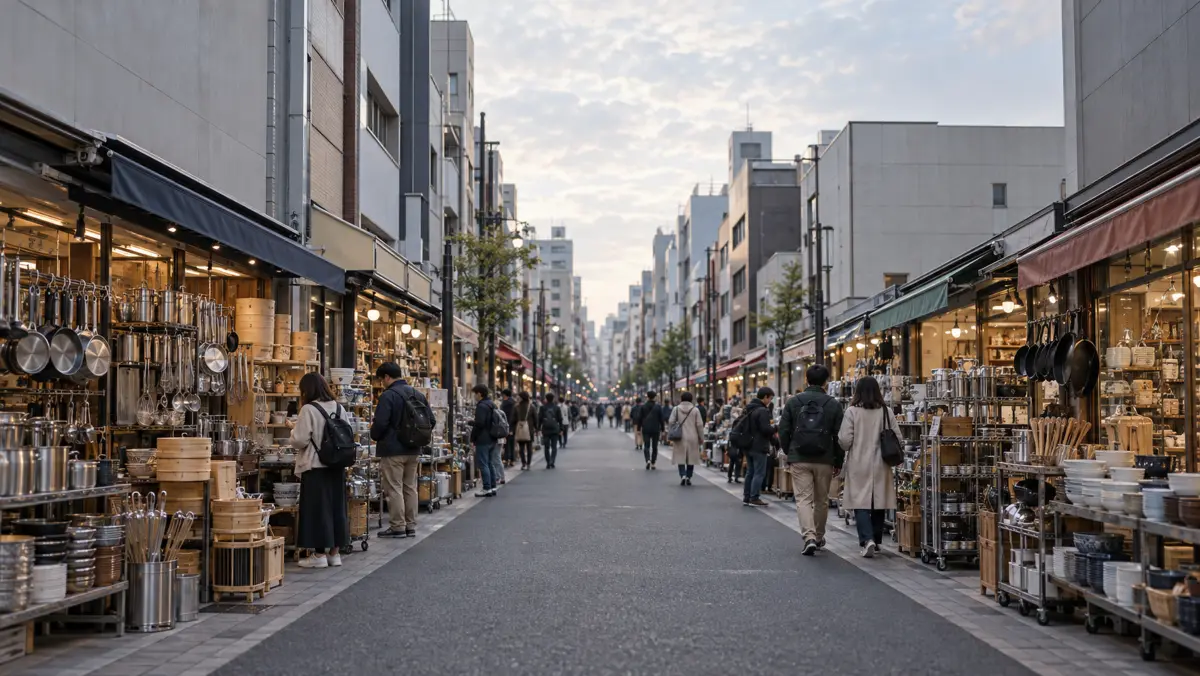
To see where restaurants buy all this, go to Kappabashi, in Tokyo, between Ueno and Asakusa. About a hundred and sixty shops sell everything a restaurant needs: knives, lanterns, bowls, signs, and samples. The name may come from kappa, rain capes once dried on a bridge there. Or from a merchant whose drainage work, a legend says, was helped by kappa, the river spirits. It depends who tells it. Visitors to Japan surged around 2015, and plastic food was already a popular souvenir. And in Gujo Hachiman, the town that calls itself the holy land of food samples, with a reservation, you can make your own tempura, out of wax.
If you visit
How to read a food sample window
Look at the whole tray, not just the bowl. If there is no rice in the window, there may be none on the table. Samples fade, and prices change. Check the price inside. At many ramen shops, a ticket machine stands by the door. You look, you choose, you pay. Then follow the staff's lead. If you are lost, and photos are allowed, take one of the window and show it to the staff. The next day, at the glass, a visitor from Ohio takes a photo. So does the ninja. Then he goes in and buys a ticket.
Useful on your trip
Where to see it
- Kappabashi Dougu Street, Tokyo — About 160 shops for restaurant supplies — knives, lanterns, bowls and plastic food samples. Google Maps
- Gujo Hachiman, Gifu — The town that calls itself the holy land of food samples. Make your own wax tempura (reservation needed). Google Maps
Enjoyed the story? Sophie answers a new question about Japan every few days on YouTube.
Subscribe on YouTube

