 Why Japan?
Why Do Japanese People Take Off Their Shoes?
 Told by Sophie, your guide to Japan
In Japan, shoes come off at the door. Even a samurai in full armor would have untied his sandals on the step. Sophie follows the line between outside and inside: from tatami that once marked rank, to an American envoy who walked into Edo Castle in brand-new shoes, to the toilet slippers every guest forgets, to the schools in Tokyo now dropping indoor shoes altogether.
Skip to the practical part: When to take your shoes off in Japan ↓
The full story
In this story
The Floor Is the Bed
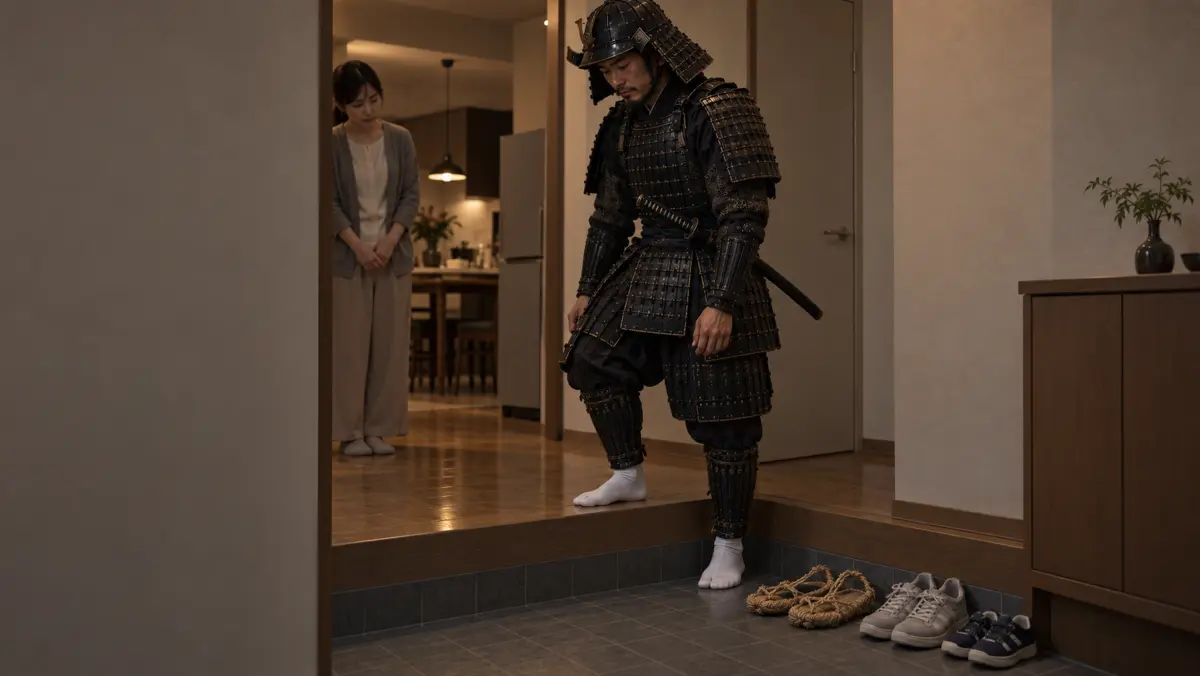
Picture a samurai in full armor at the door of a Tokyo apartment tonight. He is late for dinner. The soup is already cold. Still, he sits on the step and unties every cord of his straw travel sandals. Nobody inside finds that part strange. In Japan, the floor was never just a floor. It was the chair, and the dining room. At night it became the bed: the futon was unrolled on the same mats, and folded away each morning. Those mats, tatami, were once not a floor at all. Over a thousand years ago, they were movable mats, laid out only where a person sat or slept. Their thickness and their border showed rank.
Going Up Into a House
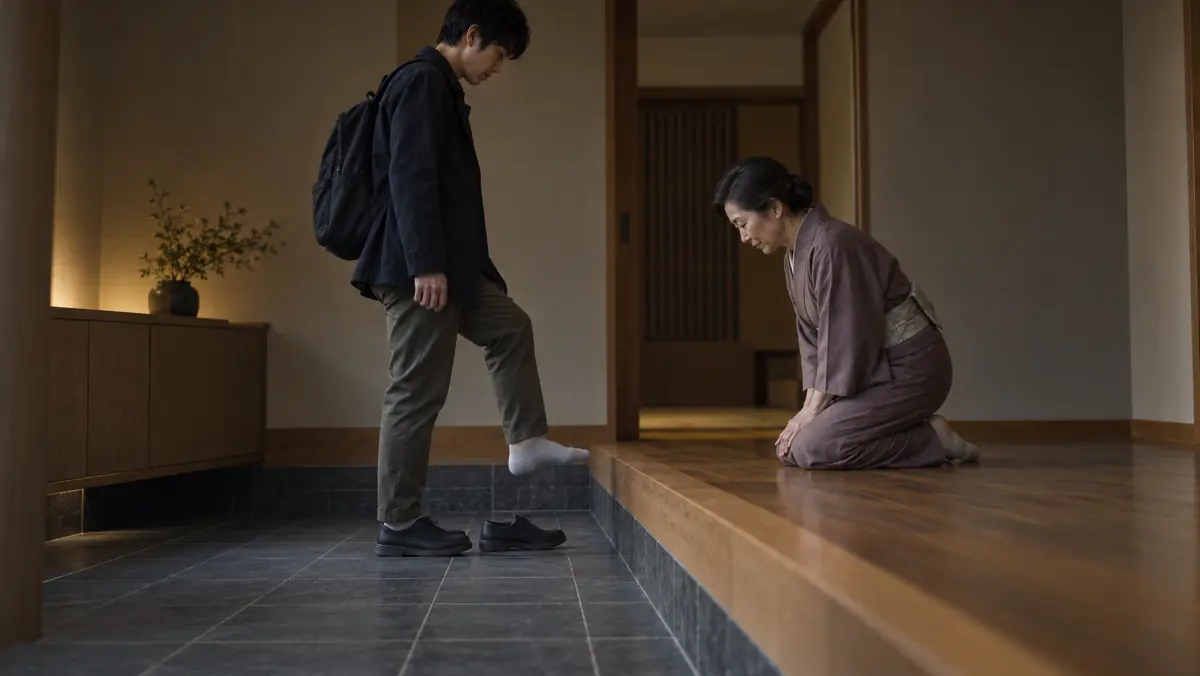
In Japanese, going into someone's home is often called agaru. To go up. At the door there is a step, and the rooms sit above it. Japan is damp, and wood rots near wet earth. A formal entrance, the genkan, was once a privilege. In old villages, mostly headmen and a few leading families had one.
Earth Feet
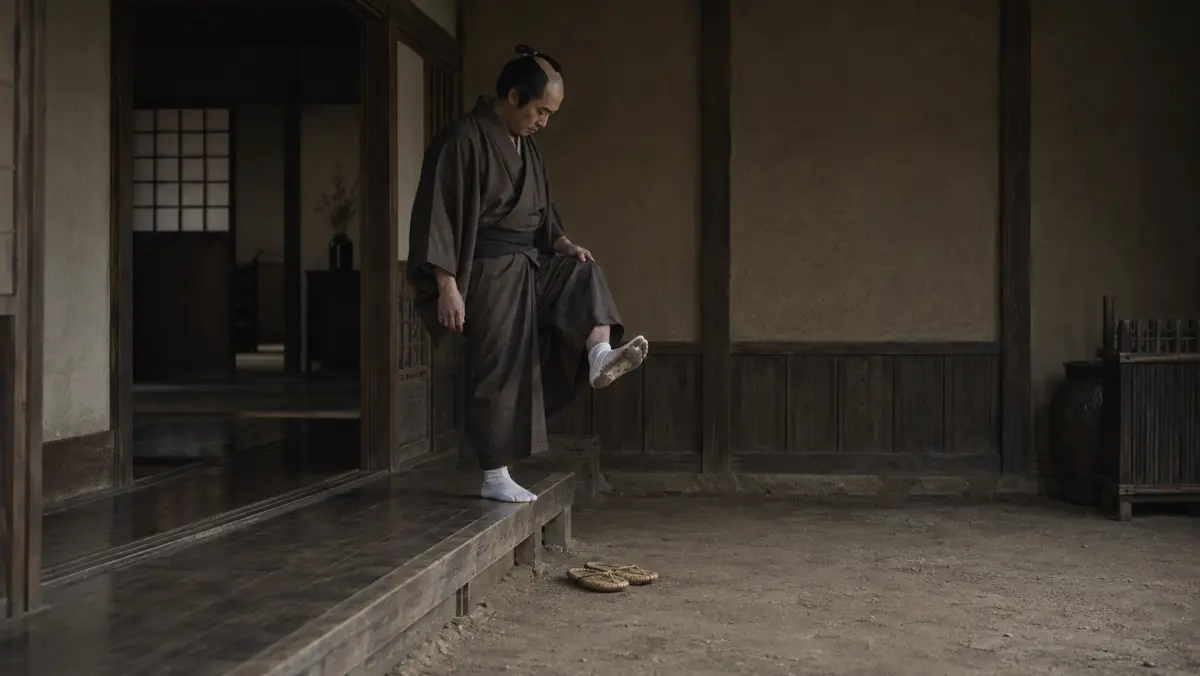
The Japanese word for going inside with your shoes on is dosoku. Earth feet. The rule was not only about shoes. It was about what had touched the ground. In December 1857, the American envoy Townsend Harris came to Edo Castle to meet the shogun. Western envoys of that time refused to take their shoes off inside the castle. So when Harris stepped out of his palanquin, his servant handed him a pair of new patent-leather shoes, clean and unworn. The Japanese officials around him had left their sandals at the entrance. Harris walked the castle floors in his. Brand new. Not yet a street shoe.
Where Does Outside End?
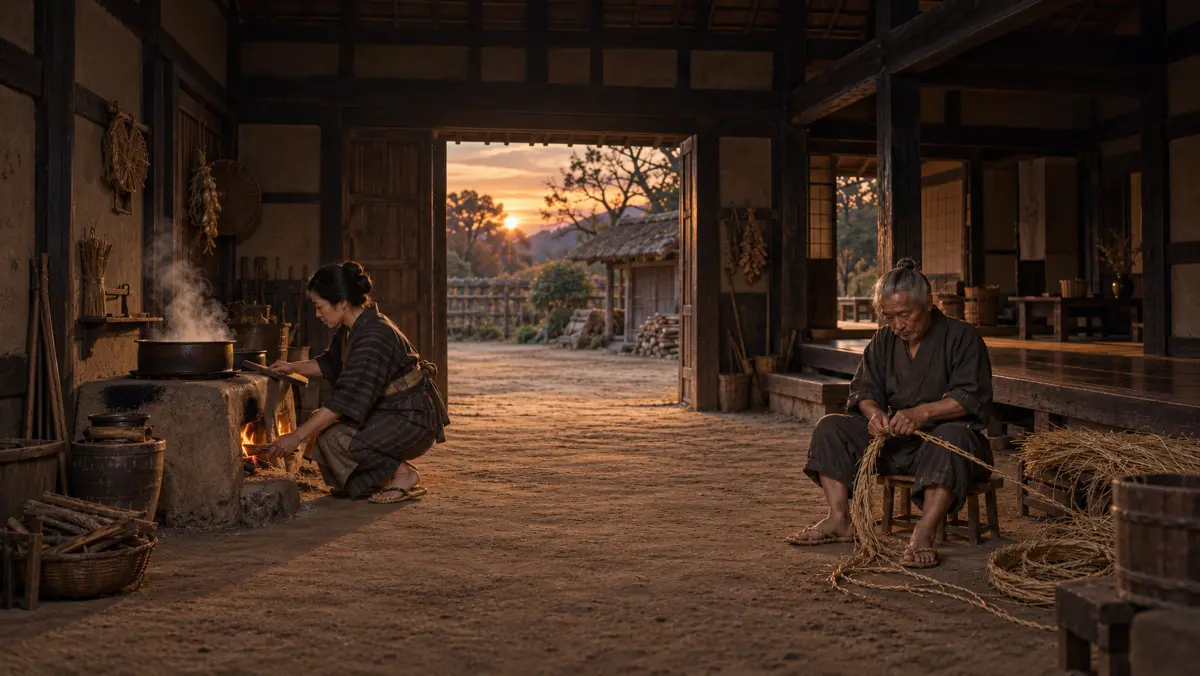
In an old Japanese farmhouse, the outside did not stop at the door. A large part of the house had an earth floor, the doma. People cooked there at a clay stove, washed, worked straw, and kept their sandals on. In some northern farmhouses, even the horse lived under the same roof. Before iron horseshoes, it often wore straw shoes on the road too. The raised wooden floor began only at the edge of that earth. The lowered floor just inside a Japanese front door today still keeps that old division. It is indoors. It still counts as outside. The front door is not the border. The step is.
Turning Your Shoes Around
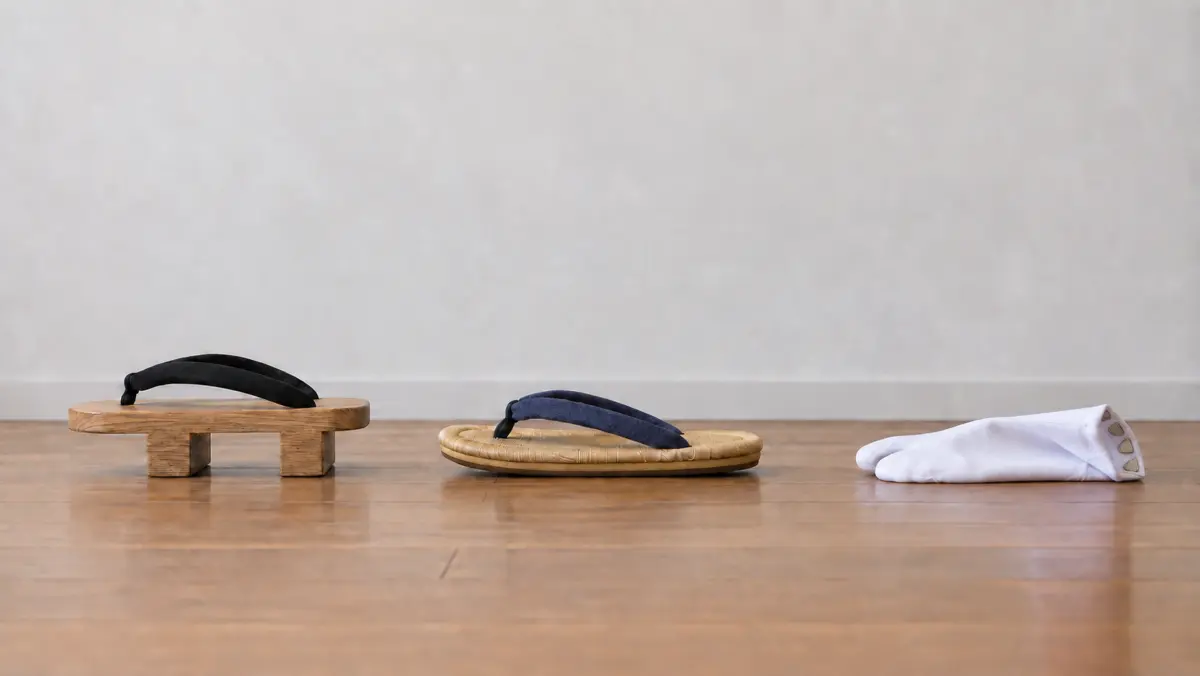
Traditional Japanese footwear made that step easy. Geta and zori have no laces and no heel to pull on. You step out of them in a second, and your feet, in cloth tabi socks, are ready for the floor. Then you turn them to face the door, so you can step straight back into them when you leave. Tonight's other guest, from abroad, arrived on time. He leaves his shoes pointing inward. Someone quietly turns them around. He never sees who.
The Toilet Slippers
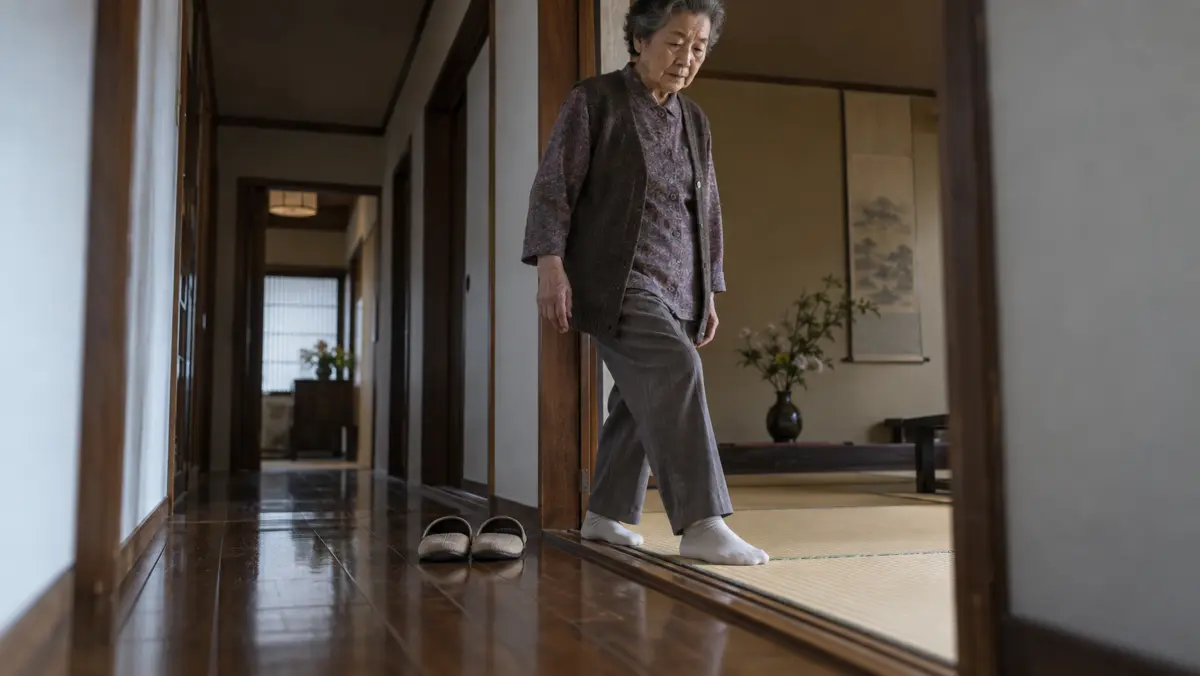
Inside, there is more than one line. The guest wears house slippers down the hallway. At the edge of the tatami, they come off. No one wears slippers on the mats. For centuries, the toilet was set apart, often at the far end of the house or outside it altogether. In many homes today, a separate pair of slippers waits just inside its door. The guest steps into them, correctly. Then he walks back to the table, still in the toilet slippers. Nobody says a word.
Geta on the Platform
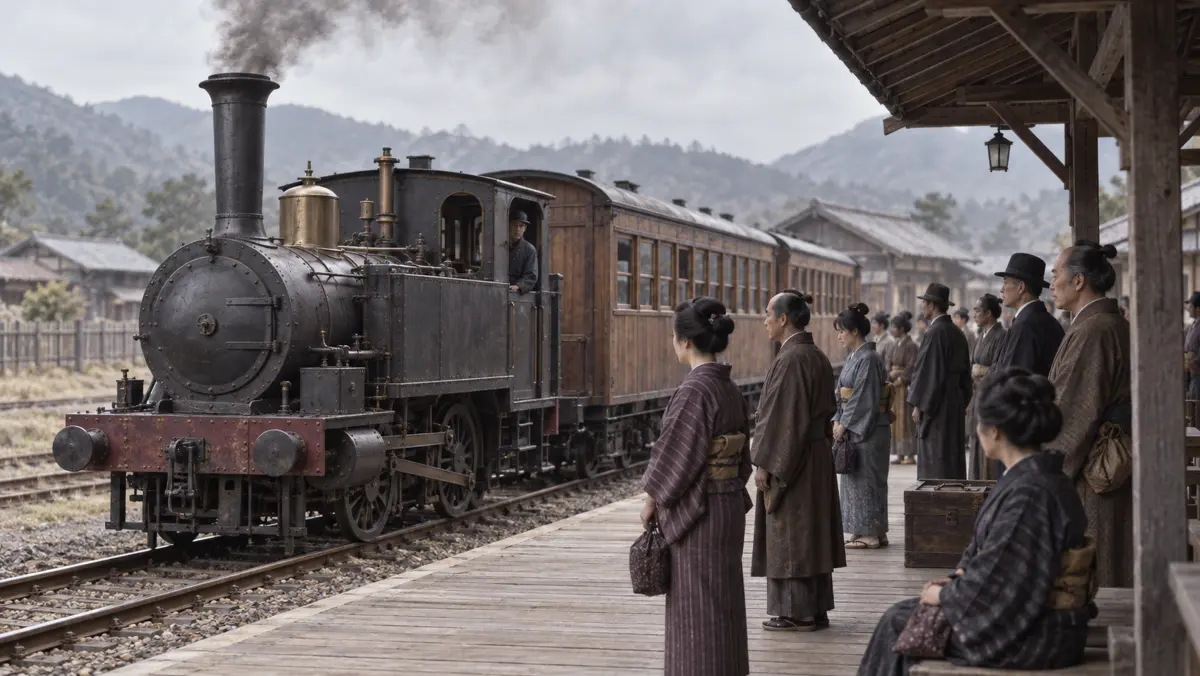
The first trains ran in 1872, near Tokyo. There is a story still told about them. A passenger stepped out of his geta on the platform, lined them up neatly, and climbed aboard. He treated the train like a room, and you do not wear geta in a room. The train left for Yokohama. His geta stayed in Tokyo. So the story goes.
A Minister and a Rumor
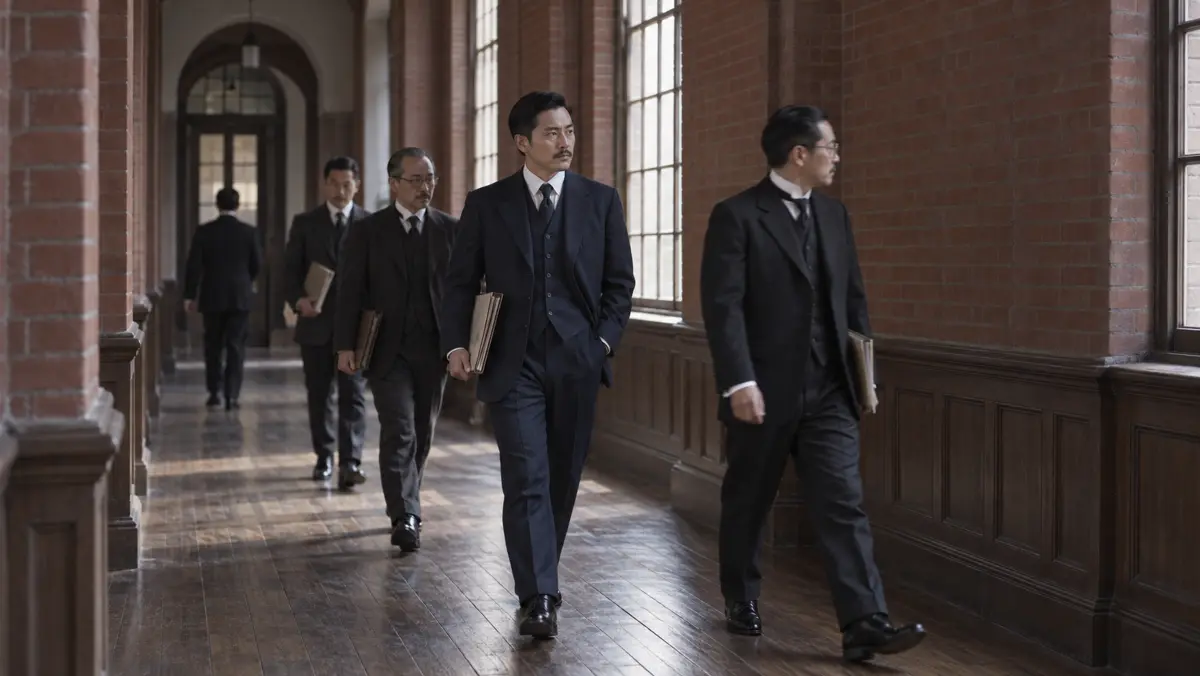
Not every line was about dirt. In 1887, the education minister, Mori Arinori, known for his Western ways, visited Ise, Japan's most sacred shrine. A story spread that he stepped up into the shrine in his shoes, and lifted a sacred curtain with his cane. In 1889, a young man attacked him. Mori died the next day. The attacker's written statement named the shoes. Whether Mori did either thing is still doubted.
One Family, Two Houses
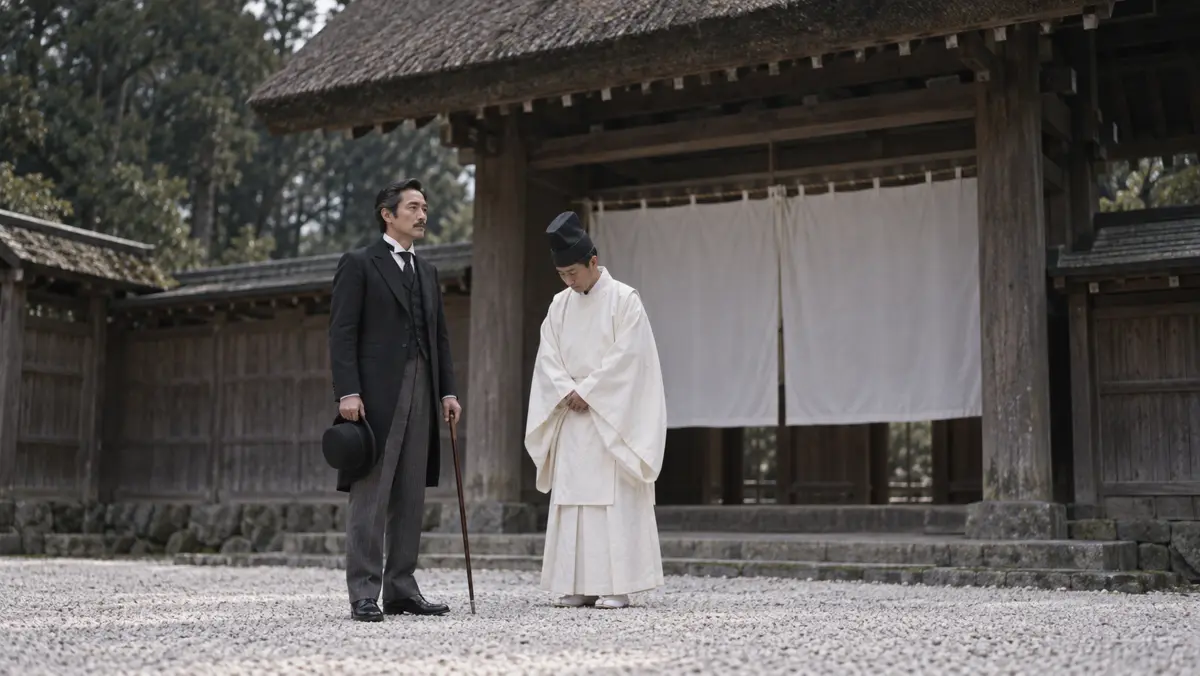
So which side gave? In public, the new country put its shoes on. Ministries, offices and army barracks were built in the Western style, and there, shoes stayed on. At home, the step did not move. Some wealthy families built a Western wing beside their Japanese house: a hall with chairs for guests, and tatami rooms for daily life. In Tokyo, the Iwasaki family, who founded Mitsubishi, built exactly that pair in the 1890s. One family. Two kinds of floor.
Shoes at School
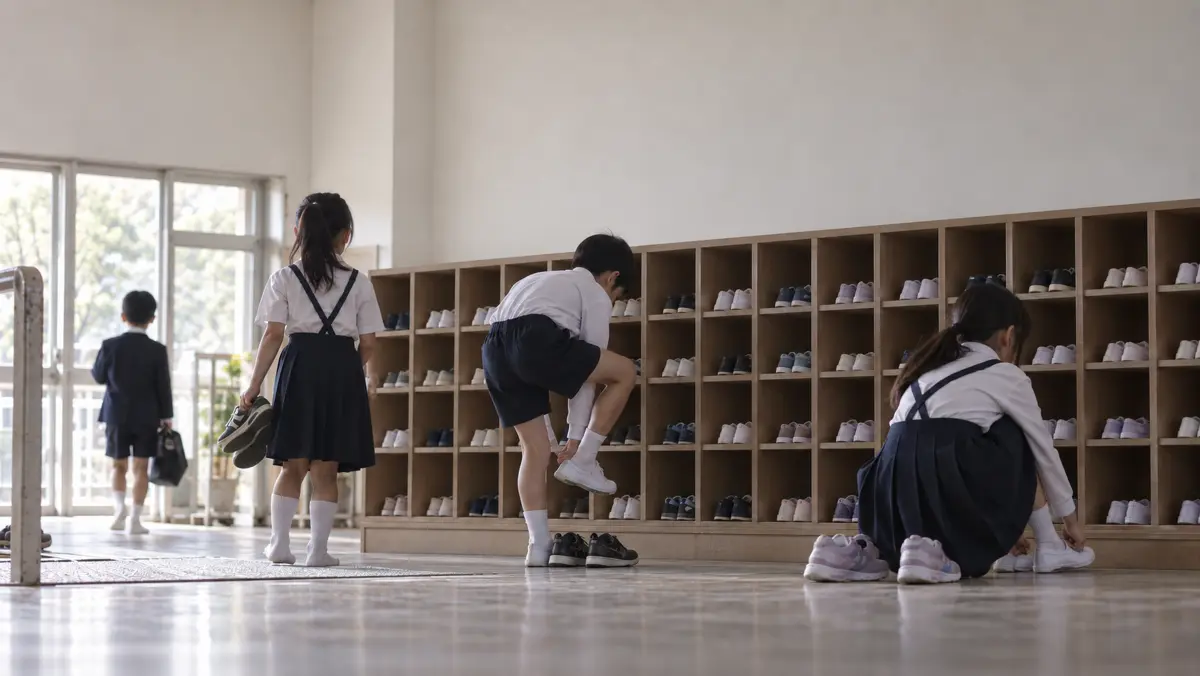
Walk into most Japanese schools in the morning, and the first thing inside is a wall of small shoe lockers. Children take off their outdoor shoes and put on soft white indoor shoes, called uwabaki. They change back when they go home. Twice a day, every school day, for years. Inside, the school is treated a little like a house. Children sit on the gym floor for assemblies, and wipe the corridors by hand at cleaning time.
The Line Still Moves
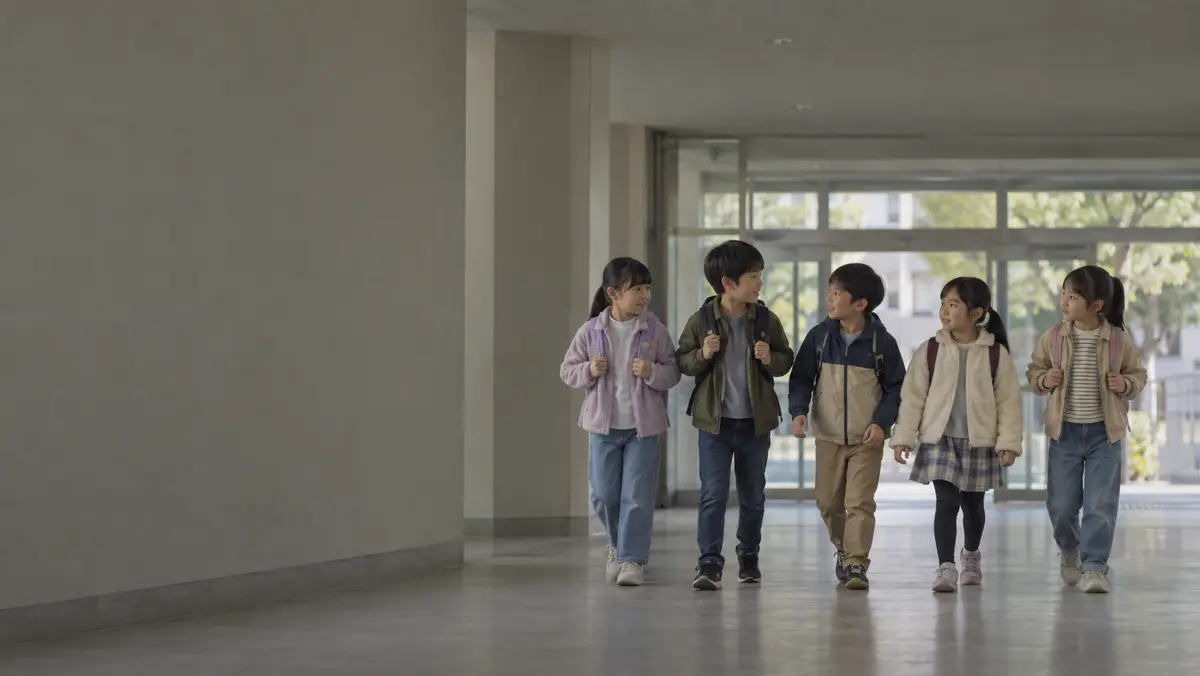
And the line still moves. By 2023, one central Tokyo ward, Minato, had moved twenty-four of its twenty-six public schools to a single pair of shoes. One pair, all day, as in an office. The reasons are practical: no crowd at the lockers, and nothing to change into when a fire or an earthquake means getting out now. Some parents worry the floors will get dirty. At home, though, the step is still there, just inside the door. When dinner ends, the guest's shoes already face the door. He steps straight into them. The samurai is still on the step, tying every cord.
If you visit
When to take your shoes off in Japan
The same line appears in smaller places. Large hospitals in Japan usually let you walk in wearing shoes. Many small clinics do not: slippers wait at the door. The smaller the building, the more it behaves like a home. In many clothes shops, the fitting room has its own little raised step. In your socks, holding the trousers, you wonder if they are worth it. So, at an unfamiliar entrance, look down. A step, slippers, a row of shoes: yours usually come off. Toilet slippers stay at the toilet. And shoes without laces help.
Where to see it
- Edo Castle (Imperial Palace East Gardens), Tokyo — Where the American envoy Townsend Harris walked in wearing brand-new shoes in 1857. Google Maps
- Kyu-Iwasaki-tei Gardens, Tokyo — The Mitsubishi founders’ home: a Western wing beside a Japanese house, built in the 1890s. Google Maps
- Ise Grand Shrine, Mie — Japan’s most sacred shrine — and the rumor about a minister’s shoes in 1887. Google Maps
Enjoyed the story? Sophie answers a new question about Japan every few days on YouTube.
Subscribe on YouTube
